
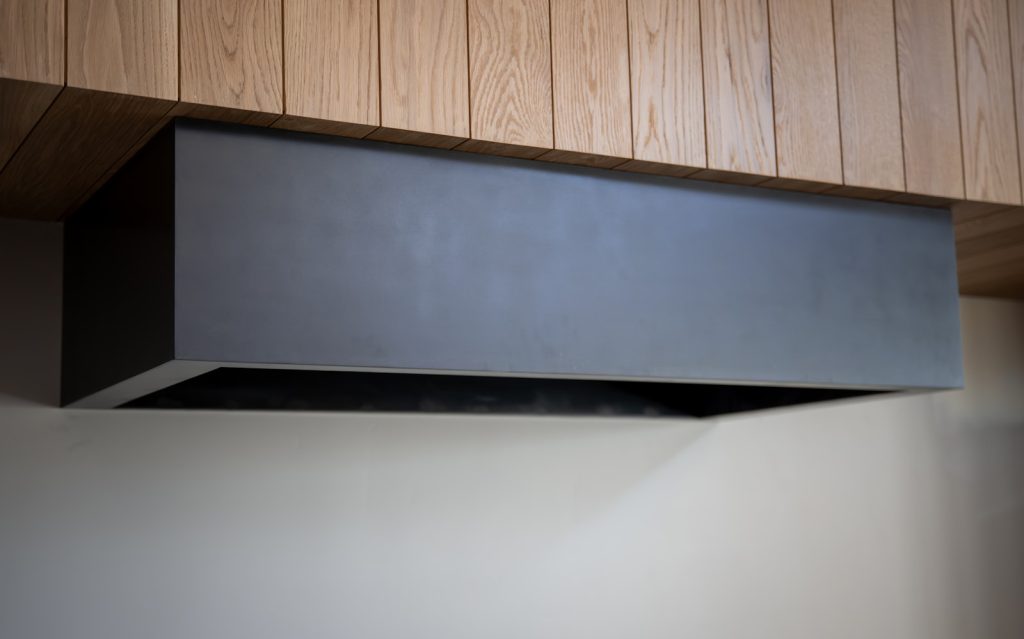
A ge range hood venting choice is one of the most important decisions in a range hood installation, since it affects not just how the unit performs but also what maintenance it will need going forward. GE range hoods are generally designed to support either a ducted or ductless (recirculating) configuration, though the exact conversion kit needed varies by model.
Ducted venting
A ducted range hood pulls smoke, steam, grease particles, and cooking odors through the hood and pushes them outside through rigid or semi-rigid ductwork, typically ending at an exterior wall or roof cap. This is genuinely the more effective option, since it removes heat, moisture, and airborne grease from the kitchen entirely rather than filtering and recirculating it.
Ductless (recirculating) venting
A ductless range hood passes air through a charcoal or carbon filter to reduce odor before releasing the filtered air back into the kitchen. This option requires no exterior ducting, which makes it considerably easier to install, particularly in kitchens where running ductwork to an exterior wall is impractical or expensive. The tradeoff is that a ductless hood does not remove heat or moisture from the kitchen, and its filtering effectiveness depends on regularly replacing the charcoal filter.
Which option fits your kitchen
- Choose ducted whenever exterior venting is feasible, especially for households that cook frequently with high heat, oil, or strong odors
- Choose ductless when running duct to an exterior wall is not practical, such as an interior kitchen island without an accessible exterior wall or ceiling path
Duct sizing and routing considerations
Ducted installations perform best with the shortest, straightest duct run possible, since each bend and extra foot of ducting reduces the effective airflow the blower can achieve. Undersized ducting relative to the blower’s rated capacity is a common cause of reduced performance and can also contribute to the whistling noise covered in our related guide on GE range hood noise diagnosis.
Converting between the two configurations
Some GE range hood models can be converted from ducted to ductless (or vice versa) using an accessory kit, but not every model supports both configurations – always confirm compatibility with your specific model before purchasing a conversion kit.
Maintenance differences between the two
Ducted hoods still need regular grease filter cleaning but have no charcoal filter to replace, while ductless hoods need both the grease filter maintenance and a periodic charcoal filter replacement to keep odor filtering effective – see our related guide on replacing a GE range hood filter for the full maintenance schedule.
CFM Rating and a GE Range Hood Venting Decision
Beyond ducted versus ductless, a genuine ge range hood venting decision should also account for the hood’s rated CFM (cubic feet per minute) relative to the size of your cooktop and kitchen. A hood undersized for a high-output cooktop, particularly one with several high-BTU gas burners, will struggle to clear smoke and steam even with a perfectly installed duct run, while an oversized hood on a small kitchen can create excess negative pressure that makes gas burners harder to keep lit. Match the hood’s CFM rating to your cooktop’s total BTU output and room size rather than choosing based on price or appearance alone.
Makeup air considerations
High-CFM ducted range hoods can pull air out of the house faster than it naturally replaces itself, and some jurisdictions require a makeup air system above a certain CFM threshold to prevent the negative pressure from affecting a gas water heater, furnace, or fireplace draft elsewhere in the home. This is worth checking with a local contractor before finalizing a ge range hood venting plan for a high-output ducted hood, especially in a newer, tightly sealed home.
When to call a professional
Our range hood repair team can evaluate your kitchen layout and recommend which venting configuration makes the most sense, and can handle duct routing for a new ducted installation.
Quick summary
Ducted venting performs better whenever it is practical to install, while ductless venting is a reasonable and much simpler alternative when exterior ducting is not feasible.
Our experienced, independent technicians – not affiliated with GE Appliances, a Haier company, or General Electric Company – install and convert both venting types. Schedule installation help at /schedule/. General GE product information is at geappliances.com.