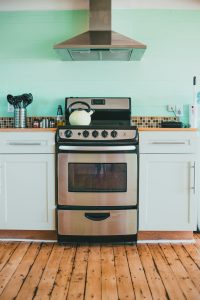
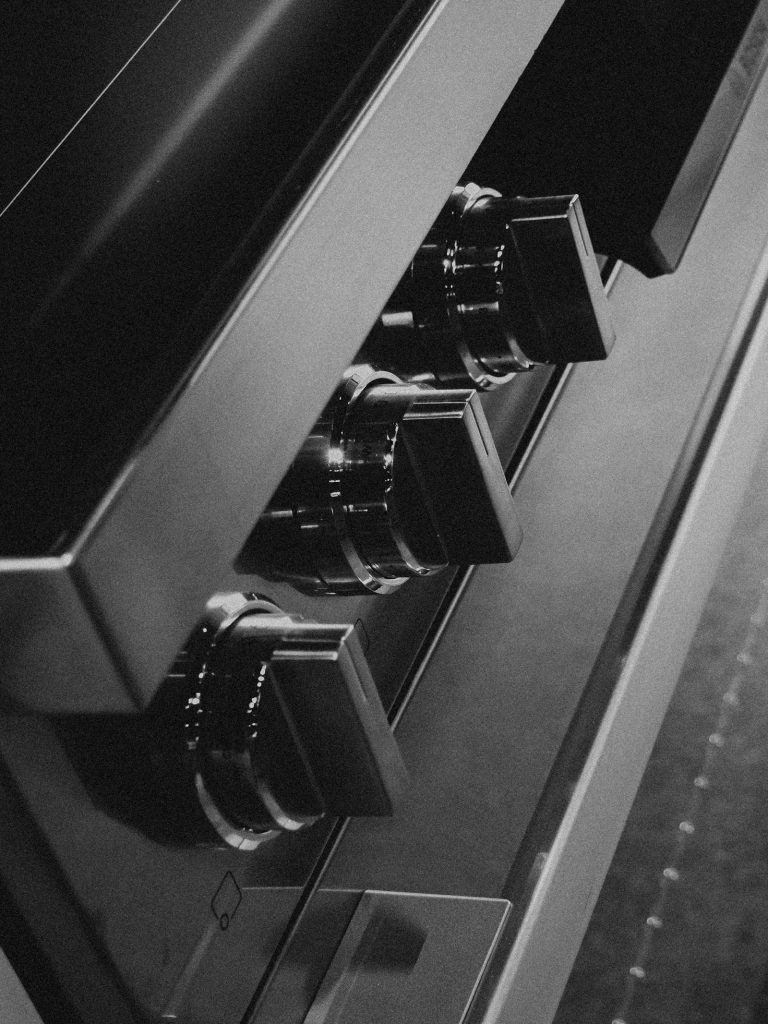
The ge range igniter spark module is the electronic component behind the familiar clicking sound many gas cooktops make when a burner knob is turned. Rather than a glow-bar that heats up slowly like an oven igniter, most GE gas cooktop burners use a spark electrode that produces a rapid, repeated spark at the burner head until the gas ignites, at which point a flame sensor tells the module to stop sparking.
How the spark ignition system works
Turning a burner knob (or, on sealed-burner electronic-ignition models, activating the corresponding switch) sends a signal to the spark module, which rapidly discharges current to the igniter electrode mounted next to the burner head. The resulting spark jumps to the burner and ignites the gas as it flows out. A flame sensor detects the established flame and signals the module to stop sparking, which is why a healthy burner clicks a few times and then goes quiet once lit.
Symptoms of a failing igniter or spark module
- Continuous clicking that never stops, even after the burner has lit – often a flame sensor problem rather than the igniter itself
- Weak, intermittent, or absent sparking at one specific burner while others work fine
- All burners clicking weakly or not at all, pointing toward the spark module rather than a single igniter electrode
- A visible gap, crack, or carbon buildup on the igniter electrode itself
See our related guide on GE gas range igniter won’t light for a step-by-step troubleshooting sequence covering both spark-ignition and glow-bar oven-style systems.
Common causes beyond a failed part
- Food debris, spilled liquid, or grease coating the igniter electrode and interfering with the spark path
- A wet igniter after cleaning, since moisture can short the spark before it reaches the burner
- A partially clogged burner cap restricting gas flow even when the spark is working normally
First checks you can do
- Turn off the range and thoroughly clean the igniter electrode and surrounding burner cap area, drying completely before testing again
- Confirm the issue is isolated to one burner by testing all burners on the cooktop
- Check that the burner cap and grate are seated correctly, since a misaligned cap can prevent proper ignition even with a working spark
When to call a technician
If cleaning and drying the igniter does not resolve continuous clicking or a weak spark, our range repair technicians can test the spark module’s output directly and confirm whether the module, a single igniter electrode, or the flame sensor is the actual point of failure. Checking your model number helps confirm which ignition system your specific range uses.
Bench-testing the ge range igniter spark module with a multimeter
- With the range unplugged, locate the spark module, usually a small rectangular box mounted behind the control panel or under the cooktop, and trace the wiring harness to each burner’s igniter electrode
- Check for continuity along the harness between the module and each igniter, since a broken or corroded wire produces the same symptom as a failed electrode
- Restore power briefly and, staying clear of the electrode tip, confirm the module actually sends output to each terminal when the corresponding burner is activated
- If one burner sparks weakly while the module’s other outputs test normally, the problem is isolated to that igniter electrode rather than the ge range igniter spark module itself
Safety note and preventing repeat failures
Never test spark output with wet hands or while gas is flowing unlit – shut off the burner knob first and let any residual gas smell clear before testing. Boil-overs and grease spatter are the leading cause of premature ge range igniter spark module failure, since residue creates a path that shorts the spark before it reaches the burner port. Wiping down and drying the igniter area after any spill extends the life of both the electrode and the module.
Quick summary
Most spark ignition problems on a GE gas range trace back to debris or moisture on the igniter electrode rather than a failed spark module, so a thorough cleaning is always the first and cheapest step before assuming a part needs replacing.
Our experienced, independent technicians – not affiliated with GE Appliances, a Haier company, or General Electric Company – test spark modules and igniters directly. Schedule service at /schedule/. General GE product information is at geappliances.com.