
A ge wine cooler placement decision matters more than it might seem, because not every wine cooler is designed to be installed the same way. Some GE wine and beverage coolers are freestanding-only, meaning they need open airflow around the cabinet to dissipate heat properly, while others are specifically built-in rated, meaning they are designed with front-venting that allows safe installation inside an enclosed cabinet space.
Why this distinction matters
A freestanding-only unit typically vents heat from its rear or sides, and installing it inside a fully enclosed cabinet – even one that looks like it fits – traps that heat with nowhere to escape, forcing the compressor to work harder and less efficiently. This is one of the most common, and most preventable, causes of the temperature swings and even premature compressor wear covered in our related guide on GE wine cooler temperature swings.
Clearance requirements for freestanding units
- Leave open space behind the unit, generally at least a few inches, for rear-vented heat dissipation – check your specific model’s installation instructions for the exact figure
- Avoid pushing the unit flush against a wall or inside a tight alcove without any air gap
- Keep the top and sides reasonably clear of obstruction as well, since heat can also radiate upward
Clearance requirements for built-in rated units
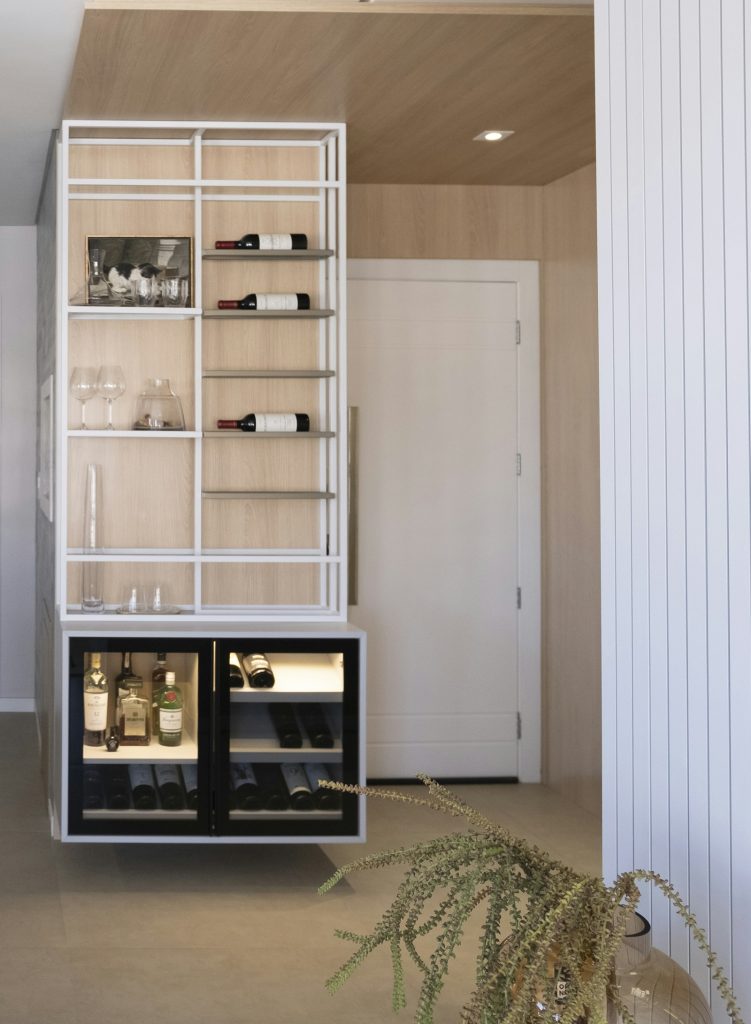
Built-in rated GE wine coolers are engineered to vent through the front grille, which is why they can be installed flush inside cabinetry with doors on either side, provided the specific model’s installation instructions for front-venting clearance are followed. Never assume a built-in installation is safe for a unit that is not explicitly rated for it – check the model’s documentation or the unit’s label before enclosing it.
Leveling and stability
Like most appliances, a wine cooler should sit level for both the compressor to run efficiently and for stored bottles to remain stable, particularly on units with sliding wine racks.
Electrical considerations
Confirm the outlet location works with the unit’s cord length and placement, and avoid using an extension cord for a continuously running appliance like a wine cooler, since a lower-gauge extension cord can create a fire risk under sustained load.
Signs a placement problem is affecting performance
- The unit runs its compressor almost continuously without ever fully cycling off
- The area immediately around the unit’s vents feels unusually warm to the touch
- Temperature readings are consistently higher than the setpoint despite the door sealing properly
Ambient Temperature and a GE Wine Cooler Placement Decision
A genuine ge wine cooler placement decision also needs to account for the ambient temperature of the surrounding room, not just clearance. Placing a unit near a heat source such as a range, oven, dishwasher exhaust, or a spot that gets direct afternoon sun forces the compressor to work harder than it should, and on some models can push the room temperature outside the unit’s rated operating range entirely, especially in a garage or unconditioned space during summer months. Choose a location that stays within normal household temperature swings for the most consistent results.
Door swing and access clearance
Beyond ventilation clearance, confirm the wine cooler door has enough swing room to open fully without striking an adjacent cabinet, wall, or appliance handle – a common oversight in a ge wine cooler placement plan for a corner or narrow galley kitchen. On built-in installations, also verify there is enough clearance to fully extend any sliding wine racks without them catching on the cabinet frame.
When to call a technician
Our wine cooler repair team can evaluate whether an existing installation has adequate clearance and advise on relocating or modifying the surrounding cabinetry if needed.
Quick summary
Confirming whether your specific GE wine cooler is freestanding-only or built-in rated, before choosing where to install it, prevents the majority of heat-related performance problems down the line.
Our experienced, independent technicians – not affiliated with GE Appliances, a Haier company, or General Electric Company – can evaluate installation clearance and airflow. Schedule service at /schedule/. General GE product information is at geappliances.com.