The ge washer e23 code is a drain-timeout problem reported on electronic GE washers, and it comes paired with a flood-protect response: once the control board decides the tub is not emptying fast enough, it not only halts the cycle but also keeps the door locked and may hold water in the tub rather than risk an overflow while the machine tries again to clear the drain. Understanding both halves of this – the timeout itself and the protective response it triggers – helps explain what the washer is actually doing rather than just reacting to a locked door and a blinking code.
What causes the E23 code
- A kinked, pinched, or crushed drain hose behind or under the washer
- A clogged pump filter packed with lint, coins, or small debris
- A blocked or partially blocked drain standpipe or utility sink connection
- A failing drain pump that can no longer move water fast enough to meet the expected drain time
How flood protect changes what you see
Once the E23 problem triggers, the washer is designed to hold rather than release water in an uncontrolled way, which is why the door may stay locked for several minutes after the code appears even if you unplug and replug the unit. This is deliberate – the flood-protect logic is meant to prevent standing water from ending up on the floor while the drain issue is being sorted out, not to make the washer harder to open for no reason.
First checks you can do
- Unplug the washer and check the drain hose for kinks or crushing behind the unit
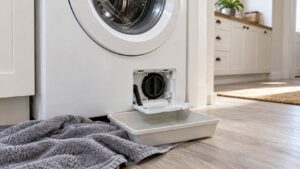
- Locate the pump filter, usually behind a small access panel at the front-bottom of the washer, and clear out lint, coins, and debris
- Confirm the standpipe or sink drain the hose empties into is not blocked
- Restart the washer and run a short rinse-and-spin cycle to see if the code clears
E23 versus a related code
A related problem, E30, means the control board received no signal at all from the drain pump – an electrical issue rather than a physical blockage – and is worth knowing about if E23 checks (hose, filter, standpipe) all come back clear. Our broader guide on GE washer not draining covers both possibilities side by side.
When to call a technician
If the filter is clear and the hose is not kinked but the ge washer e23 code keeps returning, the drain pump itself may be failing mechanically or electrically. Our washer repair technicians can test the pump directly and confirm whether it needs replacing, and you can browse other washer problems at /error-codes/washer/.
How to prevent it
Clean the pump filter every few months, especially in households that wash a lot of items with pockets, and avoid letting the drain hose get pinched when moving the washer for cleaning behind it. Checking small items like coins and tissues before loading goes a long way toward preventing filter clogs in the first place.
What a technician checks first
When a technician arrives for a reported ge washer e23 code, the first step is almost always confirming the problem is repeatable rather than a one-time event, then working the same hose, filter, and standpipe checks before opening up the pump housing. This order matters because it avoids unnecessary disassembly on a machine where the fix turns out to be a five-minute filter cleaning.
Quick summary
To recap, the ge washer e23 code means the tub failed to drain in the expected window and the flood-protect response is keeping things locked down until that is resolved. Clearing the filter and hose resolves the majority of reports, and only a persistent code points toward a failing pump.
If clearing the filter and hose does not resolve the code, our experienced, independent technicians can diagnose the drain system properly. Schedule a visit at /schedule/. General product information is available at geappliances.com.