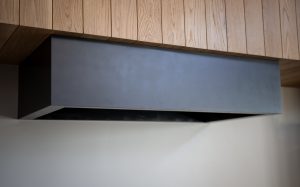
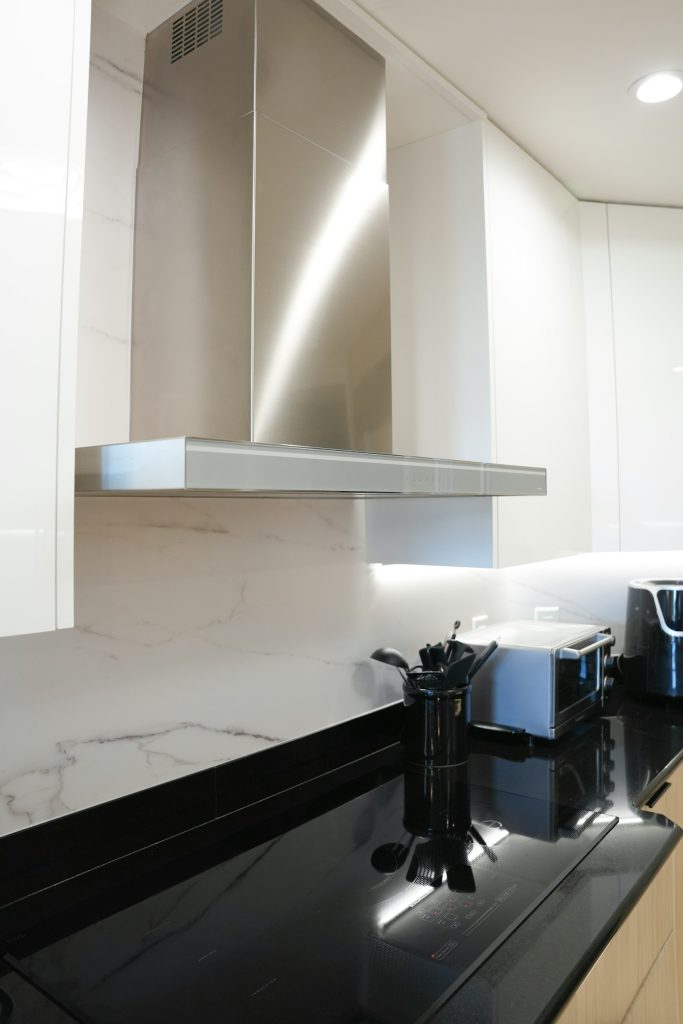
The ge range hood blower motor is the component that actually moves air – it drives a fan wheel that pulls smoke, steam, and grease-laden air up through the hood and either out through ducting or through a charcoal filter on ductless models. There is no published numeric error-code system for GE range hoods, so problems with the blower motor and its supporting parts almost always show up as a direct physical symptom rather than a code on a display.
How the blower motor and capacitor work together
Many GE range hood blower motors are permanent split-capacitor (PSC) motors, which need a run capacitor to keep the motor’s auxiliary winding properly phased once it starts spinning. If the capacitor weakens or fails, the motor may hum audibly – drawing current and trying to start – but never actually begin turning, since it cannot generate the torque needed to get moving on its own. This is one of the most common range hood complaints we see that looks like a dead motor but is actually a cheap, small part.
Symptoms pointing to the blower motor or capacitor
- The motor hums or buzzes but the fan wheel does not spin at all
- Weak suction even though the fan is spinning and the vent path is clear
- The fan runs on some speeds but not others
- A grinding or rattling noise from the blower housing, often from a worn bearing rather than the motor winding itself
Other common range hood failure points
Beyond the blower motor and capacitor, GE range hood problems often trace back to the switch (rocker or push-button), the light bulb or socket, wiring corroded by years of grease and moisture exposure, or an obstructed blower wheel caked in grease buildup. See our related guide on GE range hood fan not working for the fuller troubleshooting sequence across all of these possibilities.
First checks before assuming a part failure
- Confirm the breaker has not tripped and the switch itself is not the point of failure
- Remove and clean the grease filters and inspect the blower wheel for a heavy grease buildup that could be restricting or jamming it
- Listen for a hum with no spin, which points strongly toward a capacitor rather than the motor winding itself
When to call a technician
Our range hood repair technicians can test the ge range hood blower motor windings and capacitor directly to confirm which one has actually failed, since replacing a motor when only the capacitor was bad wastes money on an unnecessary part. Checking your model number beforehand helps confirm the correct blower assembly for your specific hood.
Keeping the blower system healthy
Regularly cleaning the grease filters and wiping down the blower wheel access area (where accessible) reduces the grease buildup that both restricts airflow and adds strain to the motor bearing over time.
How duct restriction shortens blower motor life
A ge range hood blower motor works hardest when it has to push air against resistance, so a partially blocked duct, a stuck backdraft damper, or an undersized duct run makes the motor draw more current and run hotter than it should. Over months and years, that extra strain accelerates bearing wear and can weaken the run capacitor sooner than normal. On ducted installations, confirm the exterior wall or roof damper actually opens when the fan runs – a damper painted shut or clogged with debris forces the blower to labor against a nearly closed vent. On ductless recirculating hoods, a saturated charcoal filter creates the same back-pressure problem. Keeping the duct path clear is therefore not just about suction performance; it directly extends the service life of the blower motor and capacitor. If you notice the motor running hotter or louder than it used to, a duct and damper inspection is worth doing before the motor fails outright.
Quick summary
A range hood that hums without spinning is one of the most reliably diagnosable range hood symptoms – it points strongly to a weak run capacitor rather than a dead motor, and testing before replacing avoids paying for the wrong part.
Our experienced, independent technicians – not affiliated with GE Appliances, a Haier company, or General Electric Company – test blower motors and capacitors directly. Schedule service at /schedule/. General GE product information is at geappliances.com.