A ge range hood buying guide should always start with CFM, or cubic feet per minute, which measures how much air the blower can move. This single number matters more to actual performance than style or finish, and choosing a hood with inadequate CFM for your cooktop is one of the most common regrets we hear about after installation.
Matching CFM to your cooktop
A commonly used rule of thumb is roughly 100 CFM for every 10,000 BTUs of total cooktop burner output for gas ranges, though electric and induction cooktops generally need somewhat less airflow for equivalent cooking intensity since they produce less ambient heat and combustion byproduct. High-output gas cooktops with multiple high-BTU burners may need a considerably higher-CFM hood than a basic four-burner electric range.
Ducted vs. ductless
Decide early whether ducted (vented outside) or ductless (recirculating, filtered) venting fits your kitchen layout, since this affects which models are practical options at all – see our related guide on GE range hood venting options for the full tradeoff between the two.
Hood styles available
- Under-cabinet hoods, mounted beneath existing cabinetry, generally the most affordable and common option
- Wall-mount chimney hoods, standalone units mounted directly to the wall above the cooktop without needing a cabinet above
- Island hoods, designed to mount from the ceiling above a cooktop that is not against a wall, typically requiring more powerful CFM since there is no cabinet or wall to help direct airflow
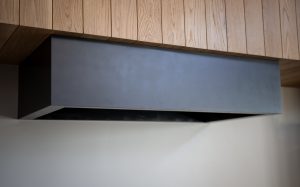
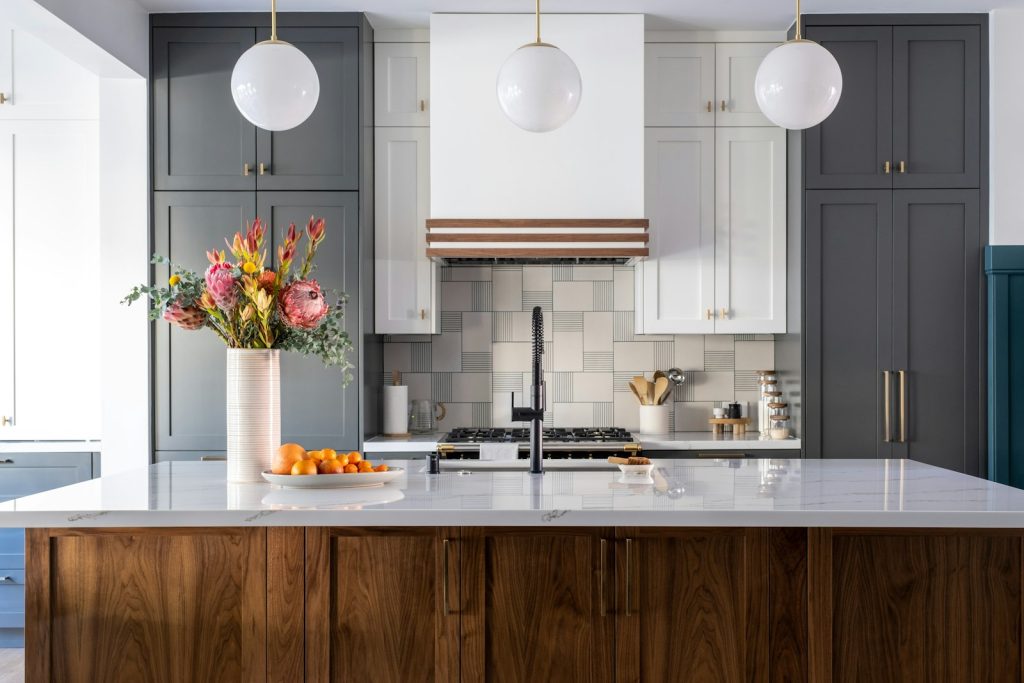
- Insert/liner hoods, hidden inside custom cabinetry or millwork for a fully built-in look
Noise level considerations
Higher-CFM blowers generally run louder at their top speed, so if noise is a concern, look at the hood’s sone rating (a measure of perceived loudness) at various speed settings rather than CFM alone, since two hoods with similar CFM can have noticeably different noise profiles.
Filter and maintenance considerations
Confirm whether the model uses washable metal grease filters, replaceable charcoal filters, or both, since this affects your ongoing maintenance routine – see our related guide on replacing a GE range hood filter for what each type requires.
Lighting and additional features
Most GE range hoods include built-in lighting over the cooktop, and some newer models add features like automatic heat-sensing fan speed adjustment or connected app control – worth considering if those conveniences matter to your cooking habits.
Sizing the hood to your cooktop width
A hood should generally match or slightly exceed the width of the cooktop below it to properly capture rising smoke and steam from the outer burners, not just the center of the cooktop.
Mounting height above the cooktop
A hood mounted too high loses capture efficiency, while one mounted too low can interfere with taller pots or create a burn hazard when reaching underneath. Most manufacturers, GE included, specify a recommended mounting height in the installation manual – typically 24 to 30 inches above the cooktop, depending on model and fuel type – and following it matters more to real-world performance than any other installation decision in a ge range hood buying guide.
Why a ge range hood buying guide has no error codes to worry about
Unlike a refrigerator or dishwasher, GE range hoods have no standard numeric error-code system – there is no display panel flashing an alert when something goes wrong. Instead, problems show up as symptoms: the fan or light dead entirely, one speed setting no longer working, new rattling or grinding noise, or weaker suction than when new. Common causes include a tripped breaker, a worn switch, a burned-out bulb or corroded socket, a failing blower motor or capacitor, wiring corrosion from years of grease and heat exposure, or an obstructed blower wheel caked with grease. A technician works through this symptom list rather than reading a code off a screen.
Quick summary
CFM matched to your cooktop’s output, followed by the ducted-versus-ductless decision, are the two factors that matter most for actual performance in any ge range hood buying guide – style and lighting features are worth considering only after those fundamentals are settled.
Whichever configuration you choose, our experienced, independent technicians – not affiliated with GE Appliances, a Haier company, or General Electric Company – install and service GE range hoods. Schedule installation help at /schedule/. General GE product information is at geappliances.com.