A ge wine cooler condensation problem, whether it appears as fogging on the outside of the glass door or as beads of moisture on interior walls and shelving, has no dedicated error code to point toward – like most wine cooler symptoms, this is diagnosed by working through the physical causes directly.
Condensation on the outside of the glass door
This is usually simple physics: when humid room air meets the cold outer surface of the glass door, moisture condenses on the outside, similar to a cold drink glass sweating on a warm day. This is more common in humid climates, rooms without good air circulation, or kitchens where cooking regularly raises humidity. It is generally not a sign of a malfunction, though it can be reduced by improving room ventilation or, on some models, by adjusting an anti-fog heater setting if the unit includes one.
Condensation on the inside of the cabinet
Interior condensation is a more meaningful sign worth investigating, since it typically means humid outside air is getting into the cabinet – most often through a worn or improperly sealing door gasket. Test the seal using the paper-strip method around the full door perimeter, checking closely at the corners where gaskets tend to wear first.
Frequency of door opening
Frequently opening the door, or leaving it open for extended periods while selecting a bottle, introduces humid room air into the cabinet each time, and in humid environments this can produce noticeable condensation even with a fully intact door seal. Minimizing how long the door stays open helps reduce this effect.
Temperature differential factors
A wine cooler set to a significantly lower temperature than the surrounding room will naturally show more condensation tendency than one set closer to ambient room temperature, simply because the temperature gap driving condensation is larger. This is a normal tradeoff of running a colder setpoint, not necessarily a problem.
When condensation points to a bigger problem
- Heavy interior condensation combined with the unit failing to hold its set temperature – see our related guide on GE wine cooler temperature swings
- Condensation appearing suddenly after previously being a non-issue, suggesting a newly developed seal problem rather than a longstanding humidity pattern
- Visible mold or mildew developing from sustained interior moisture, which needs prompt attention beyond just drying it out
Built-in installation and airflow as a hidden cause of ge wine cooler condensation
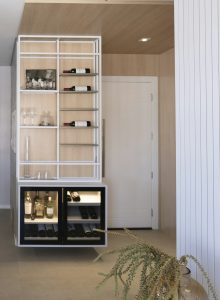
A wine cooler installed as a built-in unit inside enclosed cabinetry relies on proper front-venting clearance to exhaust heat from its condenser coils; if that clearance is blocked or the cabinet opening is undersized, the condenser runs hotter and the compressor works harder to hold the set temperature, which can indirectly worsen the differential that drives ge wine cooler condensation. Confirming your unit’s clearance requirements against how it was actually installed is worth checking before assuming the seal or humidity alone is the culprit, particularly after a kitchen remodel where clearance can be easy to shortchange for a cleaner look.
A health note on sustained moisture
Interior condensation left unaddressed for an extended period can allow mold or mildew to establish on shelving, gaskets, or interior walls, and mold exposure is a genuine health concern for household members with allergies, asthma, or other respiratory sensitivities, not just a cosmetic nuisance. If mold is visible and has been present more than briefly, a full interior cleaning combined with fixing the underlying moisture source is worth doing promptly.
First checks and fixes
- Test and, if needed, clean or replace the door seal
- Improve room ventilation or reduce nearby humidity sources where practical
- Minimize door-open time and avoid holding it open while browsing bottles
- Wipe down any accumulated interior moisture promptly to prevent mold growth
- Confirm built-in clearance requirements have not been compromised by cabinetry or nearby storage
When to call a technician
Our wine cooler repair technicians can determine whether persistent interior condensation is a seal issue, a ventilation clearance problem, or a sign of a struggling compressor.
Quick summary
Most ge wine cooler condensation is exterior fogging – just humid room air meeting a cold door surface, rarely a problem – while interior condensation more often points to a door seal problem worth addressing directly.
Our experienced, independent technicians – not affiliated with GE Appliances, a Haier company, or General Electric Company – diagnose condensation causes correctly. Schedule service at /schedule/. General GE product information is at geappliances.com.