Cleaning a GE washer drain pump filter is the single most useful maintenance job on a front-load machine, and the one almost nobody does until something goes wrong. It takes fifteen minutes, needs no tools beyond a shallow container and a towel, and it resolves a large share of the drain complaints we are called out for.
What the filter is actually for
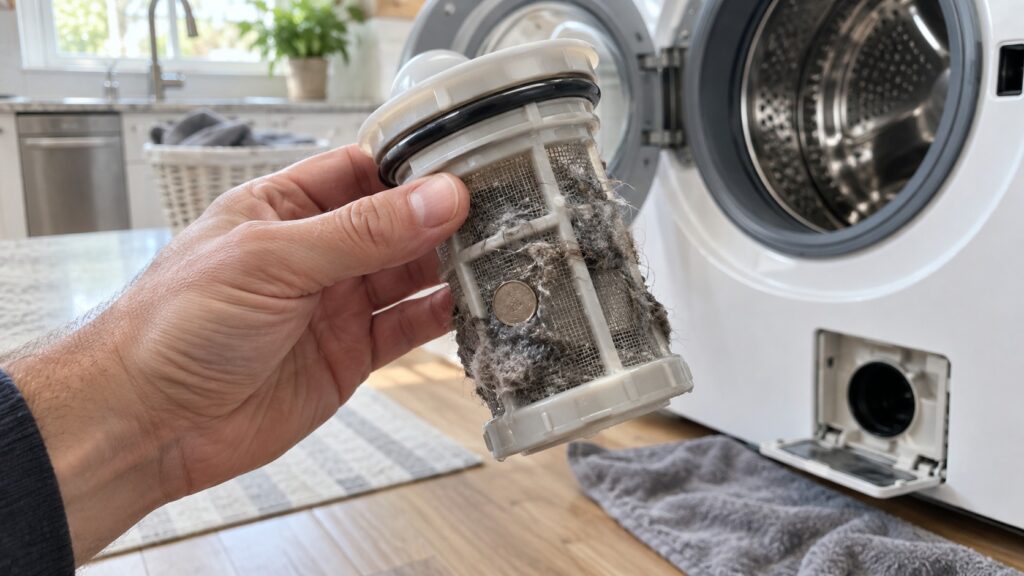
The drain pump moves water out of the machine, and it has an impeller that is easily stopped by anything solid. The filter sits ahead of it and catches what the drum lets through — coins, buttons, hair clips, the wire from an underwired bra, screws, and a surprising volume of lint that has bound itself into felt.
Full, it restricts flow and the machine takes longer to drain. Blocked, it stops drainage entirely and the cycle fails with water in the drum. Either way the pump itself is usually perfectly healthy, which is why this is a maintenance job rather than a repair.
The job, step by step
- Unplug the machine and pull it forward enough to work at the front.
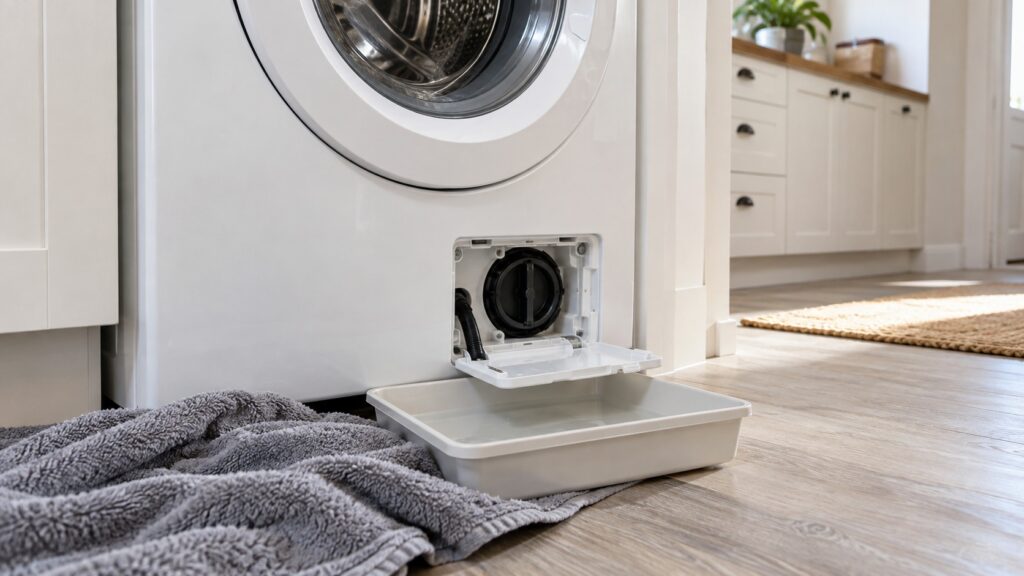
- Open the access panel. A small door or a clip-off cover at the bottom front. Some models need a coin or a flat screwdriver in a slot.
- Find the drain hose first. Most machines have a short hose beside the filter with a cap. That is how you empty the machine without a flood.
- Drain into the tray. Uncap the hose, let it run into the shallow tray, empty the tray into a bucket, repeat. This is the part people skip and regret.
- Unscrew the filter — anticlockwise, slowly. A little more water will come even after draining.
- Clean it. Rinse under a tap, pick out debris, check the mesh is clear against the light.
- Look into the housing. Reach in with a finger and turn the impeller. It should spin freely. Anything jammed in there comes out now.
- Refit firmly and check the seal is seated. Run a short rinse cycle and watch underneath for drips.
The mistake that floods a kitchen
Unscrewing the filter without draining through the hose first. A front-load drum that has failed to drain holds several gallons, and all of it arrives at once through an opening at floor level. A shallow tray cannot hold it and a towel cannot absorb it.
If your model has no drain hose beside the filter, unscrew the filter a quarter turn only, let water run into the tray, and tighten it again while you empty the tray. Repeat until the flow stops. Slower, and it keeps the water where you want it.
What you find tells you something
- Coins and hardware — pockets. Harmless to the machine if caught here, damaging if they reach the pump.
- Felted lint — normal, and the reason for the schedule.
- Underwire — the classic cause of a noisy drain and, if it gets past, a punctured drum seal. Wash bras in a mesh bag.
- Slime or a smell — the machine is running cool cycles only. Run a hot maintenance wash monthly; see our washer maintenance guide.
The gasket, while you are there
A front-load machine has a rubber door boot that traps water in its lower fold, and that fold is where the smell people blame on the drum actually lives. It costs two minutes while the machine is already unplugged and open: pull the fold back gently all the way round and wipe it out with a cloth, paying attention to the bottom where water sits.
You will usually find hair, lint and sometimes a sock that never made it into the wash. Dry the fold afterward, and leave the door ajar between washes from now on. That single habit does more for odor than any cleaning product sold for the purpose.
Water where it should not be afterward
Run a short rinse cycle with a dry sheet of paper towel under the front of the machine and look at it after. A damp patch means the filter is not seated squarely or its seal has been nicked — unscrew it, check the rubber for damage, and refit by hand rather than forcing it.
Filters and their seals are inexpensive parts. A seal that has hardened after years of hot washes will weep however carefully it is refitted, and replacing it is a five-minute job rather than a repair.
Top-load machines are different
Most GE top-loaders do not have a user-accessible pump filter at the front. On those machines the equivalent job is checking the drain hose for kinks and confirming the standpipe height, and anything inside the pump is a service job rather than a routine.
If your machine has no access panel at the bottom front, that is what you have — do not go looking for a filter that was never fitted. Our page on a washer that will not drain covers the diagnosis on both formats.
When cleaning it does not fix it
A machine that still will not drain with a clean filter and a freely turning impeller is telling you about the pump itself, the drain hose, or the standpipe. A pump that hums without moving water is usually an obstruction you have not reached; one that is silent is electrical. Our drain pump guide covers the same component on the dishwasher side, and the principles carry across.
We are an independent repair company, not a factory service arm. Pricing starts from a diagnostic visit and we confirm the estimate before any work begins. GE washer repair covers pumps, hoses and controls, and you can schedule a visit online.