GE freezers: series and lineup
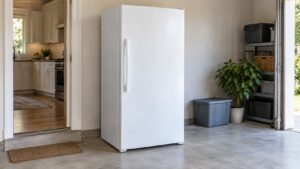
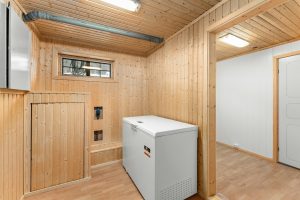
GE freezers cover both upright frost-free models with an electronic control panel and simpler chest or manual-defrost uprights that skip the display entirely, and GE engineers both formats directly rather than sourcing them from an outside manufacturer. The electronic uprights are the ones most likely to show an error code, since the control board actively monitors the thermistor and keypad; chest freezers and manual-defrost uprights rely on a mechanical thermostat and dial instead, so there is no code to read on those cabinets. Reading the model and serial tag before diagnosing any ge freezers call still matters, because GE’s two-letter, six-digit serial format (first letter month, second letter year) is the most reliable way to confirm a unit’s actual age when the manual isn’t on hand. You can browse the units we service in our model directory.
Technologies and features
GE’s upright freezers organize storage with adjustable shelves and door bins and run an automatic defrost cycle on frost-free models, trading a slightly higher energy draw for a cabinet that stays largely clear of ice buildup. Chest freezers and manual-defrost uprights instead ask the owner to defrost the cabinet periodically, with no electronic monitoring involved. Across both formats, the parts that wear are the defrost heater and thermostat (on frost-free electronic models), the evaporator fan motor, the door gasket, the thermistor, and the compressor and start relay in the sealed system — all standard GE service parts once the model tag confirms the exact platform.
Common issues and maintenance
On electronic GE upright freezers, the confirmed error codes are E7 (a control button has been stuck for more than 30 seconds), E8 (the thermistor has shorted), and E9 (the thermistor circuit is open), with HI or HRS appearing as a high-temperature alert on some models. Chest freezers and manual-defrost uprights show no codes, so those units are diagnosed by symptom: not freezing or running warm most often traces to a door that is not sealing, blocked interior air vents, or a failed evaporator fan; frost buildup on interior walls is expected on a manual-defrost cabinet between defrost cycles but points to a warped gasket on a frost-free unit; and a freezer running constantly usually means the coils need cleaning or the gasket needs replacing. Because these units run continuous compressor duty, ambient temperature swings in a garage or unheated basement can also throw off normal cycling, which is worth ruling out before assuming a part has failed. Routine care — checking the door seal, avoiding propping the door, defrosting a manual chest model before ice exceeds about a quarter inch, and keeping the target temperature at 0°F — prevents most calls on ge freezers units. It is also worth giving a freezer a full day to catch up after delivery, a long power outage, or a large batch of fresh food before assuming a defrost heater or fan has actually failed, since heavier-than-normal compressor cycling right after a big load is often just the unit doing its job rather than a sign of trouble. For deeper troubleshooting, see our repair guides and browse GE freezer models we service.
When to call for repair
A failed defrost heater, evaporator fan motor, door gasket, thermistor, or compressor are best handled by experienced technicians who can trace an E7/E8/E9 problem or a not-freezing symptom through the defrost circuit and sealed system before recommending refrigerant work. As an independent, third-party repair service, we are not affiliated with, authorized by, or endorsed by GE Appliances (a Haier company) or General Electric Company, and our technicians back every visit with a 30-day labor warranty on the workmanship. Manufacturer warranty terms vary by model, so independent repair is typically used once that coverage has lapsed. Note the exact code or symptom and your full model and serial number when you book. Schedule GE freezer repair or book an appointment online, and you can review current GE listings at geappliances.com.