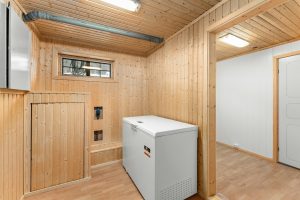

Freezers are among the lowest-maintenance appliances in the home, but a small amount of ge freezer maintenance a few times a year meaningfully reduces the odds of an unexpected failure — and helps a unit reach the upper end of its typical 10-15 year service life rather than the lower end.
Managing Frost Buildup
Frost accumulation around the evaporator coil is the single biggest efficiency killer in any freezer. On manual-defrost chest freezers, plan a full defrost whenever frost reaches roughly a quarter-inch thick — waiting longer just makes the eventual defrost more of a project. On electronic auto-defrost uprights, frost buildup beyond normal levels usually signals a defrost heater, defrost timer, or door seal problem rather than something a manual defrost alone will fix.
Door Gasket Inspection
Run your hand around the full perimeter of the door gasket monthly, feeling for gaps, stiffness, or tearing. A simple test: close the door on a piece of paper at several points around the frame and gently pull — if it slides out easily, the seal is not gripping properly there. A failing gasket lets warm, moist air in continuously, which both wastes energy and accelerates frost buildup.
Condenser Coil Cleaning
One of the most overlooked parts of ge freezer maintenance is the condenser coil, typically on the back or underneath the unit, which dissipates heat as part of the cooling cycle. Dust and pet hair insulate these coils over time, forcing the compressor to work harder. Vacuuming them out every few months, especially in dusty environments or homes with pets, is one of the easiest maintenance tasks available and pays off directly in compressor longevity.
Keeping the Interior Sensor-Friendly
Because thermistor failures like E8 and E9 are sometimes preceded by ice pressing against sensor wiring, avoid letting frost build up against the interior back panel where sensors are typically mounted. If you notice unusual ice formations in one specific spot rather than an even layer, that is worth investigating rather than ignoring.
Loading and Airflow
Freezers actually cool more efficiently when reasonably full, since frozen items help maintain temperature during door openings — but airflow vents inside the cabinet still need to stay clear. Avoid blocking any interior vents with tightly packed items.
Seasonal Considerations
Freezers kept in garages or unconditioned spaces face bigger temperature swings between seasons, which can affect both frost buildup rates and gasket flexibility. A gasket that seals fine in summer heat can stiffen and lose some grip in cold winter conditions, so it is worth doing an extra seal check heading into colder months if your unit lives somewhere without climate control.
Keeping a Simple Maintenance Log
Jotting down the date of each defrost, gasket check, and condenser cleaning — even in a basic notebook or phone note — makes it much easier to notice when an interval has started slipping. Many owners intend to check the gasket “every few months” but without a record, that interval quietly stretches to a year or more, which is exactly when small issues have time to turn into bigger ones. Even a simple running list on your phone, updated in a minute or two each time you check the unit, is enough to keep the pattern visible and to flag if an interval is quietly slipping longer than intended. A little consistent ge freezer maintenance goes further than most owners expect toward avoiding a larger repair down the road.
When to Call a Technician
If maintenance steps do not resolve frost buildup, a persistently loose-feeling gasket, or unusual noise from the compressor area, bring in an experienced technician for a proper inspection rather than repeating the same maintenance cycle indefinitely. See /services/freezer-repair/.
Summary
Regular ge freezer maintenance — frost control, gasket checks, and clean condenser coils — is inexpensive insurance against the bigger failures covered in our freezer not freezing guide. Book a maintenance visit at /schedule/, and see geappliances.com for model-specific care instructions.