A ge freezer not cold diagnostic is different from troubleshooting a freezer that will not run at all – here, the compressor is clearly operating (you can hear it), but the interior temperature stays too high. This distinction matters because a running-but-warm freezer usually points to an airflow or door-seal problem rather than the compressor itself.
Step 1 – Check the door seal
A worn, torn, or misaligned door gasket lets warm room air continuously leak into the compartment, forcing the compressor to run constantly without ever reaching setpoint. Close the door on a piece of paper at several points around the perimeter – if it pulls out too easily, the seal is not holding properly at that spot.
Step 2 – Check for evaporator coil frost buildup
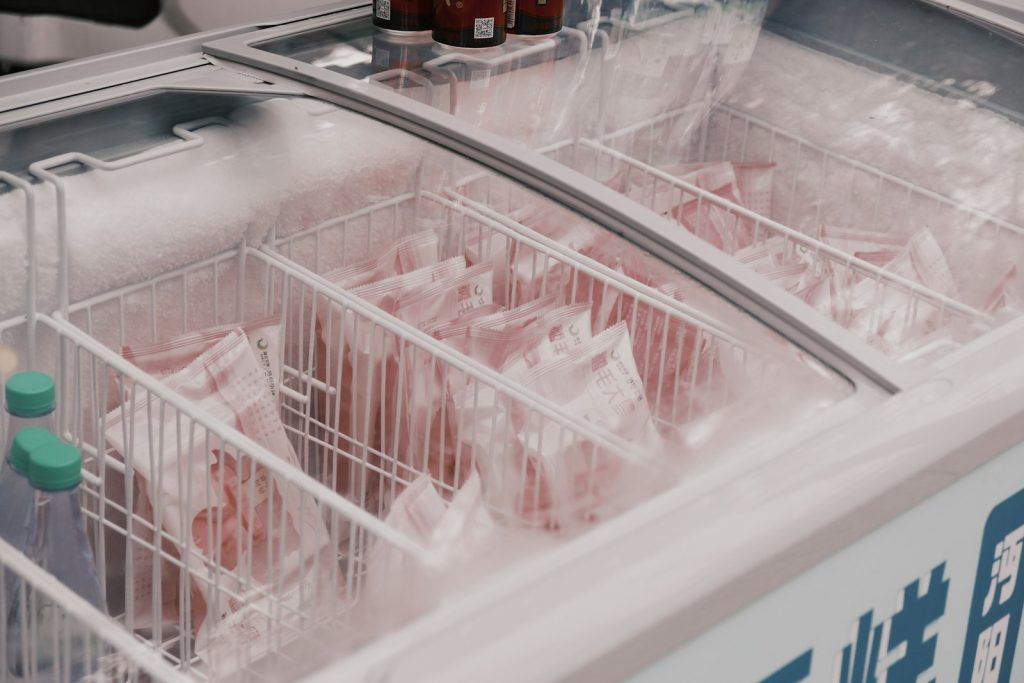
Heavy frost on the evaporator coils blocks the airflow needed to actually cool the compartment, even though the compressor and fan may both be running normally. See our related guide on the GE freezer defrost heater and thermostat, since a failed defrost system is one of the most common causes of this exact symptom.
Step 3 – Check the evaporator fan
If the coils are not heavily frosted but the compartment is still warm, confirm the evaporator fan itself is spinning and moving air across the coils – a fan blocked by ice, or one with a failed motor, can leave the compressor running with nowhere for the cold air it generates to go.
Step 4 – Check airflow restriction from overloading
An overpacked freezer, or food stacked directly against the vents, can block internal airflow enough to create warm spots even when the system itself is healthy. This is a simple, free fix worth ruling out before anything else.
Step 5 – Confirm the thermostat setting and location sensitivity
Some upright freezers place the thermostat sensor in a location more sensitive to nearby door openings or nearby vents than others, which can create a reading that does not match the true average interior temperature. Confirm the control setting itself has not been accidentally changed.
Step 6 – Check for a genuine refrigerant or compressor issue
Only after ruling out the door seal, defrost system, fan, and airflow should a low refrigerant charge or a weakening compressor become the leading suspect – this is also the point where an start relay test becomes relevant if the compressor is short-cycling rather than running continuously.
Logging temperature over time to guide a ge freezer not cold diagnostic
Because a freezer can look completely normal at the exact moment it is inspected, keeping a simple appliance thermometer inside the compartment and checking it at the same time each day for a week gives far more useful information than a single reading. A ge freezer not cold diagnostic benefits enormously from this kind of log, since a pattern of steadily worsening temperature points toward a genuine mechanical problem like frost buildup or a weakening compressor, while a temperature that spikes only after grocery-loading days or hot weather points toward a capacity or ventilation issue rather than a failing part. Note the ambient room temperature too, since a freezer located in a garage or unconditioned space works considerably harder in summer and can show temporary warm readings that are not actually a problem.
Ambient location and seasonal effects
A freezer rated for indoor use but installed in an uninsulated garage or shed may struggle to maintain setpoint once outdoor temperatures swing to either extreme, since the compressor and door-seal system were engineered around a narrower ambient range – this is worth ruling out early in any ge freezer not cold diagnostic before assuming a component has failed on a garage-installed unit.
When to call a technician
Our freezer repair technicians work through this exact sequence, since starting with the door seal and defrost system before touching the sealed refrigerant system avoids an unnecessarily large repair when the actual cause is something simple and inexpensive.
Quick summary
A freezer that runs but stays warm is rarely a refrigerant problem on the first check – the door seal and evaporator frost buildup explain the large majority of these complaints.
Our experienced, independent technicians – not affiliated with GE Appliances, a Haier company, or General Electric Company – follow this exact diagnostic order on every “running but warm” call. Schedule service at /schedule/. General GE product information is at geappliances.com.