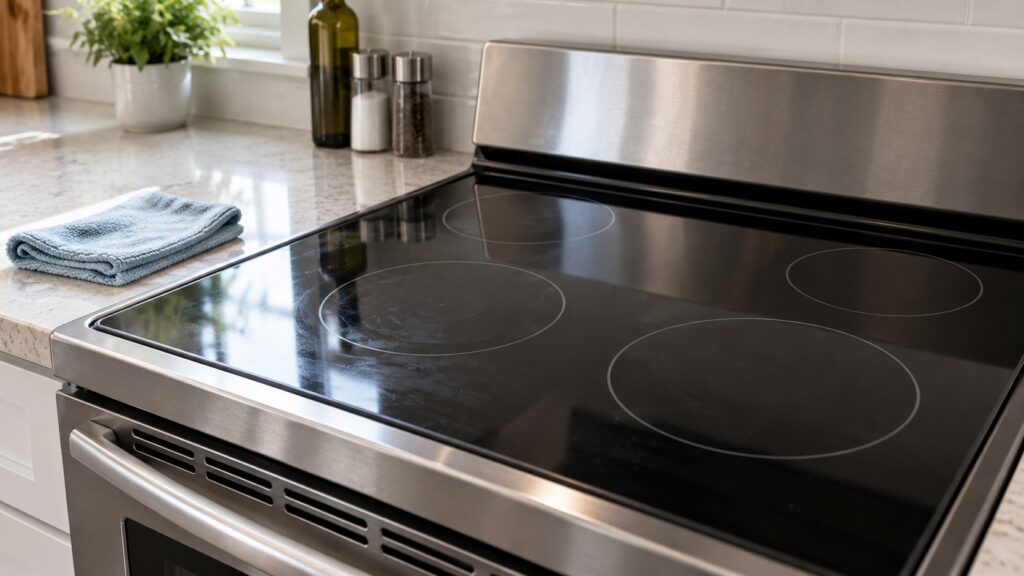
GE glass cooktop cleaning is straightforward if you follow three rules: wait until the cooktop has fully cooled, use a cleaner made for glass cooktops with a soft cloth or non-scratching pad, and wipe up spills before they bake on. Our model pages list a ceramic glass cooktop on ranges such as the JB735SPSS and JBS360DMWW and an induction cooktop on the Café CHS985SELSS. Keep water and cleaner away from the touch controls, and never slide cast iron or a rough-bottomed pan across the glass.
Why does glass cooktop care matter?
A glass top looks smooth, but it is a working surface: it carries the heat or the induction field to the pan, and it hides the controls and the sensors beneath it. Residue that bakes on makes stains that are harder to remove each time the cooktop heats. A scratched or pitted surface, our induction range page notes, can occasionally cause uneven heating. Regular cleaning is the cheapest way to avoid it, and it is a job any owner can do. Our range maintenance guide covers the wider routine for gas and electric ranges.
What should you use to clean a GE glass cooktop?
Use a cleaner that is made for glass or ceramic cooktops and a soft cloth, sponge or non-scratching pad. Check your owner’s manual for the cleaners it recommends for your model, because they differ and a wrong one can cloud or damage the glass. Our induction range page recommends a cooktop-safe cleaner and letting the surface dry fully. Do not use steel wool, scouring powder or a rough scrubber, and do not use a knife to chip at residue. For daily care, a damp cloth followed by a dry one removes most light soil and leaves no film. Apply a cleaner only to a cool surface and read its label to confirm it is made for glass or ceramic cooktops. Keep the cloths and sponges you use on the glass clean, and do not share them with the sink or with greasy pans, because grit or grease on a cloth scratches or smears the surface.
How do you clean a cooled glass cooktop step by step?
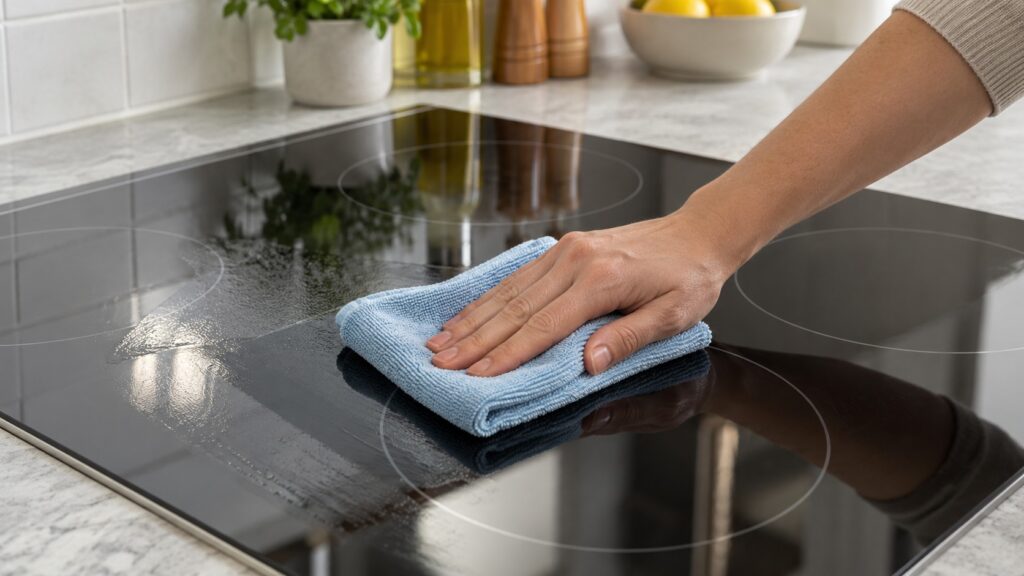
First make sure every burner is off and the glass is completely cool. Wipe away loose crumbs with a dry cloth so that they do not scratch the glass. Apply a small amount of cooktop cleaner as the label directs, rub with a soft cloth or a non-scratching pad using light circular motions and then wipe the area clean with a damp cloth. Buff with a dry cloth. Work in sections rather than wetting the whole surface. Keep the cloth wrung out, and do not let liquid run into the gap between the glass and the frame or toward the touch controls.
What about stuck-on spills and burned food?
Treat them gently and patiently. Soften burned-on food by laying a damp cloth over it for a while, then use the non-scratching pad and cleaner. Your owner’s manual comes first here: some manuals describe a scraper made for glass cooktops, and the manual explains how to hold and use it safely, so follow it rather than improvising. Sugary and melted-plastic spills are the ones to take seriously, because they can mark the glass permanently, so check your manual for what it says about them. Never scrape with a metal blade at a steep angle or use a tool that is not meant for glass.
Does clean glass matter for an induction cooktop?
Yes. Our induction range page lists spilled food or sugar residue baked onto the glass as something that can interfere with the pan-sensing coils underneath, and notes that moisture on the glass can sometimes confuse touch controls. It suggests confirming the cookware is induction-compatible with a magnet test and cleaning the surface thoroughly with a cooktop-safe cleaner, letting it dry fully. Read our induction range issues guide if a zone will not heat. A clean, dry, undamaged surface and the right pan solve most of these problems.
How do you avoid scratching the glass?
Lift pans instead of sliding them. Check that pan bottoms are clean and smooth, because a grain of grit or a rough edge scratches under the weight of a full pot. Do not use glass, ceramic or stoneware that is not rated for the cooktop. Do not set a hot pan on a cold wet surface, and do not drop heavy objects on the glass, because a cracked top is not repairable by cleaning. If the glass is cracked or chipped, stop using the cooktop and call a technician. If liquid reaches the crack, switch off the breaker at the panel while standing on a dry floor.
When is it not about cleaning?
If a zone does not heat on a clean surface, our electric range element not heating guide goes through the causes. If the touch controls do not respond, wipe them with a barely damp cloth and dry them, and then try again. Controls that stay unresponsive need a technician. Our GE range repair page explains how a visit works. If you are choosing a range, our range buying guide compares the types.