A ge otr countertop microwave decision usually starts with a simple question: do you have counter space to spare, or would you rather free it up by mounting the microwave above the cooktop? Both options are well represented across GE’s lineup, and each comes with genuine tradeoffs beyond just where the unit physically sits.
Over-the-range (OTR) microwaves
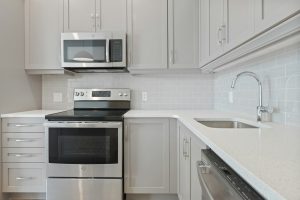
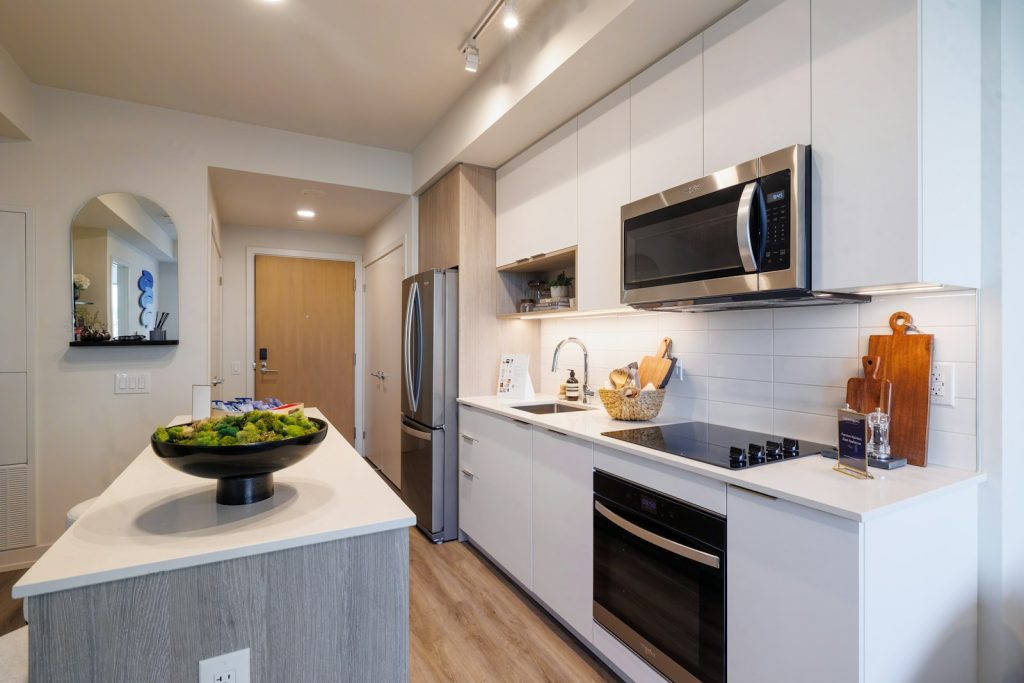
An OTR microwave mounts above the cooktop in the space a range hood would normally occupy, and most models include a built-in exhaust fan serving the same venting purpose a dedicated hood would – either ducted outside or recirculating through a charcoal filter. This frees up counter space entirely, which matters most in smaller kitchens, but installation is considerably more involved, requiring a wall-mounted bracket, a dedicated circuit, and often ducting work. See our related guide on how to install a GE OTR microwave for the full process.
Countertop microwaves
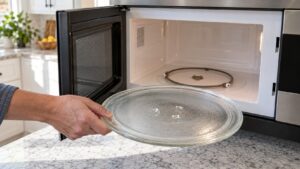
A countertop microwave sits on any flat, stable surface near an outlet, with essentially no installation beyond finding a spot and plugging it in. This makes it by far the simpler option, especially for rentals or households that do not want a permanent wall-mounted appliance, but it takes up counter space some kitchens cannot spare, and it provides no cooktop ventilation.
Ventilation considerations
If you choose a countertop microwave, your kitchen still needs a separate ventilation solution over the cooktop – either an existing range hood or one installed separately – since a countertop microwave cannot serve that dual purpose the way an OTR unit does. This is one of the most overlooked factors in the comparison, since removing an existing OTR unit in favor of a countertop model also removes your kitchen’s ventilation unless something else replaces it.
Capacity and feature differences
OTR units are often somewhat larger in capacity given their fixed cabinet footprint, while countertop models come in a much wider range of sizes, from compact units for small spaces to large-capacity models for households that use the microwave heavily. Both formats are available across GE’s core and Profile tiers with similar cooking feature sets.
Repair and maintenance considerations
Because an OTR unit also handles ventilation, its filter and fan maintenance overlaps with what a standalone range hood would need – see our related guide on the GE range hood filter replacement process, which applies similarly to an OTR microwave’s built-in vent filter. A countertop unit has no such ventilation components to maintain.
Which option fits your kitchen
- Choose OTR if counter space is limited and you want combined cooking and ventilation in one footprint
- Choose countertop if you have adequate counter space, already have separate cooktop ventilation, or prefer the simplicity of no permanent installation
Error codes are shared between the two formats
Whichever side of a ge otr countertop microwave decision you land on, the electronic controls inside both formats use the same error-code vocabulary: F1 signals an open thermal sensor, F2 a shorted thermal sensor, F3 a shorted touchpad, F6 a shorted temperature probe, and F10 a shorted touch screen on models that have one. A Probe alert means the temperature probe accessory is open or was left unplugged mid-cook, while 888, 8888, or PF on the display simply indicates a power interruption reset the clock rather than an actual problem. These codes appear identically on OTR and countertop units, since the difference between the two formats is mounting and ventilation, not the cooking electronics underneath.
A safety note on door interlocks, regardless of which side of the ge otr countertop microwave decision you take
Every GE microwave, OTR or countertop, relies on door interlock switches to prevent the magnetron from operating with the door open, and this is not a component to try bypassing or ignoring if the door feels loose, fails to latch cleanly, or the unit stops heating only when the door is nudged. A malfunctioning interlock is a safety-relevant failure, not just an inconvenience, and warrants prompt attention from a technician rather than continued use.
Quick summary
A ge otr countertop microwave decision is really about counter space and ventilation needs rather than cooking performance, since both formats cook similarly well within comparable capacity ranges.
Whichever format you choose, our experienced, independent technicians – not affiliated with GE Appliances, a Haier company, or General Electric Company – service both. Schedule service at /schedule/. General GE product information is at geappliances.com.