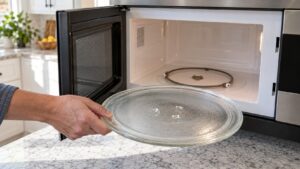
A ge microwave not heating diagnosis is one of the most misdiagnosed microwave symptoms, because the microwave appears to run completely normally – the turntable spins, the interior light comes on, the fan runs, and the display counts down – while food simply never gets hot. The two leading causes, a worn door interlock switch and a genuine high-voltage circuit failure, are on opposite ends of the repair-cost spectrum, which makes correct diagnosis worth the extra few minutes.
Step 1 – Check the door interlock switches first
GE microwaves use two or three interlock switches around the door frame that confirm the door is fully and securely closed before allowing the high-voltage circuit to activate at all. As these switches wear, one can fail in a way that lets the microwave run its normal cycle sequence but silently blocks the high-voltage circuit as a safety precaution, producing exactly the same “runs but does not heat” symptom as a true magnetron failure. This is the single most common cause of this complaint and the cheapest to fix.
Step 2 – Listen for the high-voltage transformer
A working high-voltage transformer produces a distinct low hum when the microwave is actually generating cooking energy. If you hear that hum but food still does not heat, the transformer is likely receiving power but something downstream – the capacitor, diode, or magnetron itself – is not converting it properly. If you hear no hum at all, the transformer, the interlock switches, or the control board’s power relay may be the point of failure.
Step 3 – Rule out a genuine high-voltage component failure
See our related guide on the GE microwave magnetron and high-voltage diode for how the capacitor, diode, and magnetron work together, and why testing them requires safely discharging stored high-voltage charge first – not a step to attempt without the right training and equipment.
Step 4 – Check for an active error code
Some GE microwaves display F1-F6 sensor codes or other alerts that can help narrow the cause, though many no-heat complaints occur without any code appearing at all, since the interlock safety response does not always register as a problem.
Symptoms that point toward each cause
- Interlock switch: door may feel slightly loose, or the microwave briefly loses power when the door is jostled during operation
- High-voltage failure: door closes and latches firmly, but heating never occurs regardless of door position
When to call a technician
Our microwave repair technicians check interlock switches first on every no-heat call, since it resolves a meaningful share of these complaints before any high-voltage testing is even needed.
A safe homeowner check before a ge microwave not heating diagnosis visit
You can narrow things down yourself before calling for service, without opening the cabinet or touching any high-voltage component. Bring the door to a close slowly and listen for a distinct mechanical click from each side of the frame – a door that closes with an unusually soft or inconsistent click, or one that needs to be pushed firmly to latch, points toward a worn interlock rather than the high-voltage circuit. You can also boil a cup of water for sixty seconds: lukewarm rather than genuinely hot output confirms a real heating failure, which helps a technician skip straight to targeted testing rather than re-confirming the basic complaint.
Why age matters in a ge microwave not heating diagnosis
Door interlock switches are mechanical parts that wear from thousands of open-close cycles, so they tend to fail gradually over several years of normal use, while a genuine magnetron or diode failure can happen more abruptly, sometimes after an obvious event like a power surge. A microwave more than seven to ten years old showing this symptom is statistically more likely to have simply worn out an interlock switch from cumulative use than to have a sudden component failure – a useful piece of context to weigh early in any ge microwave not heating diagnosis.
Quick summary
Because a worn interlock switch and a genuine high-voltage failure look identical from the outside, checking the switches first before assuming the more expensive repair is the right diagnostic order every time.
Our experienced, independent technicians – not affiliated with GE Appliances, a Haier company, or General Electric Company – follow this interlock-first diagnostic order. Schedule service at /schedule/. General GE product information is at geappliances.com.