GE dishwashers: series and lineup
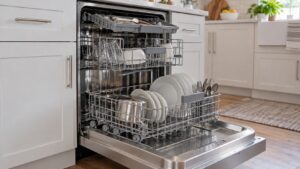
GE dishwashers are engineered and built entirely by GE Appliances, with the tall-tub GDT665SSNSS representing GE’s current mainstream platform (the GDT prefix denoting GE’s tall-tub interior design). GE Profile and Café tiers add features on top of the same core wash and drain architecture rather than switching to a different OEM platform, which means the error-code table is consistent across the lineup once the control-panel generation is confirmed. Reading the model and serial tag before a ge dishwashers call still matters for parts fit and for confirming the unit’s true age from GE’s two-letter serial date code. You can browse the units we service in our model directory.
Technologies and features
GE dishwashers use a soil-sensing wash system, a bottom-mounted filter that needs periodic manual cleaning on most current models, and, on GE Profile and Café units, a dedicated third rack and quieter decibel-rated motor and pump assembly. Because GE builds the wash pump, water inlet valve, heating element, and control board in-house, the error codes on the control panel map directly to a component GE itself documents in its own service literature — a genuine advantage over rebadged dishwasher brands where the “manufacturer” code table doesn’t match the actual OEM parts inside. The parts that wear are the water inlet valve, the drain pump and check valve, the wash motor and spray arms, the heating element and water-temperature sensor, the float switch, and the door latch and gasket.
Common issues and maintenance
GE’s published error-code set is one of the more complete in the appliance category: C1 (draining for more than two minutes — a partial restriction), C2 (total pump-out time over seven minutes — a more complete blockage), C3 (the dishwasher won’t drain at all), C4 (the tub filled twice after a power failure, or the float switch is stuck), C5 (pump-out finished too quickly to be a real cycle), C6 (water temperature too low), C7 (a problem in the water-temperature sensor circuit), C8 (the detergent cup is blocked), PF (a power failure occurred mid-cycle), H2O (low water reaching the tub), and PrS (an invalid pressure-sensor reading), along with a dedicated leak-detection alert (displayed as Leak Detected or, on some panels, 999) tied to GE’s Floor Protect feature. A blinking 1H is not a problem — it simply means delay-start is set. Cleaning the bottom filter every few weeks, running hot water at the sink before starting a cycle, and using the correct detergent amount prevent the majority of C1–C8 calls before they happen. A dishwasher that seems to be cleaning poorly without throwing any of these codes is often just a clogged spray arm or hard-water film on the interior, both of which a homeowner can rule out before booking a ge dishwashers visit. A genuine Leak Detected alert should be treated seriously and the unit left unplugged until the source is found, since GE’s Floor Protect system is specifically designed to shut the unit down rather than let water continue reaching the floor. For code meanings, see our GE dishwasher error codes, and browse repair guides for deeper troubleshooting on ge dishwashers models.
When to call for repair
Water inlet valves, drain pumps, wash motors, heating elements, float switches, and control boards are best handled by experienced technicians who read the C-series or PF/leak code first and confirm the problem against GE’s own service documentation before ordering a part. As an independent, third-party repair service, we are not affiliated with, authorized by, or endorsed by GE Appliances (a Haier company) or General Electric Company, and our technicians back every visit with a 30-day labor warranty on the workmanship. Note the exact code and your full model and serial number when you book. Schedule GE dishwasher repair or book an appointment online, and you can review current GE listings at geappliances.com.