A GE dishwasher buying guide is complicated by something no other brand does to the same degree: GE sells dishwashers under several names at once. GE, GE Profile, Café and Hotpoint are not marketing tiers on one machine — they are genuinely different builds at different price points, and knowing which line you are looking at explains most of what you see on a spec sheet.
Start with the lines, because everything else follows
Comparing two GE dishwashers without knowing which line each belongs to produces a confusing spec sheet, because the same feature name means different implementations at different levels. Our guides on GE against Profile and Café and the house of brands set out what separates them.
The short version: Hotpoint is built to a price and does the job; GE is the volume line and where most households should look; Profile adds the quieter running and the better racking; Café is Profile with design options — hardware finishes, handle styles — rather than a different machine underneath.
Drying is what you will notice every day
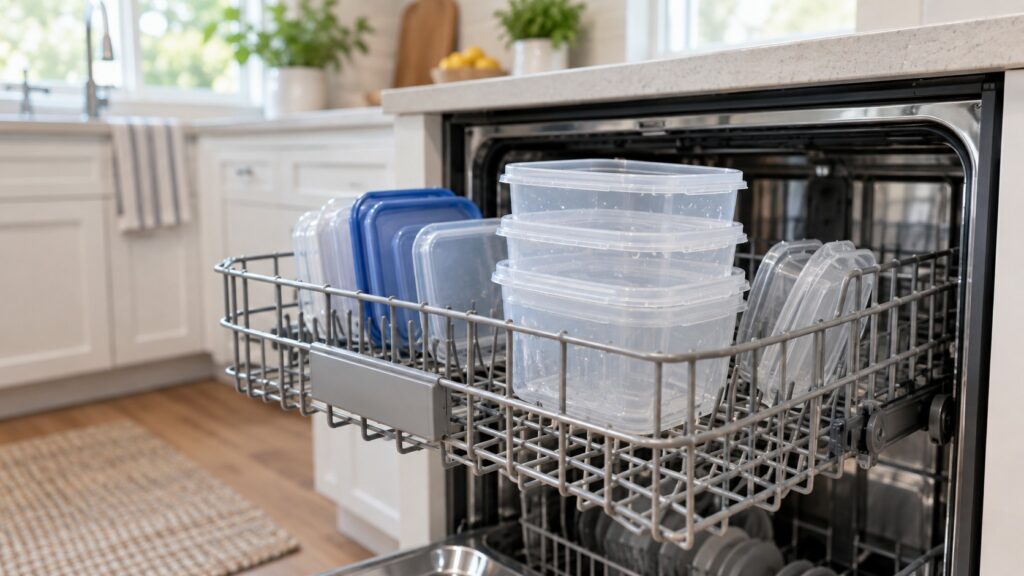
Ask anyone what annoys them about their dishwasher and the answer is wet plastic containers. How the machine dries decides that. A heated element is the most effective and uses the most energy. Condensation drying relies on a stainless tub staying cool so moisture condenses on the walls rather than on the dishes — efficient, quiet, slower, and weak on plastics.
Neither is wrong. If you wash mostly ceramics and glass, condensation drying is entirely adequate and pleasantly quiet. If half your loads are plastic storage containers, you will be disappointed by it every time. Decide that before comparing anything else.
Filtration is a trade between noise and a small chore
- Manual filter: a cylinder that lifts out and rinses. Quieter machine, five minutes every few weeks.
- Hard-food disposer: grinds debris away. Nothing to clean, audibly busier.
- Be honest about whether the filter will get cleaned. A neglected one produces exactly the complaints people blame the machine for.
- Our guide on filter cleaning covers the routine either way.
Racks decide whether it fits your kitchen
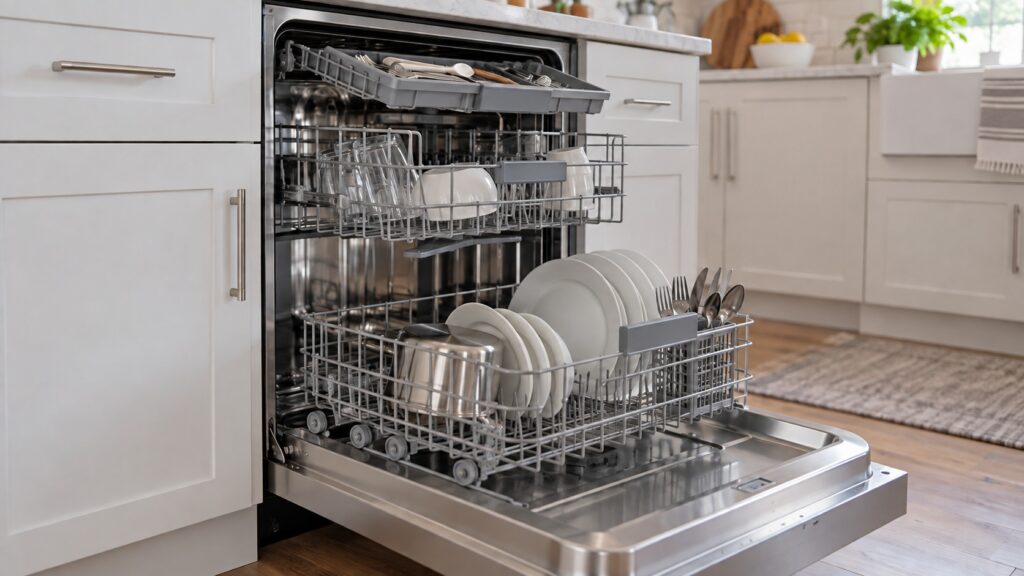
Look at racking with your own awkward items in mind rather than at the rack count. A third rack holds utensils and lids flat and takes height from the upper basket, so tall glasses get tighter. Adjustable upper racks matter more for most households, because they let one load take a stock pot and the next take stemware. Fold-down tines are the difference between fitting a roasting pan and not.
Take a favorite pot and a set of glasses to the showroom if you can. It sounds excessive and it prevents the most common regret in this category.
Noise, and where the number comes from
Decibel ratings are measured under standard conditions and are comparable between machines. In an open-plan kitchen a few decibels is noticeable; in a closed one it is not. Below the mid-40s a dishwasher running in the evening is genuinely unobtrusive; in the low 50s it is present in the room.
What the rating does not capture is character. A disposer cycling on and off is more intrusive at the same volume than a steady hum, which is part of why manual-filter machines feel quieter than their number suggests.
Cycle length, and why the new machine seems slower
Nearly everyone replacing an older dishwasher reports that the new one takes far longer, and it does. A two-hour normal cycle is how low water and energy use are reconciled with good cleaning: less water means the machine has to work longer with what it has. This is not a fault and it is not particular to GE.
Practically, it means the quick program becomes your weeknight cycle and the normal program runs overnight. If that does not suit the household, compare machines on how capable their short cycles are rather than on the headline time — a good one-hour program is worth more than a shorter stated normal cycle.
Features that earn their place, and features that do not
Three are worth paying for when they suit you. A bottle-wash jet genuinely cleans narrow vessels that otherwise come out wet inside. A sanitize cycle matters if there is a baby in the house or someone immunocompromised. And a leak-detection system that shuts the water off is cheap insurance in a kitchen above a finished floor.
Two are usually oversold. A large program count is decoration — households use three cycles. And a wifi connection on a dishwasher rarely changes behavior, because unlike a dryer there is nothing useful to do remotely; the machine is either running or it is not.
Installation constrains the shortlist
A dishwasher goes into a standard opening, but the details vary — height available under the counter, whether the drain connects to a disposer or an air gap, and whether the connection is hard-wired or a cord. A machine needing more height than the opening offers turns an appliance swap into a cabinetry job.
Check the opening before shortlisting. Our installation guide covers the connections, and getting this wrong is the commonest reason a delivery becomes a return.
Before replacing the one you have
A dishwasher that will not drain, leaks, or has stopped cleaning is very often a filter, a hose, a drain pump or a door seal rather than an appliance at the end of its life — all ordinary parts. See our page on a machine that will not drain and the drain pump guide.
We are an independent repair company, not a dealer, so we have nothing to sell you on the buying side. GE dishwasher repair starts with a diagnostic visit, we confirm the estimate before any work begins, and you can schedule a visit online.