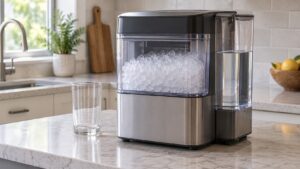
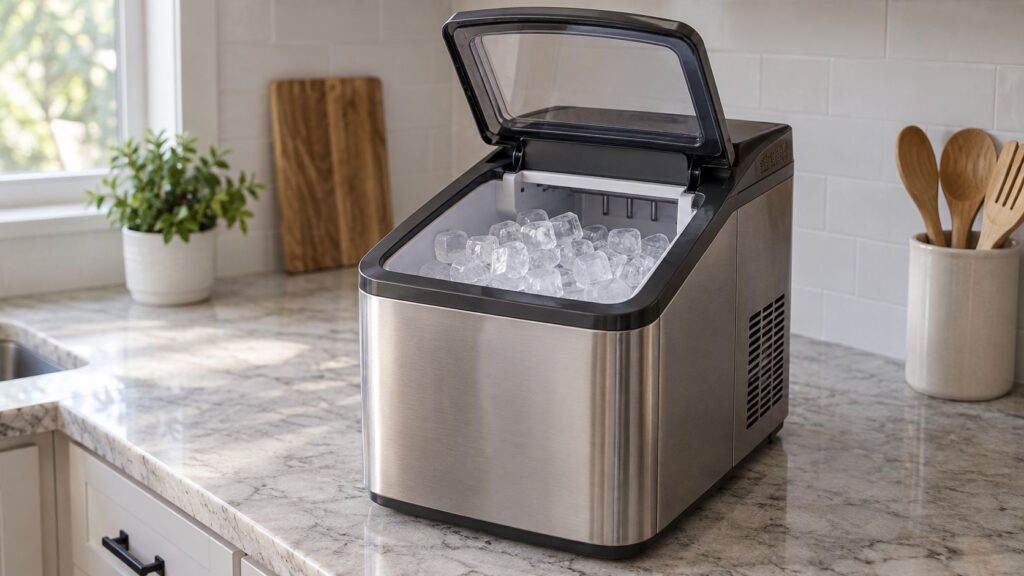
A GE ice maker needs three recurring jobs, none of them optional if you want clean-tasting ice: sanitizing the bin every few months, replacing the water filter on the schedule the model calls for, and emptying and cleaning the bin fully at least twice a year. Skip all three long enough and the symptom is not “no ice” — it is ice that tastes or smells off long before the machine actually fails.
How often should you clean a GE ice maker?
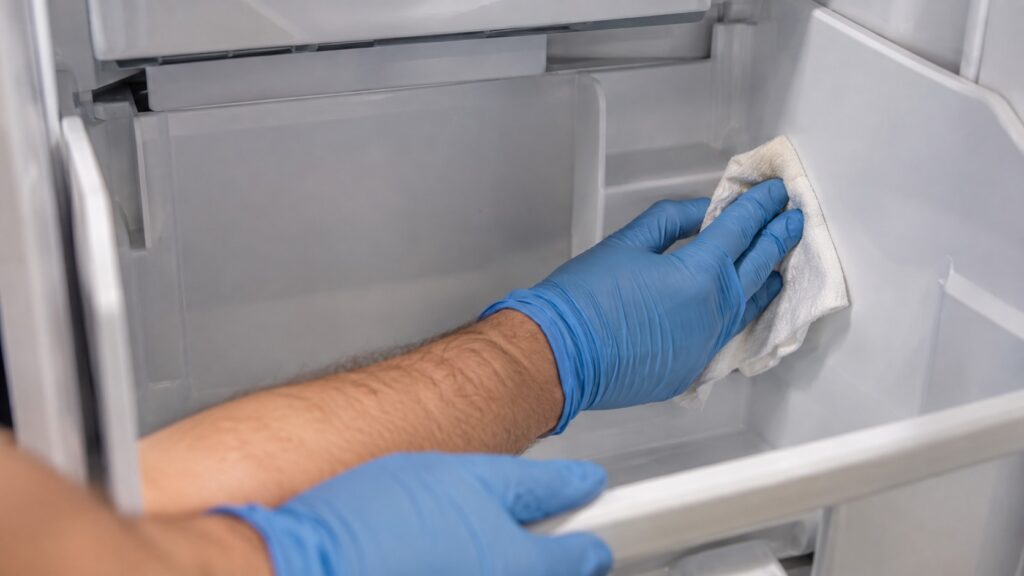
Sanitize the bin every three to six months under normal use, and lean toward the shorter end of that range in a humid kitchen or if the ice maker sits behind a door that stays closed most of the day, since both conditions encourage moisture to linger in the bin. A full clean means emptying every cube, washing the bin and the removable parts with warm water and a food-safe sanitizer made for ice-contact surfaces, and letting everything air dry completely before it goes back in — ice made in a bin that is still damp from washing will pick up a plastic smell from trapped moisture.
Why does GE ice maker maintenance include a water filter, not just the bin?
Everything upstream of the bin affects what ends up in it. A water filter that has gone past its interval does not usually stop water flow outright — it lets more sediment and chlorine taste through gradually, which shows up as cloudy cubes or an off taste long before the ice maker itself shows any fault. Most GE refrigerator ice makers call for a filter change around every six months, though the interval varies by model and by how hard the water is; a status light on the dispenser panel is the most reliable reminder if your model has one.
What does mold or mildew look like in an ice bin, and what should you do about it?
A musty smell from the bin, a slightly slimy feel on the walls, or cubes that come out gray rather than clear are all signs biofilm has built up faster than normal use cleared it out. That calls for a full empty-and-sanitize cycle rather than just running a batch of ice through and discarding it — biofilm on the bin walls keeps contaminating new ice until the surface itself is cleaned. If the smell returns quickly after a proper cleaning, check whether the door seal near the ice maker is letting in warm, humid kitchen air, since that moisture is what feeds the growth in the first place.
How is a maintenance clean different from an ice maker reset?
Cleaning is preventive upkeep on a machine that is otherwise working; a reset is a recovery step for one that has stopped. Our GE ice maker reset guide covers restarting production after a fault, and it is not a substitute for the cleaning schedule here — a reset clears an error, it does not remove biofilm or change a filter. If the ice maker has stopped producing ice altogether rather than just tasting off, GE ice maker not making ice covers that failure directly.
Does the type of ice maker change the maintenance schedule?
A built-in refrigerator ice maker, a standalone bin-style unit, and a countertop nugget-style machine all collect the same kind of biofilm, but not at the same rate. A standalone unit that sits at room temperature in a garage or bar area typically needs bin sanitizing on the shorter end of the three-to-six-month range, since warmer ambient air speeds up growth compared with an ice maker inside a refrigerated cavity. A countertop unit with a smaller reservoir and more frequent water changes tends to need less deep cleaning between uses, but its narrower internal passages clog faster if mineral buildup from hard water is not addressed, which is its own separate maintenance item worth checking alongside the sanitizing schedule.
Does hard water change the maintenance schedule?
Yes, and it is easy to overlook because the symptom shows up as production speed rather than taste. In a hard-water area, mineral scale builds up inside the fill line, the inlet valve screen and the mold tray faster than biofilm ever would, and a narrowing fill line means smaller cubes or a slower cycle long before the water itself tastes or smells different. Descaling once a year with a food-safe appliance descaler, run through the fill line rather than just the bin, keeps that buildup from ever reaching the point where a technician has to replace a valve that scale alone has choked off. If your home already runs a whole-house softener, the ice maker’s own schedule can usually stay on the longer end of the ranges above, since the softened supply is doing part of that job already.
Does the maintenance schedule change for a heavily used household?
Yes. A household running the ice maker constantly — filling a cooler for guests every weekend, or using an icemaker-heavy countertop unit for entertaining — cycles more water through the same lines and bin in a month than a light user does in half a year. That faster turnover means less time for biofilm to build relative to how much fresh ice flushes through, but it also means the filter reaches its rated volume sooner even if the calendar says it still has months left. Judging the filter by usage volume rather than the calendar alone is the more reliable approach for a heavily used ice maker, and checking ice taste periodically is a simpler proxy than tracking gallons.
What should you do before a long trip or a season the ice maker won’t be used?
Empty the bin, run a final sanitizing wipe, and leave the bin dry rather than leaving old ice sitting for weeks — ice left standing slowly absorbs odors from the freezer around it and develops a stale taste even without any bacterial growth involved. If the water supply will be shut off for any reason, disconnect the ice maker’s fill first so it does not try to cycle against a dry line.
When you come back and turn the ice maker on again, discard the first two or three full batches of ice rather than using them. Water that sat in the fill line and the mold tray while the machine was idle picks up a stale, plastic taste that a short flush cycle clears out; those first batches exist to carry that stale water away, not to drink.
A cleaning schedule this consistent takes the guesswork out of whether an ice maker issue is a maintenance gap or an actual part failure. If ice quality or production stays poor after a proper clean, filter change and reset, the module or water valve behind it may be the real cause — our guide to the GE ice maker module and water valve covers that part. A visit starts from a standard diagnostic call with the estimate confirmed before any part is ordered — we are an independent repair company, not a factory service arm. GE ice maker repair covers anything cleaning alone will not fix, and you can schedule a visit or call (844) 524-4561.