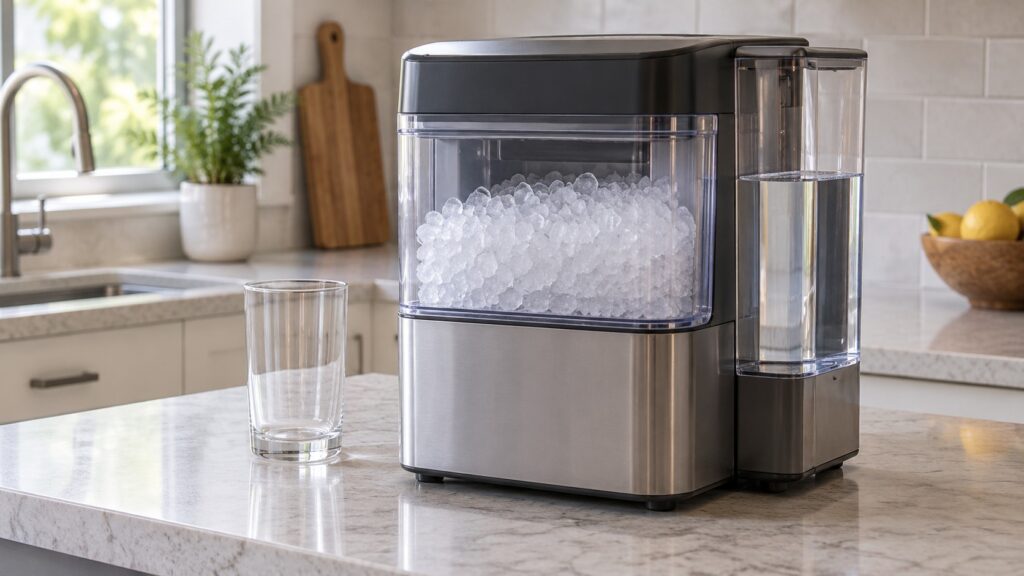
GE Opal ice maker cleaning has two parts: a wash of everything you can remove and reach, and the machine’s own cleaning cycle for the inside you cannot. Empty the ice and the water, wash the ice bin, the side tank and the removable parts with mild soap and water, rinse, dry and then run the cleaning cycle with the solution and steps in your owner’s manual. Hard-water scale is the usual enemy of a nugget ice maker, so clean it before it asks you to.
Why does an Opal ice maker need cleaning?
A nugget ice maker passes water through its freezing mechanism over and over, and the minerals in the water stay behind. Over time scale builds on the parts that touch the water and slows or blocks them. Our Opal error code guide says that mineral buildup from hard water is a common underlying cause of E3, the code for the pump or ice sensor, and that regular descaling reduces how often it appears. The ice bin and the side tank can also grow a slimy film if water sits in them. Cleaning is the simplest way to keep the ice tasting clean and the machine running.
What does the cleaning cycle do?
Our model page for the OPAL01GEPKT lists a self-monitoring cleaning cycle among its features. We do not describe how the cycle starts, how long it runs or which cleaning solution it expects, because that differs between the original Opal and later versions, and the manual for your unit is the only reliable source. Use only the solution the manual names, in the amount it states, and follow the rinse steps. A cleaning solution that the manual does not name could damage the machine or leave a taste in the ice.
How do you wash the parts you can remove?
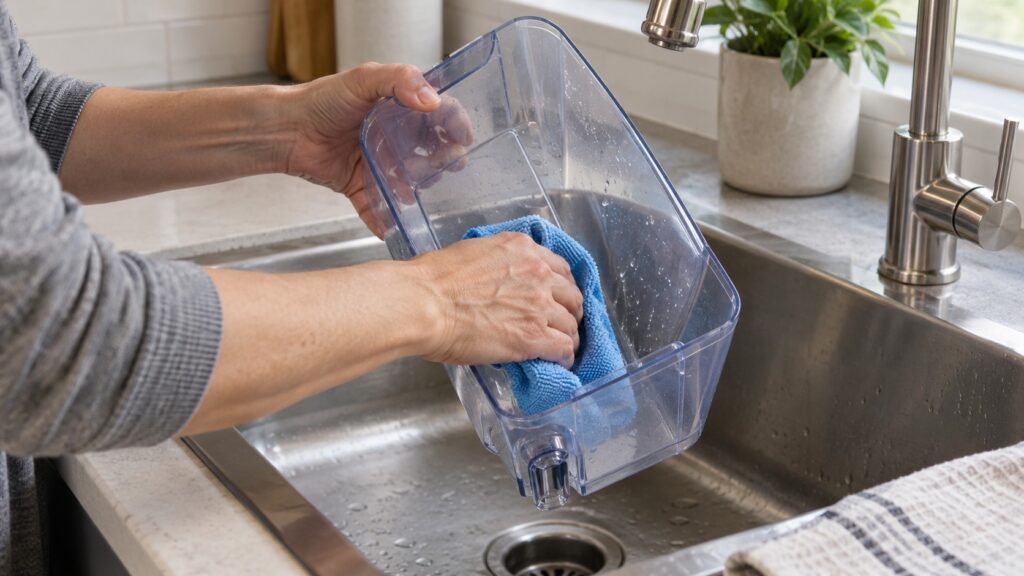
Switch the machine off and let it stop running. Remove and discard the ice, empty the side tank and lift out the bin and any parts the manual says are removable. Wash them with mild dish soap and warm water, use a soft cloth or brush on the corners and rinse well so no soap remains. Do not use abrasive pads or harsh chemicals. Dry the parts before you put them back. Do not put electrical parts in water, and never rinse the base or the cord. If the manual says a part is dishwasher safe, it will say which.
How do you wipe the machine and the tank?
Wipe the outside with a soft damp cloth, taking care near the display and the connections. Wipe the inside of the side tank thoroughly, including the corners and the area where the water leaves the tank. Leaving the lid open for a while lets the tank air out. Keep the plug and the outlet dry. If you notice a slimy film in the tank, wash it more often, and do not leave water standing in the tank for days when you are not using the machine.
What if there is scale or a code?
Scale is white or chalky and builds up at the water line and on the parts that touch water. A thorough clean with the solution the manual names is how to remove it. Our Opal ice maker error codes guide lists E1 for low water, E2 for the temperature sensor, E3 for the pump or ice sensor and T3 for a thermal sensor failure, and cautions that the meaning can vary between model revisions. Check the manual for your unit. If a code returns right after a clean and a fresh start, a part has probably failed and needs a technician.
How often should you clean it, and how do you store it?
We do not give a fixed interval, because it depends on how often you make ice and how hard your water is. A sensible habit is to wash the bin and the side tank every time you notice film or a stale taste, and to run the cleaning cycle when the manual or the machine calls for it. Hard water shortens the interval. If you will not use the machine for a while, empty the tank and the bin, dry them and leave the lid open so no stale water or damp stays inside. Using fresh water each time you refill the tank keeps the ice tasting clean and slows the build-up of scale.
What other Opal problems are cleaning-related?
Ice that comes out slowly or not at all can be a dirty or scaled machine, and our pages cover it. Our Opal not making nugget ice page and side tank empty page describe two common symptoms, and our ice maker maintenance schedule explains the habits that keep any ice maker healthy. If water leaks onto the counter, stop and dry the area. If it reaches the plug or an outlet, switch off the breaker at the panel while standing on a dry floor, and never pull a plug from a wet outlet.