
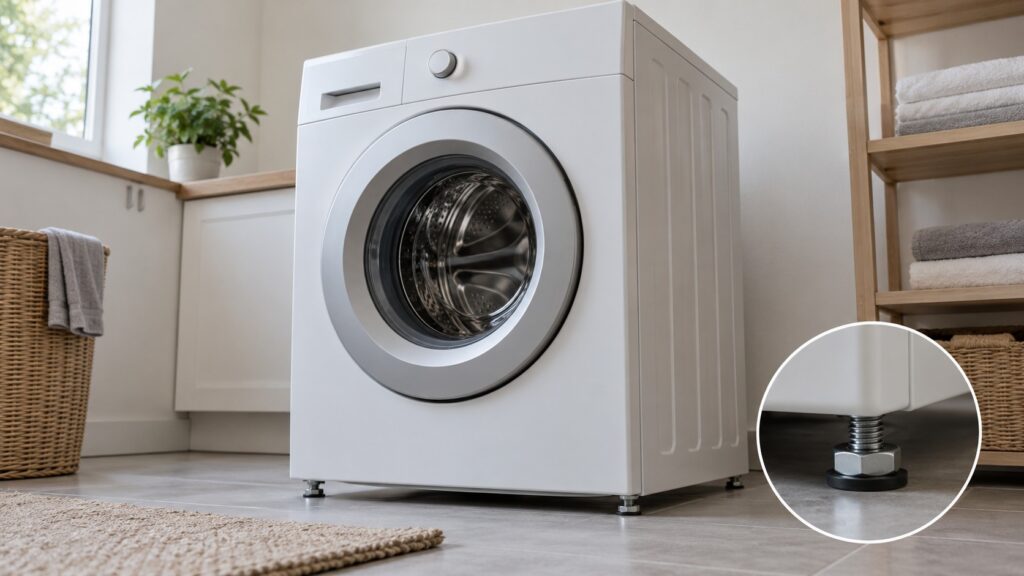
GE washer leveling vibration setup starts with three things: remove the shipping bolts on a front-load washer, adjust the feet until the machine does not rock and then tighten the locknuts so the feet cannot drift. After that, spread the load evenly and check the hoses and the drain. Our washer pages say an unlevel machine and an unbalanced load are the most common everyday causes of shaking, and leftover shipping bolts are the most missed installation step.
Why does a GE washer shake during spin?
Our excessive vibration page describes a washer that shakes, rattles or walks across the floor during spin, and says an unlevel machine or an unbalanced load are the most common everyday causes. Worn suspension on a front-load model or worn tub bearings on a top-load model are the deeper causes. The page lists the leveling legs, the shipping bolts and suspension, the load balance and the tub bearings, rates the severity medium and the first checks as DIY-friendly. That is the order to work in: the simple things first.
Have the shipping bolts been removed?
This is the first thing to check on a new or newly moved front-load washer. Our washer installation guide says front-load GE washers ship with bolts or rods that lock the drum suspension during transport, that missing them is the single most common installation mistake and that, if they are not removed, the washer will vibrate violently and can damage itself on the first spin. The installation instructions show where the bolts are on the back panel. Remove all of them, keep them in case you move the washer later and do not run the washer with any bolt left in.
How do you level the washer?
Place a bubble level on top of the washer and check it front to back and side to side. Turn the adjustable feet at the bottom corners, a little at a time, until the washer sits flat and does not rock when you push on the corners. Make sure all four feet are firmly on the floor. Then tighten the locknut on each foot against the cabinet so that the feet stay put. The washer should have room around it so that it cannot knock a wall or cabinet. Move it only with help, and do not tilt a front-load washer far, because the drum is heavy.
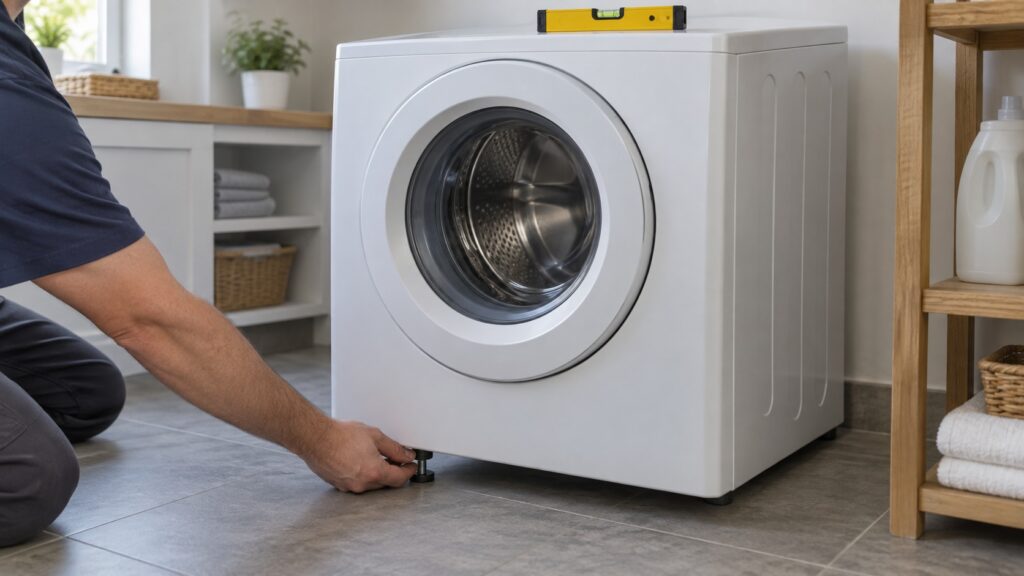
Is the floor part of the problem?
A washer on a floor that flexes will shake even when it is level, because the floor moves with the drum. A weak or bouncy floor, particularly on an upper story, can make any washer vibrate. If your washer is level, the load is balanced and it still shakes, press on the floor beside it and watch for movement. Reinforcing a floor is a structural question for a contractor, not something the washer’s feet can fix. If you use a stacking kit or a pedestal, our installation guide says to confirm the unit is securely anchored before you connect hoses, since a loose stack adds vibration.
What should you watch on the first cycles?
Run the first load with a modest, mixed load and stand by the washer during the first spin. Watch for rocking, for a knocking sound and for the washer moving across the floor. If it moves, stop the cycle once it is safe, check the level again and rebalance the load. Check the hoses and the floor for drips after the first fill. Note whether the washer shakes only with heavy loads or with every load, because that tells a technician whether the cause is balance or a part. Keep a small level handy, since a washer can drift out of level over the first several loads, and recheck the feet and locknuts after the first several loads.
What about hoses and the drain?
Our installation guide says to use new hoses rather than old ones, connect hot to hot and cold to cold, hand-tighten and add a quarter turn with pliers, and turn the water on to check both connections for drips before the first cycle. It also says to confirm the drain standpipe height and to secure the drain hose at the standpipe. The exact height and fitting rules are in your owner’s manual. After you push the washer back, check that the taps are still reachable and that neither hose is kinked behind it. If you need to move water lines or add a standpipe, that is plumbing work for a professional.
How does load balance affect vibration?
The spin is when an unbalanced load shows itself. A comforter or a single heavy item bunches on one side of the drum and throws it off balance. Mix bulky items with smaller ones, and shake out wet items as you load them so they do not form a lump. If vibration is worse with big or one-sided loads, the problem is the load and not a part. Our washer not spinning guide covers a washer that gives up on the spin. If shaking continues after leveling and balancing, a technician should look at the suspension or the bearings. Do not open the cabinet yourself. Our GE washer repair page explains how a visit works.