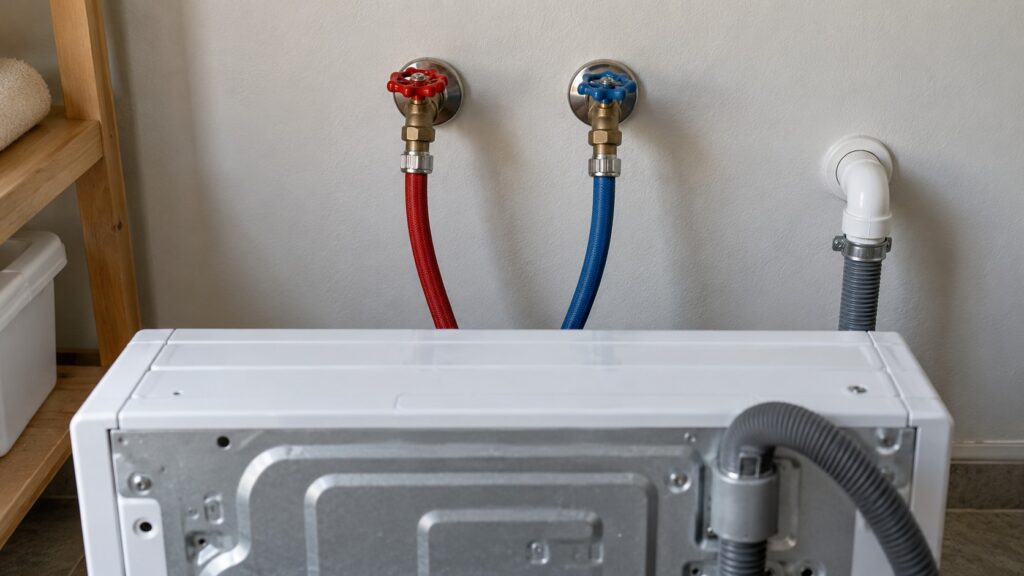
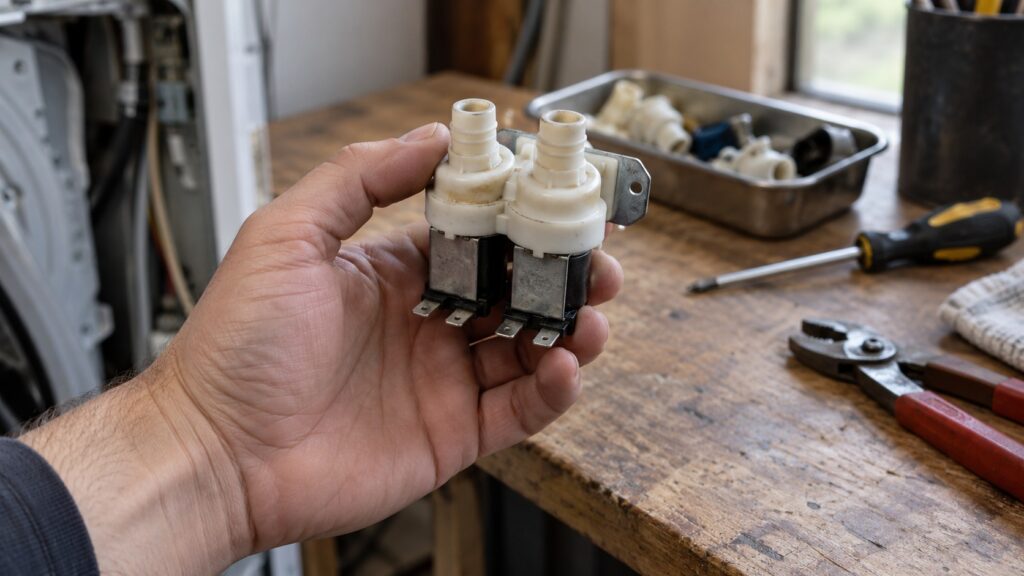
The GE washer water inlet valve is the part that lets water into the machine. It is an electrically operated valve with a connection for the hot hose and one for the cold, and the control opens it to fill the tub and closes it when the water reaches the right level. If it does not open fully the washer fills slowly or not at all, and if it does not close fully the washer can fill too far. Owners can check the taps, hoses and screens, but replacing the valve itself is a technician’s job.
What does the water inlet valve do on a GE washer?
The washer is not connected to the house supply the way a faucet is. Between the hoses and the tub sits the inlet valve, which is the gate. When a cycle needs water the control energizes the valve, which opens and lets water flow through to the detergent dispenser and the tub. When the sensor says the level is right, the control removes the signal and the valve closes. Many valves have two inlets, one for hot and one for cold, so the washer can mix them for a warm wash. The valve is the reason a washer can fill with no one at the tap.
What are the signs of a failing valve?
Our washer not filling page lists the water inlet valve, the inlet screens, the supply hoses and the water pressure switch among the affected parts, and describes a cycle that starts but fills very slowly or not at all. It also notes that a fill that is worse on hot than on cold, or the other way round, can be a clue. A valve that sticks open does the opposite: our overfilling page says a valve that will not shut off fully lets a small continuous trickle add up over the cycle, and that a faulty level sensor can produce the same result. Note when the problem happens: at the start of the fill, part way through, or after the cycle has ended with water still arriving. A fill that continues when the washer is switched off is a reason to close the taps at once and call, because water can keep entering the tub and overflow. Tell the technician which of these you saw, along with the hot or cold pattern, since it narrows the search quickly.
What should you check before blaming the valve?
Our not filling page lists the causes in order of likelihood: supply valves not fully open, clogged inlet screens, kinked or damaged hoses and only then the inlet valve itself. Open both taps fully. Look behind the washer for a kink in either hose. If your taps are old, it is possible that one does not open as much as it seems to. Screens are small mesh filters where the hoses connect, and sediment collects in them. The E22 page lists the same items and rates the first checks as DIY-friendly. Our E22 guide goes through them.
How do you clean the inlet screens safely?
Close both taps first. Pull the washer out only as far as you can reach the hoses without strain, and place a towel and a shallow pan under the connections, because some water will come out. Unscrew a hose by hand, look at the small mesh screen in the washer’s inlet, and clear sediment with a soft brush. Do not use a sharp tool that could tear the screen. Reconnect the hose by hand, then add a quarter turn as our installation guide describes, open the tap slowly and look for drips. If a screen is damaged or the hose is cracked, replace the hose, and let a technician deal with the screen. If you are unsure, stop.
Why should a technician replace the valve?
The valve is an electrical part that sits inside the cabinet, wired to the control, and it is attached to the water supply. Replacing it means working on a live appliance with water inside, and a mistake can cause a leak or an electrical fault. The correct part is matched from the model and serial number, as our pages say for GE washers. A technician can test whether the valve opens and shuts as it should, and can rule out a level-sensor or control problem before replacing anything. Do not open the cabinet to look for the valve yourself.
How can you prolong the life of the valve?
Sediment and hard water are the valve’s enemies. Check the hoses and screens from time to time and replace old rubber hoses, which our installation guide notes degrade. Turn the taps off if you will be away for a long time, which also reduces the risk of a burst hose. Our washer maintenance guide and installation guide cover the wider habits. If water ever reaches an outlet, switch off the breaker at the panel while standing on a dry floor. Our GE washer repair page explains how a visit works.