
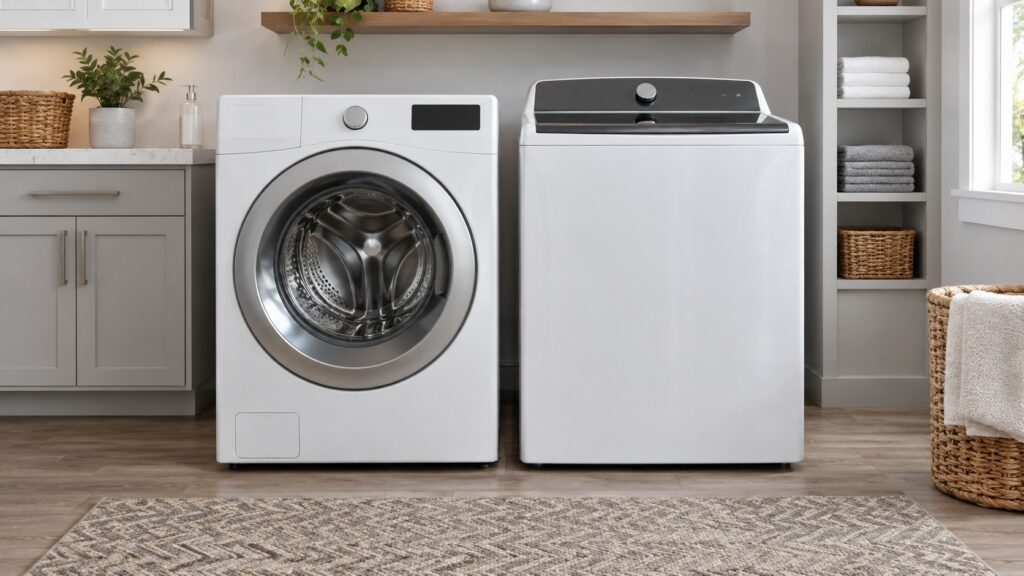
A GE top load vs front load washer decision comes down to four practical differences: how much water and energy each uses per load, how tall you have to bend to load and unload it, how loud it runs on spin, and what it costs to buy versus what it costs to fix later. Front-load models generally use less water and spin faster, which gets clothes drier before the dryer even starts; top-load models are easier on the back and, on most GE lineups, cost less up front.
Does a GE front-load washer really use less water than a top-load?
Yes, and the difference is mechanical rather than a setting you can dial in on a top-load machine. A front-load drum tumbles clothes through a shallow pool of water at the bottom rather than submerging the whole load, so it needs less water to get the same cleaning action. That lower water volume is also why front-load washers typically show up with better energy-use ratings — most of the energy in a wash cycle goes into heating water, so using less of it lowers both the water bill and the energy used to heat it.
Which type gets clothes drier before they go in the dryer?
Front-load washers, without much argument. Their drum spins around a horizontal axis and can reach much higher spin speeds without the load becoming unbalanced, which pulls significantly more water out of the fabric before the dryer starts. A top-load washer with an agitator or impeller generally tops out at a lower spin speed, which means clothes come out heavier with water and take longer in the dryer afterward — worth factoring in if dryer time or energy use matters as much as wash time.
Is a top-load or front-load GE washer easier to load and unload?
Top-load wins here for most people: there is no bending required, and dropping a load in from above is simpler with heavy items like bedding or towels. Front-load washers sit lower and require bending unless the model is installed on a pedestal, which raises the height but adds to the total cost. If back or knee strain is a real concern, that alone often decides the choice regardless of the water and energy differences.
Which is louder, and does that matter for where it’s installed?
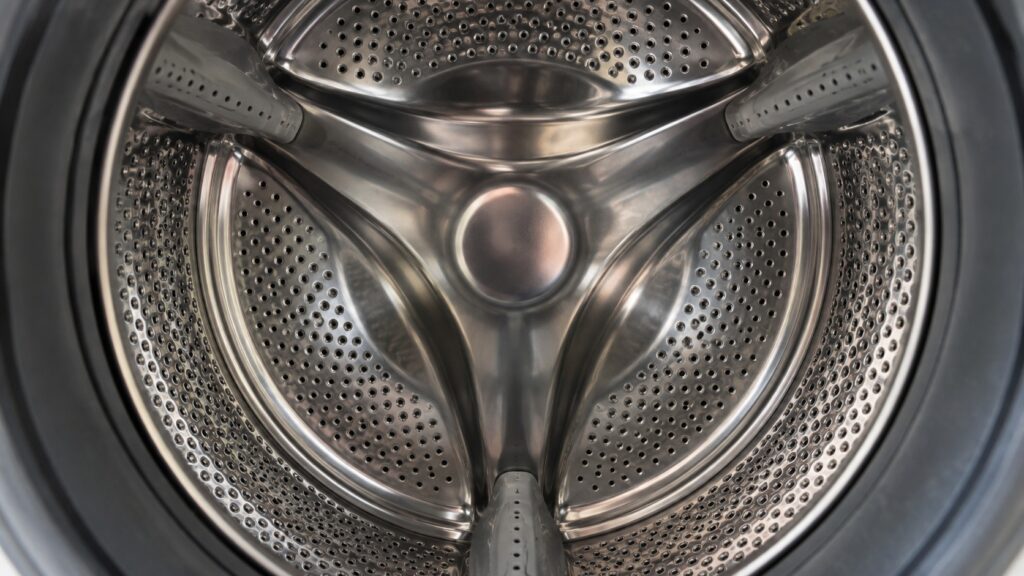
A front-load washer’s high spin speed generates more noise and vibration at that stage of the cycle than a typical top-load machine, which matters if the laundry area sits near a bedroom or a shared wall. Vibration also transmits more if the washer is not installed dead level, which is a bigger issue on a front-load model given how fast the drum spins. A top-load washer’s slower spin keeps both noise and vibration lower, even on an imperfect floor.
Which costs more to buy, and which costs more to repair?
Across most GE lineups, a comparable-capacity top-load model sits at a lower price point than a front-load model with similar features, since front-load mechanisms — the door seal, the higher-speed motor and drum bearing — are more complex to build. On the repair side, a front-load door boot seal and tub bearing are wear points a top-load washer simply does not have, while a top-load agitator or impeller and its drive components are the equivalent wear points on that side. Neither type is categorically cheaper to keep running; the parts that wear are just different.
Detergent and long-term running cost lean slightly toward front-load models too, since high-efficiency detergent formulas are built around the lower water volume a front-load machine uses, and using less water generally means using less energy to heat it over the life of the machine. That gap is small compared with the upfront price difference, so it rarely changes the decision on its own, but it is worth knowing about if a front-load model’s higher purchase price is the main thing holding you back.
Does capacity differ between the two types?
A front-load drum can generally offer a larger usable capacity in a similar-sized cabinet than a top-load drum built around a center agitator, since there is no post taking up space in the middle of the tub. Top-load models built around an impeller instead of an agitator close some of that gap, trading the center post for a low-profile plate at the bottom, but a comparable front-load model still tends to fit a bulkier item like a comforter or a stack of towels with more room to spare. If you regularly wash large or bulky loads, that capacity difference is worth weighing alongside water use and noise.
Stacking is the other space consideration worth a mention: a front-load washer can typically take a matching dryer on top with a stacking kit, which a top-load washer cannot do at all, since its lid needs to open upward. In a small laundry closet, that difference alone sometimes decides the choice before water use or noise even enter the conversation. Total cycle time is the other trade-off worth naming here: a front-load washer’s deep-clean and sanitize settings often run longer overall than a comparable top-load cycle, even though the front-load model’s faster spin cuts down on dryer time afterward, so the time savings show up later in the laundry process rather than on the washer’s own display.
Does either type handle bulky items like comforters or sneakers better?
Front-load washers generally handle large, bulky single items like a comforter or a pillow more gently, since there is no center agitator post for a bulky item to wrap around or get stuck against during the wash. A top-load impeller model closes some of that gap compared with an older agitator design, but a front-load drum’s open interior still tends to distribute an oddly-shaped load more evenly through a full cycle. For a household that regularly washes bedding, rugs or sneakers, that difference is worth weighing alongside the water, noise and cost factors above, since a load that agitates unevenly can also throw the machine off balance and trigger a pause partway through the cycle.
So which one should you buy?
If water and energy use, dry time, or a tight utility closet matter most, a front-load model earns its higher price and its higher spin noise. If ease of loading, a simpler mechanism, and a lower purchase price matter more, a top-load model is the better fit. Either way, once it is installed, our GE washer installation guide covers leveling and hookup for both types, and GE washer maintenance covers the upkeep that keeps whichever one you choose running well past its first repair call.
If a washer you already own is having trouble rather than helping you decide on a new one, GE washer repair covers both types, and you can schedule a visit or call (844) 524-4561 with the model and the symptom.