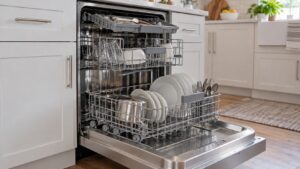
A ge dishwasher not cleaning well is one of the most common complaints we hear, and in the large majority of cases the dishwasher itself is working exactly as designed – something between the water supply and the dish surface is getting in the way. Because GE engineers and builds its dishwashers at Appliance Park rather than licensing someone else’s design, the wash system follows a documented, predictable path: water is pumped through the spray arms, filtered as it recirculates, and heated to a target temperature, and a gap anywhere along that path shows up as dishes coming out spotty, greasy, or still carrying food residue.
Spray arm blockages
The upper and lower spray arms have small jets that direct water onto dishes at pressure. Food particles, labels, and mineral deposits can clog these jets over time, which starves parts of the rack of water pressure.
- Remove each spray arm (most twist or snap off by hand) and hold it under a faucet, checking that every jet sprays freely
- Use a toothpick or thin wire to clear any blocked holes
- Spin each arm by hand once reinstalled to confirm it rotates freely without hitting a tall dish or utensil
Filter and sump buildup
Most GE dishwashers use a removable fine filter at the bottom of the tub that catches food debris before it recirculates. A clogged filter is one of the single biggest reasons a ge dishwasher not cleaning well complaint turns out to have a simple fix.
- Locate and twist out the filter assembly at the bottom of the tub
- Rinse it under running water, using an old toothbrush on stubborn buildup
- Wipe out the sump area underneath before reinstalling
Hard water and mineral film
A cloudy, chalky film on glassware is typically hard-water mineral deposits rather than a cleaning failure. Using a rinse aid and a dishwasher cleaner formulated for mineral buildup on a monthly basis usually resolves this, and it pairs well with the routine covered in our GE dishwasher maintenance guide.
Loading habits that block water
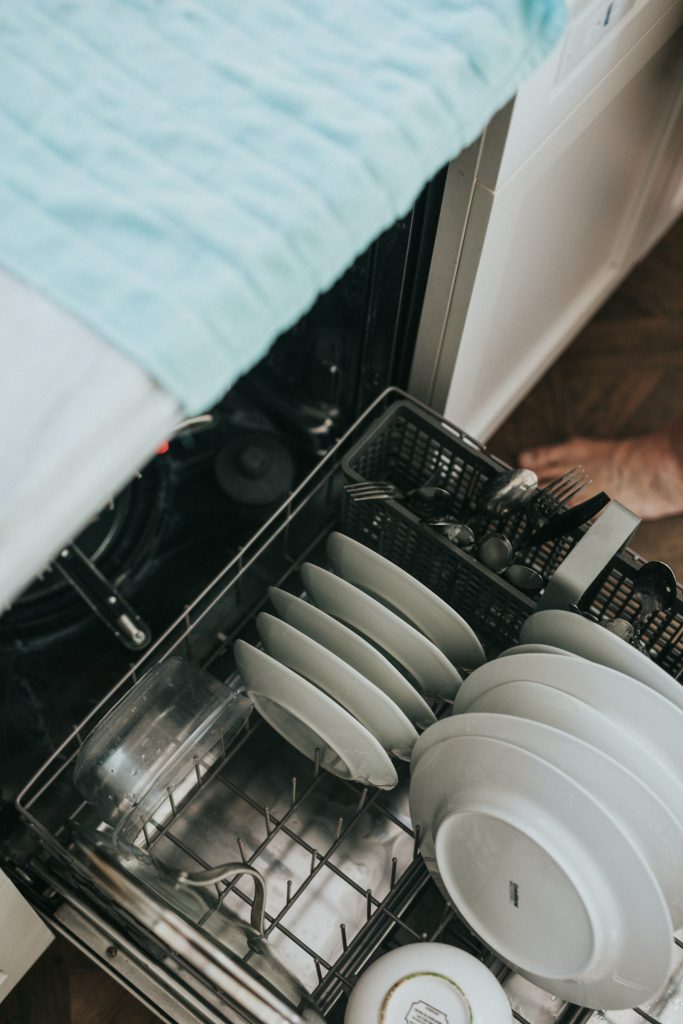
- Nesting bowls or plates too tightly, which blocks spray from reaching interior surfaces
- Overloading the rack so the upper spray arm cannot clear tall items
- Placing large platters or cutting boards where they shield smaller items from spray
Detergent and water temperature
Old, clumped detergent pods lose effectiveness, and using too little detergent for heavily soiled loads produces the same symptom as a mechanical problem. Water that never reaches an adequate temperature also plays a role – see our guide on the GE dishwasher C6 C7 code if you have noticed a temperature-related problem alongside poor cleaning results.
Rack loading and rinse aid
Beyond spray arms and filters, a ge dishwasher not cleaning well complaint that is limited to just a few specific items, rather than the whole load, often traces back to where those items sit in the rack rather than anything mechanical. Tall glasses and narrow-necked bottles need to sit fully over an upper rack jet to get any meaningful water contact inside, and nesting bowls or overlapping plates blocks the same spray that a clean, well-aimed arm is otherwise delivering correctly. Running low on rinse aid produces a similar-looking symptom in a different form – cloudy, spotted glassware even though the dishes themselves came out food-free – so check the rinse aid reservoir near the detergent dispenser before assuming a mechanical cause. Because a ge dishwasher not cleaning well complaint has so many simple, non-mechanical explanations, the wash pump itself should be one of the last things suspected rather than the first.
When to call a technician
If you have cleared the spray arms and filter, run a cleaning cycle for hard water, and adjusted your loading habits, but the dishwasher still leaves food residue or film consistently, the wash pump, a spray arm bearing, or the water inlet valve may need inspection. Our dishwasher repair technicians can test water pressure and pump performance directly rather than having you guess at parts.
Quick summary
A ge dishwasher not cleaning well is rarely a sign the machine has failed outright – working through spray arm jets, the filter, hard-water buildup, loading habits, and detergent freshness in that order resolves the overwhelming majority of cases, and only when all of those check out clean does a pump or valve become the leading suspect.
If basic checks do not restore cleaning performance, our experienced, independent technicians service GE, GE Profile, Café, and Hotpoint dishwashers and can pinpoint the failed component quickly. Schedule service at /schedule/. For general product information, visit geappliances.com.