
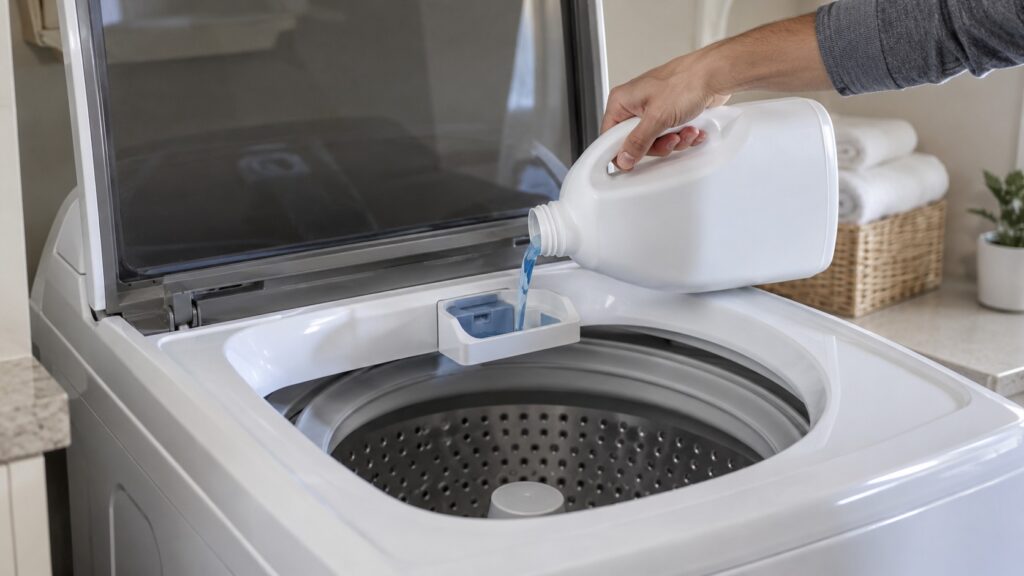
GE FlexDispense is the automatic detergent dosing system on top-load washers such as the GE GTW720BSNWS and the GE Profile PTW600BSRWS. Instead of pouring detergent into a dispenser for every load, you fill a reservoir with liquid detergent once, and the washer’s own cartridge and pump measure out a dose for each cycle. Using it well comes down to four things: filling it with the right kind of detergent, filling it to the right level, letting the washer set the dose and keeping the cartridge and the dispensing path clean. This guide shows each step, explains the problems that come from skipping one, and points you to the manual for the details that vary by model.
What is GE FlexDispense, and how does it work?
FlexDispense takes the guesswork out of detergent. The washer carries a cartridge with a pump of its own, separate from the usual dispenser drawer. When you start a cycle, the control decides how much detergent the load needs and the pump delivers that amount at the right moment in the fill. On the Profile PTW600BSRWS the dosing is paired with Smarter Wash Technology, a load-sensing feature that adjusts the wash to the size of the load, so the two systems work together.
The advantage is consistency. Hand-poured detergent is usually too much, which leaves residue and dull colors, or too little, which leaves soil in the clothes. An automatic dose avoids both, provided the cartridge has detergent in it and the pump path is clear. The disadvantage is that the system is another set of parts, and our model page notes that a detergent-related complaint on these washers starts with the cartridge and pump, while fill and drain problems still trace to the inlet valve and the drain pump.
How do you fill the FlexDispense cartridge?
- Find the cartridge. Your owner’s manual shows where the reservoir sits on your model and how to open it. Do not guess; forcing a cover can break a clip.
- Choose the right detergent. Use a liquid detergent of the type the manual lists, which for automatic dosing is generally a high-efficiency liquid. Powders, pods and sheets do not belong in a pumped reservoir.
- Pour slowly to the fill line. Do not overfill; detergent that spills into the surrounding area can run into the cabinet and attract lint.
- Close the cover until it seats. A cover that is not fully closed can stop the system from dosing.
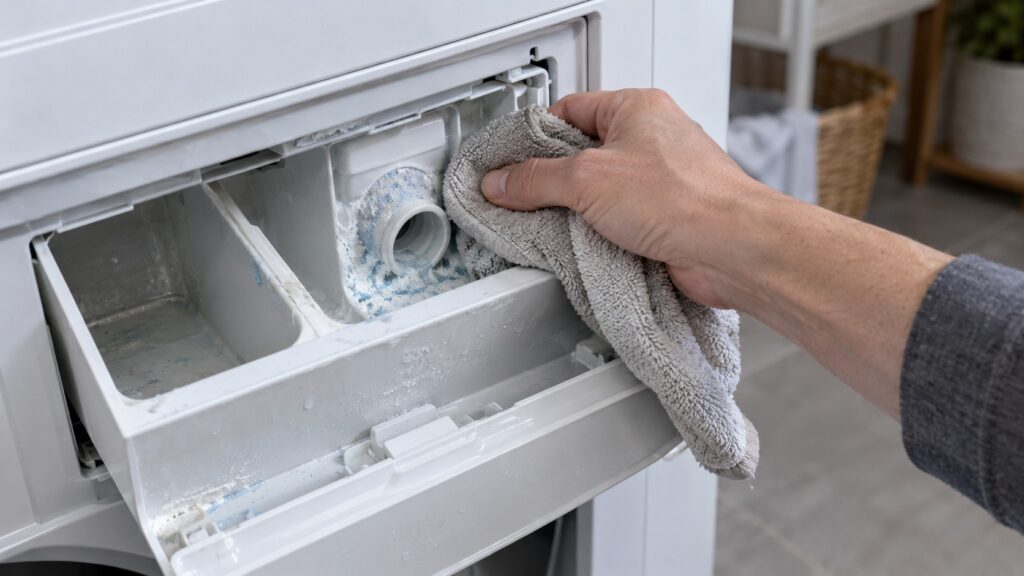
- Wipe up drips. Detergent that dries around the opening turns into a sticky residue.
Bleach and fabric softener still use their own dispensers where the washer provides them, since the detergent cartridge is meant for detergent alone. Check the manual before putting anything else in it.
How do you set the dose and use the washer day to day?
Most of the time you do not set anything. Choose your cycle and options and start the washer, and the control chooses the dose. The Sanitize with Oxi cycle on these models is used for loads that need extra cleaning power, and the Deep Fill option adds water for bulky items. If your washer lets you adjust the dose level or turn the automatic dosing off for a load, the manual describes the control, and it is worth using the off setting when you want to add a special detergent or a stain treatment by hand. If you do add something by hand, use less than usual; the washer cannot count what you poured.
Do not mix detergents without flushing. Switching from one brand or type to another can leave the old product in the pump path, and some combinations thicken. If you change brands, run the cartridge nearly empty first, then refill.
How do you keep the system clean?
- Do not let the cartridge run dry for long. An empty reservoir can leave the pump to run on air, which wears it, and a washer that dosed nothing leaves clothes dirty without warning.
- Wipe the dispensing area monthly. Dried detergent around the outlet narrows it. A damp cloth is enough.
- Mind the temperature. Detergent thickens in a cold garage or porch, and thick liquid pumps slowly or not at all. Keep the washer in a space that stays above freezing.
- Run a tub-clean cycle. Our GE washer maintenance guide sets out the routine, and our drain pump filter cleaning guide covers the filter that keeps drainage healthy.
What goes wrong with FlexDispense, and what does it look like?
Clothes that come out stiff, sudsy or smelling of detergent have received too much, and clothes that stay dirty or smell sour have received too little. Too little is usually an empty cartridge, a thickened product or a blocked outlet. Our washer not dispensing detergent page describes the symptom. A washer that fills slowly or stops filling is a different matter: that is a water-supply or inlet-valve problem, which our GE washer E22 guide covers. Do not assume a dosing complaint is a fill problem, or the other way around.
If you still cannot get the washer to dose after refilling and wiping the outlet, a technician can test the pump and the path. Our GE washer repair service handles it, and we are an independent service, so we will say plainly when the fix is a cleaning. You can book a visit online.
Is FlexDispense worth having?
If you do a lot of laundry and want steady results, yes, since it removes both over-dosing and forgetting. If you like to use powders or specialty detergents, it is less useful, and you may prefer a washer without it. For a comparison with front-load models, see our top-load versus front-load washer guide.