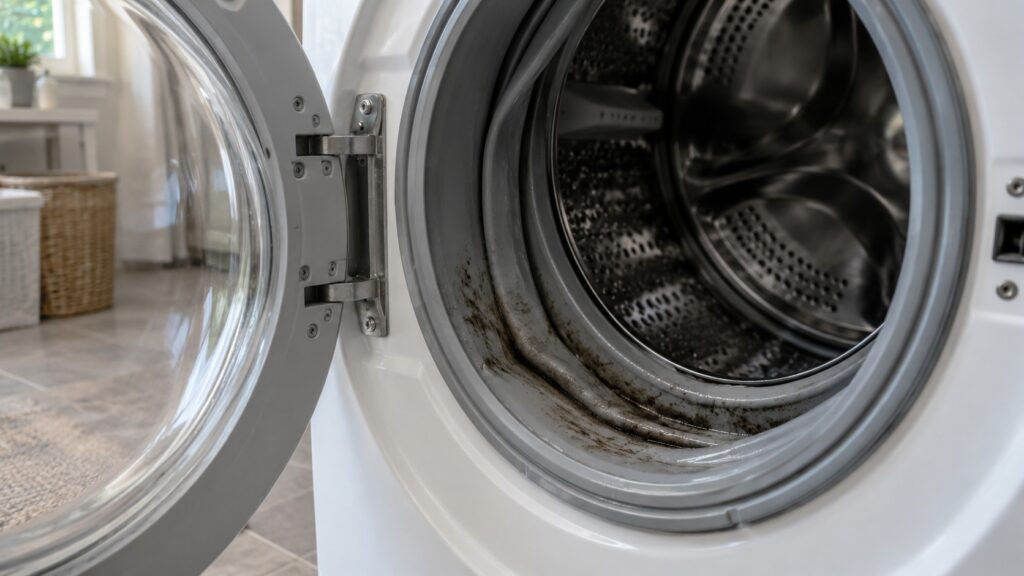
GE washer door seal cleaning takes a few minutes and no tools: fold back the rubber seal around the door opening, wipe out standing water, lint, hair and film with a damp cloth and a little mild soap, dry the folds and leave the door ajar after each load. Our washer pages say that a musty smell is almost always mold or mildew growing where the washer stays damp, and the door seal fold on a front-load washer is the first place to look.
Why does a washer door seal need cleaning?
A front-load washer uses little water and the seal sits at the lowest point of the door opening, so water, detergent residue and lint settle into its folds and stay damp between loads. Our washer foul smell page lists trapped moisture in the door boot fold, detergent or softener residue, debris in the drain filter and leaving the door closed between loads as the common causes, and rates the problem low severity and DIY-friendly. In other words the smell is a maintenance issue, not a mechanical failure.
How do you clean the seal step by step?
Make sure the washer is empty and not running. Open the door fully and pull the rubber seal gently away from the drum to open its fold. Take out anything you find: a sock, a coin, hair, lint. Wipe the fold with a soft cloth dampened with warm water and a little mild dish soap, working all the way around the ring, including the lower part where water sits. Rinse with a clean damp cloth so that no soap film remains, then dry with a dry cloth. Wipe the inside of the glass and the rim of the door as well. Do not scrape with anything sharp, because a nick in the rubber can become a tear.
What if there is black mold or a strong smell?
Visible dark spots mean mildew has taken hold. Repeat the soap-and-water wipe, working the cloth into each fold, and rinse thoroughly. Do not mix cleaning products, because some combinations give off harmful fumes. Do not use a stronger product on the seal unless your owner’s manual names it, since some chemicals damage rubber. After a deep clean, run the washer’s own cleaning option if the manual describes one for your model, and leave the door open to dry. If the smell returns quickly, check the detergent drawer and the drain filter, because our smell page lists both as sources. Our drain pump filter cleaning guide explains the filter.
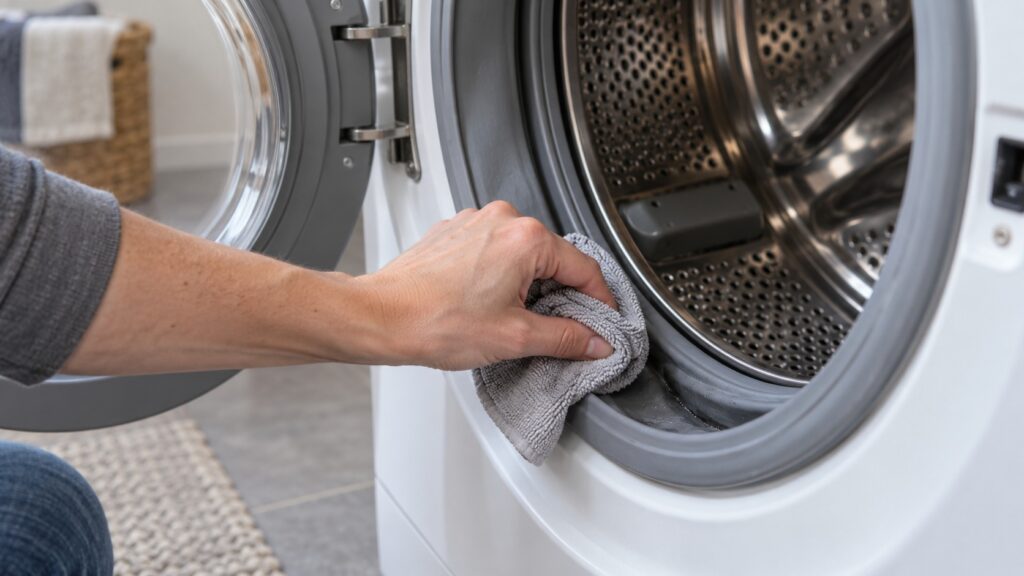
How do you keep the seal clean afterward?
Wipe the lower fold after the last load of the day and leave the door ajar so that the drum and the seal dry out. Our smell page recommends exactly this: wipe the boot fold after each cycle and leave the door cracked open between loads. Use only the detergent type and amount that your owner’s manual calls for, because excess detergent leaves the film that mold feeds on. Rinse the detergent drawer now and then. Our washer maintenance guide lists the other habits that keep a washer fresh.
What about UltraFresh and other vent systems?
Some GE washers are listed on our site with the UltraFresh Vent System and OdorBlock. Our page for the GFW550SSNWW describes it as a smart front-load washer with the UltraFresh Vent System, and notes that persistent odor complaints on that line should check the vent fan and the seal drain path. That is a technician’s check, because the fan sits inside the washer. What the feature does on your exact model is in your owner’s manual, and it does not replace wiping the seal. Whether or not your washer has it, a clean, dry seal is the best way to prevent smell.
Does a top-load washer have a door seal to clean?
Not in the same way. A top-load washer has a lid, not a rubber boot around a door opening, so the damp fold that collects water on a front-load machine does not exist. A top-load washer can still smell, but the sources are the detergent drawer or dispenser, the drain filter where fitted and the rim of the tub under the lid. Wipe the lid rim and the dispenser, leave the lid open between loads and use the right amount of detergent. If you are choosing between the two types, our top load versus front load washer guide explains the differences, including which needs more upkeep.
When is the seal itself the problem?
A seal that is torn, split or permanently deformed can leak and harbor mold that no cleaning removes. Check the whole ring for cracks, holes and areas where the rubber has separated from the frame. A leak at the door, or water on the floor after a cycle, is a reason to stop using the washer and call. If water reaches an outlet or you see sparks, switch off the breaker at the panel while standing on a dry floor. Do not remove the seal or any panel yourself. Our GE washer repair page explains how a visit works.