What means on your GE washer (ge washer leaking water)
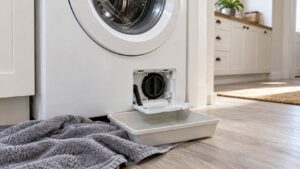
A ge washer leaking water problem shows up as a puddle or damp spot on the floor near the machine. A worn door boot on front-load models, a loose or cracked drain hose connection, or an overfilled dispenser drawer are common everyday causes before a deeper tub or inlet-valve leak needs to be considered.
Symptoms
The signs below help confirm you are dealing with this condition rather than a different problem on your GE washer. You may notice one of them or several together, and they can appear gradually or suddenly after a power event, a wash or cook cycle, a spill, or recent installation or service.
- A puddle forming under or in front of the washer during the cycle
- Water dripping from the door area on front-load models
- Dampness around the drain hose connection at the wall or standpipe
- Suds or water escaping from the detergent dispenser drawer
Common causes
Several different problems can produce these symptoms. Working through the most likely causes in order separates a quick owner-level check from a problem that needs trained service and the correct GE parts.
- Worn or torn door boot/gasket on front-load models — no longer forms a watertight seal
- Loose or cracked drain hose connection — water escapes before reaching the standpipe
- Overfilled detergent dispenser or too much detergent — excess suds escape from the drawer
- Faulty water inlet valve — leaking during the fill phase specifically
Troubleshooting steps you can try
Work through these checks in order before calling for service. Stop wherever you are unsure, or where mains voltage, gas, a hot oven cavity, water, or a sealed component is involved, and hand the rest to a qualified technician.
- Inspect the door boot or gasket for tears, especially along the bottom fold on front-load models.
- Check the drain hose connection at both the machine and the standpipe or drain.
- Reduce detergent amount and confirm the correct type (low-suds HE detergent) is being used.
- Note whether leaking happens during fill, wash, or drain to help narrow the source.
Parts a technician may replace
Depending on what the diagnosis shows, a technician may inspect, test, or replace the door/lid seal, drain hose, water inlet valve, and tub seal. The correct part for your GE washer is matched from the model and serial number, and genuine OEM components are fitted through trusted parts suppliers rather than generic substitutes so performance, safety, and the appliance long working life are all protected. Confirming the failed part before ordering avoids replacing more than the problem actually requires.
When to call a technician
If leaking continues after checking the seal, hose, and detergent amount, an experienced technician should test the water inlet valve and tub seal. This condition is rated Medium severity, so there is no emergency — but if the same keeps returning after the checks above, a technician should confirm the cause before any part is replaced. As an independent repair service we are not affiliated with the manufacturer, and we work only with experienced, skilled technicians and genuine OEM parts from trusted parts suppliers, with our workmanship backed by a 30-day labor warranty. When you book, have your GE washer model and serial number ready so the right part for your exact build can be matched before the visit and the condition resolved in as few trips as possible.
Related help and GE resources
If the condition keeps returning after these checks, book GE washer repair, browse our washer error-code guides and step-by-step repair guides, or schedule service in your area on our locations page. See also the related not draining symptom. For full manufacturer specifications and model lookup, visit ge.com.