A ge french door side by side decision is one of the most common questions when replacing an aging refrigerator, and the right answer depends heavily on your kitchen layout and how you actually use fresh food versus freezer storage. Both layouts are well represented across the GE and GE Profile lineups, identifiable by prefixes like GNE and GFE for French-door models and GSS or PFS for side-by-side models.
French-door layout
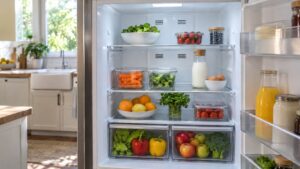
A French-door refrigerator places the fresh food compartment across the full width of the unit behind two narrower doors, with the freezer as a separate drawer below. This layout generally allows for wider shelves, making it easier to store large platters, sheet pans, or wide serving dishes that would not fit on a narrower side-by-side shelf.
Side-by-side layout
A side-by-side refrigerator splits fresh food and freezer vertically, with a narrower door on each side running the full height of the unit. This gives the freezer a taller, more accessible footprint with shelves at eye level, which some households prefer for frequently accessed frozen items, though the narrower width on both sides can make storing wide items more difficult.
Capacity and efficiency considerations
French-door models with a bottom freezer drawer often edge out side-by-side units in usable fresh food capacity for a similar overall footprint, since the taller, full-width fresh food section makes more efficient use of shelf space. Side-by-side units, by comparison, tend to have a narrower fresh food section relative to total width, since both compartments run the full height of the unit.
Access and ergonomics
Bending down to a bottom freezer drawer on a French-door model can be less convenient for households that access frozen items frequently throughout the day, while a side-by-side puts both compartments at a similar reachable height but with narrower access on each side.
Repair and reliability considerations
Both layouts share broadly similar core components – compressor, evaporator, defrost system – but French-door models typically have more doors, hinges, and door seals to maintain given the added drawer, which is worth factoring in over the appliance’s lifespan. See our related guide on the GE refrigerator start relay and compressor for the shared mechanical core behind both layouts.
Which layout fits your household
- Choose French-door if you frequently store wide items and prefer maximizing fresh food shelf width
- Choose side-by-side if frequent, eye-level freezer access matters more than fresh food shelf width
Checking your options
Confirming available model numbers and capacities is the practical last step in any ge french door side by side comparison, ideally done in person, since it is the best way to judge how each layout will actually fit your kitchen space and daily habits before buying.
What the display panel tells you in a ge french door side by side comparison
Once installed, both a French-door and a side-by-side GE refrigerator use the same basic alert codes on the control panel: FF means the freezer is running too warm, CC means the fresh food compartment is running too warm, dE means defrost has not run within the expected window, and PF means the unit lost power and reset. A CI alert relates to the icemaker specifically. None of these differ by layout, since both share the same underlying electronic control platform – the layout choice affects storage and access, not how the unit reports a problem.
Common failure points by layout
Across a ge french door side by side comparison, the core sealed-system components – compressor, start relay, condenser coils, and evaporator fan – fail at similar rates regardless of layout, since both share the same refrigeration platform. Where they diverge is wear items: a French-door model’s extra doors, hinges, and drawer seals give it more gasket surfaces that can eventually need replacing, while a side-by-side’s narrower, taller doors see more repeated open-close cycles per side over time. Neither difference is dramatic, but it is worth knowing before you commit to one layout for the next decade of ownership.
Quick summary
Neither layout is objectively better – French-door favors fresh food shelf width, while side-by-side favors taller, more accessible freezer storage, and the right choice depends on your household’s actual usage patterns.
Whichever layout you choose, our experienced, independent technicians – not affiliated with GE Appliances, a Haier company, or General Electric Company – service both. Schedule service at /schedule/. General GE product information is at geappliances.com.