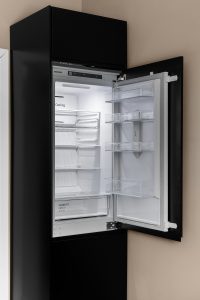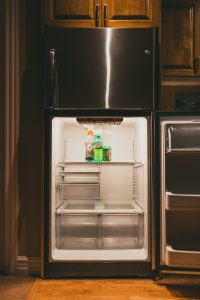
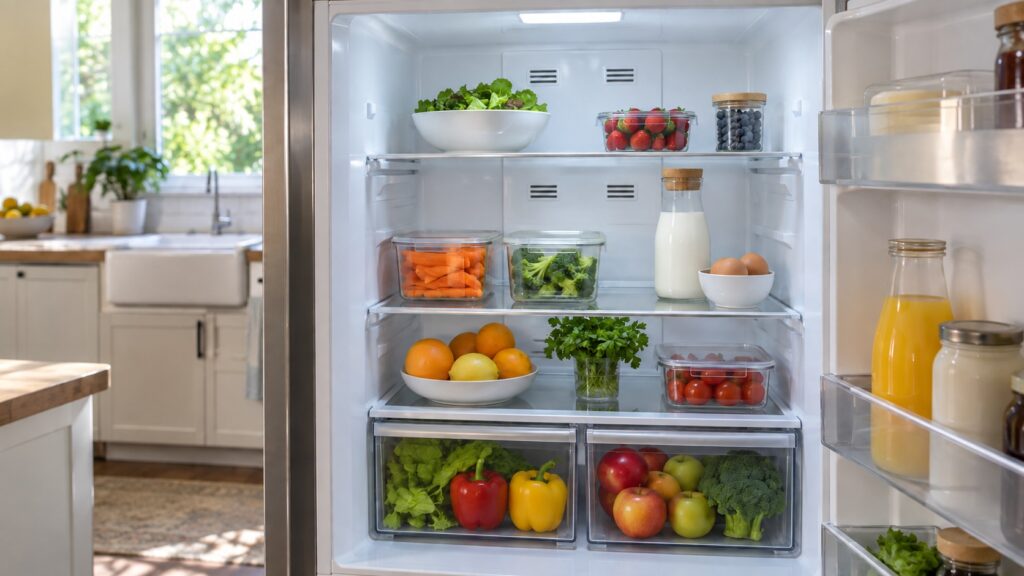
A GE refrigerator warm freezer cold complaint — or its mirror image, a freezer that has warmed while the fresh-food side is fine — is one of the most diagnostic symptoms an appliance can give you. It rules out almost everything at once, because whatever is wrong cannot be the compressor or the refrigerant: those would take both compartments down together.
Why one compartment can fail alone
Most GE refrigerators cool both compartments from a single evaporator in the freezer. A fan blows cold air over it, and a damper decides how much of that air is diverted into the fresh-food side. The fresh-food compartment has no cooling of its own — it is fed air from next door.
That architecture is why a warm fresh-food side with a cold freezer is an airflow problem by definition. The cooling is working; the delivery is not. Our explainer on the refrigerator diagnostic mode covers how to interrogate the appliance directly.
Work through it in this order
- Look at the vents. The openings between the compartments, usually at the back of the fresh-food side. A carton pushed flat against one blocks everything downstream. This is free and it is the answer more often than anything else.
- Listen for the fan. Open the freezer and hold the door switch in. The evaporator fan should run. Silence with a cold freezer points straight at the fan.
- Feel for air at the vent. With the fan running, air should be moving into the fresh-food side. None means the damper is closed or stuck.
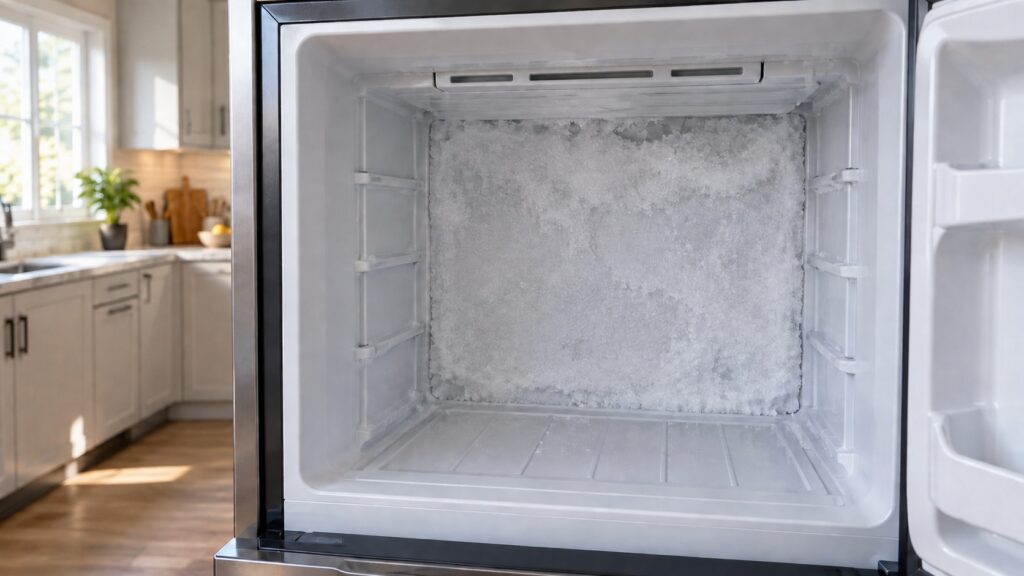
- Look at the back wall of the freezer. Frost building across it means ice has formed over the evaporator and the fan is pushing air against a block.
- Check the door seals on both compartments with a strip of paper. A fresh-food door that seals badly raises that side alone.
The three parts it usually turns out to be
The evaporator fan. It runs constantly, and when it fails the freezer stays cold by proximity to the evaporator while the fresh-food side gets nothing. A fan that has become noisy for weeks before stopping is the classic sequence.
The damper. A flap, manual or motorized, that meters air into the fresh-food compartment. Stuck closed gives a warm fresh-food side; stuck open gives one that freezes the lettuce. On a manual damper the control is inside the compartment and can be knocked.
The defrost system. A heater clears frost from the evaporator on a schedule. When it fails, ice accumulates until it blocks airflow entirely — and the symptom appears gradually over a week or two rather than suddenly. Our page on defrosting covers the manual route, and the defrost heater and thermostat guide covers the parts.
The test that separates defrost from fan
These two produce nearly identical symptoms and have different fixes. Empty the freezer, switch the appliance off at the wall, and leave both doors open for several hours — overnight is better. Then switch it back on.
If the fresh-food side cools normally for a day or two and then warms again, you have a defrost problem: you manually removed the ice the system should have removed, and it has come back. If it does not improve at all, the fan or the damper is the candidate. This costs nothing but time and it is the single most useful test on this page.
How fast it went wrong tells you something
The timeline is diagnostic and people rarely mention it unprompted. A fresh-food side that warmed over a week or two, gradually, points at ice building on the evaporator — the defrost system failed, and the blockage accumulated. A side that was fine yesterday and warm today points at something that stopped: the fan, or a damper that has jammed.
Two more patterns are worth recognizing. Warming that follows a big grocery load and recovers in a day is not a fault at all — the appliance is working through the heat you put in it. And warming that appears only in hot weather points at the condenser and the room rather than at the airflow inside.
What it is not
- Not the thermostat setting. Turning the fresh-food side colder when air is not reaching it changes nothing except the energy bill.
- Not low refrigerant. That takes both compartments, and these systems are sealed — they do not run low without a leak.
- Not the condenser coils, though dirty coils make everything worse and are worth vacuuming twice a year regardless.
- Not a full appliance. A packed fresh-food side does slow circulation, but that is a vent problem in disguise.
What to do with the food while you work through it
A fresh-food compartment sitting above safe temperature is a real problem rather than an inconvenience, and the overnight defrost test makes it worse before it makes it better. Move anything perishable to a cooler with ice, or to the freezer side if there is room — the freezer in this scenario is working perfectly and has capacity to spare.
Judge what to keep by temperature rather than by appearance. Food that has been above 40°F for more than a couple of hours should go, and a thermometer left in the compartment from now on will make that judgment for you next time instead of leaving it to guesswork.
When to call
A silent evaporator fan, a damper that does not respond, frost that returns within days of a manual defrost, or a compartment that will not recover after the overnight test — those are parts. All of them sit behind the rear panel of the freezer, among refrigerant lines, which is why this is the point at which it stops being a five-minute job.
We are an independent repair company, not a factory service arm. Pricing starts from a diagnostic visit and we confirm the estimate before any work begins. GE refrigerator repair covers the airflow, defrost and sealed systems, and you can schedule a visit online. If both compartments are warm, start instead with our page on a refrigerator that is not cooling.