
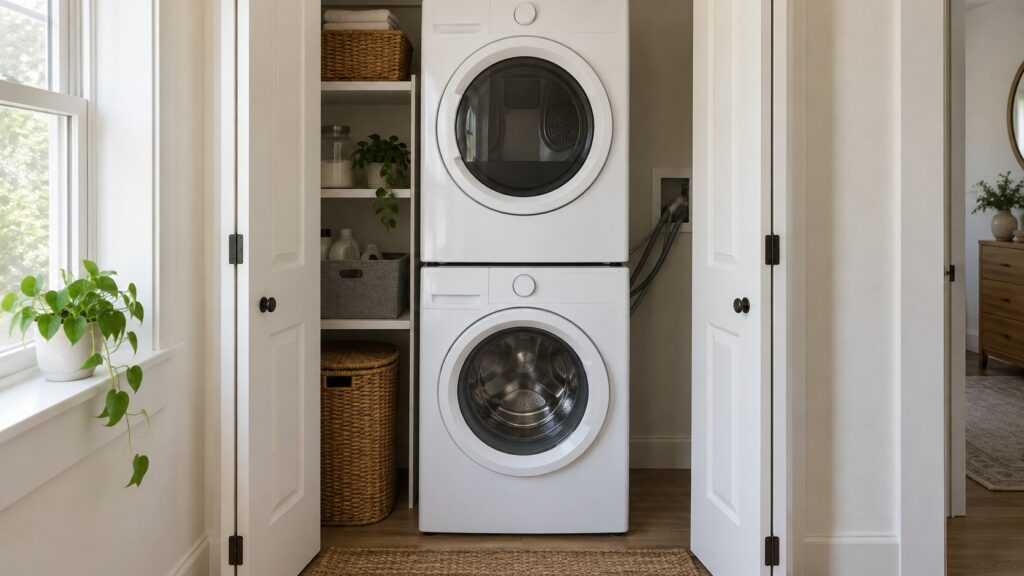
GE stacked washer dryer installation means mounting a front-load dryer on top of a front-load washer with a stacking kit made for that pair, after both are connected and the washer is perfectly level. Only front-load washers can carry a dryer; a top-load washer cannot. On our site, the GE GFW550SSNWW front-load washer (4.8 cubic feet, UltraFresh Vent System) and the GFD55ESSNWW electric dryer (7.8 cubic feet, Sanitize cycle) are the kind of pair that stacks, subject to the kit and the manuals. The order of work matters, because a stacked pair is difficult to adjust once the dryer is up.
Can I stack any GE washer and dryer?
No. Three conditions have to be true. The washer must be a front-load model, because the top-load design cannot support a dryer on top of it. The dryer must be a front-load model that the stacking kit lists as compatible. And the kit itself must be the one made for that washer and dryer family, since the mounting points and frame differ between lines. Start by reading the installation manuals of both machines and the instruction sheet of the kit for the exact model numbers they approve. If you are still choosing between washer styles, our GE top-load vs front-load washer guide explains why only front-loads stack.
What space and connections do I need?
A stacked pair is tall, so measure the ceiling and any overhead cabinets or soffits against the combined height of the washer, kit and dryer, and leave room to lift the dryer into place. The width of the closet or alcove has to take both machines side by side with the door swings in mind, and the floor must be solid and level, since the washer vibrates during the spin. Behind the washer you need hot and cold water valves, a drain standpipe, and a grounded outlet. Behind the dryer, you need a 240-volt outlet for the electric GFD55ESSNWW or a gas line for a gas dryer, plus a vent to the outdoors. Plan all of this before delivery, because moving a stacked pair afterward is a job for four hands and a dolly.
How do I install the washer first?
Install the washer completely before anything goes on top of it. Remove the shipping bolts or restraints on the back of a front-load washer, which hold the drum steady in transit and must come out. Connect the hot and cold hoses to the valves and tighten them, then put the drain hose into the standpipe or the drain connection, with the loop height the manual requires. Position the washer, then level it with the adjustable feet until it does not rock, checking both directions with a level. The washer is the foundation of the stack: a washer that is even slightly out of level will walk when the dryer sits on it. Run a short test cycle with water and check that nothing leaks.
How do I fit the stacking kit and lift the dryer?
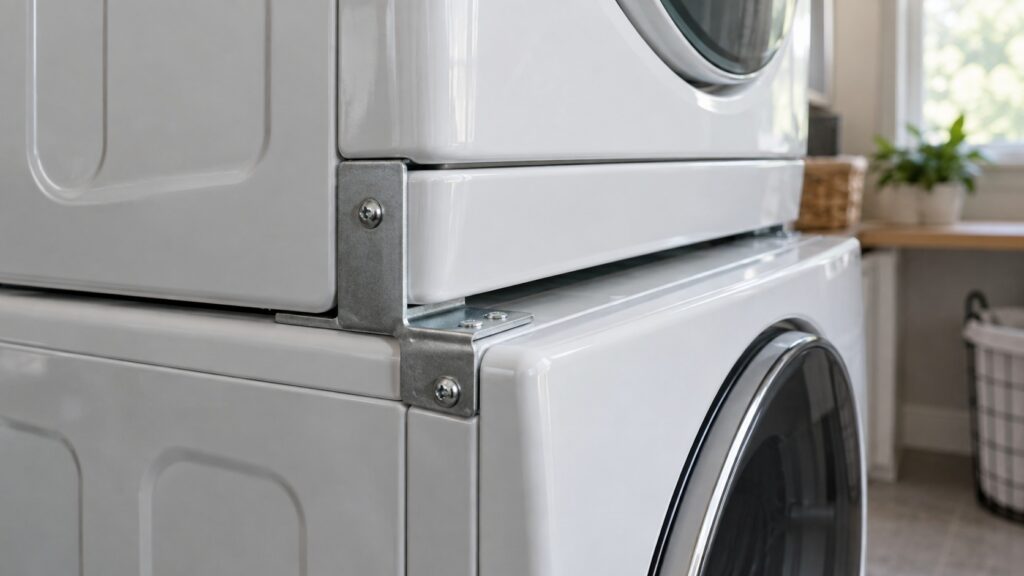
Follow the kit’s instructions in order, since the parts mount to both machines. In general the kit attaches a frame or brackets to the top of the washer and the base of the dryer, and a strap or locking feature holds the dryer to the frame. Attach the washer-side parts first, then get a helper. Lift the dryer from the sides or the base, never by the control panel or the door, and place it onto the kit. Secure the dryer to the kit as directed, check that it sits level and square, and make sure it is properly locked. Do not lift a dryer onto a washer alone: a dropped dryer can injure you and damage both machines.
How do I vent and power the dryer?
With the dryer in place, connect the vent and power. The vent should be short, smooth rigid or semi-rigid metal duct to the outdoors, with a clear hood outside. At a stacked height the duct usually runs up and back, so check the clearance behind the dryer so the duct is not crushed. Plug the dryer into its 240-volt outlet; for a gas dryer, connect the gas line with an approved connector and test the joints. Our GE dryer installation guide covers the dryer connections in detail, and the GE washer installation guide covers the washer side.
What should I check after installation?
Give the stack a full day of ordinary use before you call the job done. Heavy loads such as bedding and towels are the real test of both the leveling and the floor, since an unbalanced spin pushes hardest on the stack. Wipe the washer door seal after each wash and leave the door ajar, which keeps the lower washer fresh, especially on models with a vent system such as the UltraFresh Vent System on the GFW550SSNWW.
Run a heavy spin on the washer and watch the stack. A little motion is normal, but a pair that shakes or walks needs the washer re-leveled. Check that the doors open fully and that you can reach both controls. Run a heated dryer cycle and confirm warm air at the outside hood. Then keep the vent clear: see the GE dryer vent cleaning guide. If the pair vibrates or the washer shows a drain fault, the GE washer drain pump filter guide is a good first stop. If you need help with a stacked pair, GE washer repair covers the washer, and you can schedule a visit.