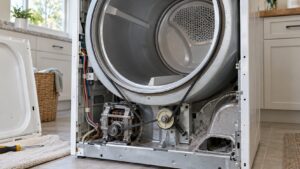
GE dryers: series and lineup
GE dryers are built in both gas and electric versions on a shared GTD-prefix electronic platform, with the trailing letter distinguishing fuel type — the GTD72EBSNWS is an electric model (the “E”) and a matching gas version would carry a “G” in the same position. Electronic GTD-series dryers run a full sensor-monitored control board, while older and simpler timer-dial models use a mechanical timer with no error-code display at all. Confirming the model and serial tag before a service call still matters — GE’s serial date code (first letter month, second letter year) tells us the unit’s real age even when the model plate has worn or the manual is long gone. You can browse the units we service in our model directory.
Technologies and features
Electronic GE dryers monitor drum temperature through a thermistor and use that reading to control the heating element or gas valve cycle, cut off airflow at a set high-limit temperature, and, on many models, sense moisture to end the cycle automatically rather than running a fixed time. Timer-dial models skip the sensor network entirely and simply advance through a mechanical cycle regardless of how dry the load actually is. Across both platforms, the parts that wear are the thermistor and high-limit thermostat, the heating element (electric) or igniter, flame sensor, and gas valve (gas), the drum belt and rollers, the idler pulley and drum support rollers, the door switch, and the exhaust vent path itself — which is the single most common point of failure across every GE dryer, electronic or mechanical. Gas ge dryers add an igniter and flame sensor to that list, while electric models rely on a resistive heating element instead, so confirming fuel type from the model prefix before ordering a part avoids an unnecessary return trip.
Common issues and maintenance
On electronic GE dryers, the confirmed error codes are E1 (the thermistor has failed), E2 (the high-limit thermostat has tripped, or the inlet thermistor has shorted), and E3 (the exhaust or outlet temperature is too high — almost always a blocked or restricted vent, and the dryer should not run again until the vent is cleaned). Timer-dial units show no code, so a dryer that runs but doesn’t dry is diagnosed by symptom: a clogged lint screen or exhaust duct is by far the most common cause, followed by a failed heating element or igniter, a worn drum belt, a worn idler pulley, or a failed thermostat. A dryer that takes noticeably longer than it used to is one of the earliest signs of a restricted vent, well before an E3 code or a burning smell appears, and a burning-smell complaint on any electric or gas unit should always be treated as urgent rather than left for a convenient appointment slot. Cleaning the lint screen after every load, having the full exhaust duct professionally cleaned annually, and not overloading the drum prevent the large majority of service calls. For code meanings, see our GE dryer error codes, and browse repair guides for symptom-based troubleshooting on timer-dial models.
When to call for repair
A failed thermistor or high-limit thermostat, a bad heating element, igniter, or gas valve, a worn drum belt, or a genuinely blocked exhaust vent are best handled by experienced technicians who confirm the code (or symptom) and inspect the full vent run before recommending a part. As an independent, third-party repair service, we are not affiliated with, authorized by, or endorsed by GE Appliances (a Haier company) or General Electric Company, and our technicians back every visit with a 30-day labor warranty on the workmanship. Note the exact code and your full model and serial number when you book. Schedule GE dryer repair or book an appointment online, and you can review current GE listings at geappliances.com.