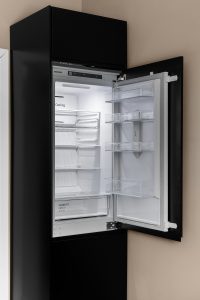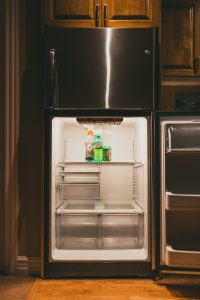

The ge refrigerator start relay is a small electrical component, sometimes built into an overload/relay unit mounted directly on the compressor, that supplies the extra current the compressor motor needs to overcome inertia and begin spinning. Once the motor is up to speed, the relay drops out and lets the compressor run on normal current. It is one of the most common electrical failure points in any refrigerator’s sealed system, GE-built units included.
How the start relay and compressor work together
Every time the compressor cycles on, the start relay briefly closes a circuit that routes extra current to the start winding of the compressor motor. This gives the motor the torque needed to begin turning against the pressure already inside the sealed system. Once the motor reaches running speed, the relay opens that circuit and the compressor continues on its run winding alone. An overload protector in the same housing also trips if the compressor draws too much current or runs too hot, temporarily cutting power to protect the motor.
Symptoms of a failing start relay or compressor
- A clicking sound every few minutes as the relay tries and fails to start the compressor
- The compressor humming but never actually starting to run
- The refrigerator running warm, often triggering a GE refrigerator FF or CC code for a too-warm compartment
- The compressor cycling on and off far more frequently than normal
Testing the ge refrigerator start relay before replacing
A multimeter can confirm whether the ge refrigerator start relay itself has failed versus the compressor windings. Because the compressor is part of a sealed refrigerant system, a failed compressor is a considerably larger repair than a failed relay, and misdiagnosing one for the other means paying for the wrong part. Our refrigerator repair technicians test both components directly rather than assuming which one failed based on symptoms alone.
When it is the relay, not the compressor
A worn start relay is a relatively affordable, straightforward swap – it typically sits in a small housing on the side of the compressor and can be replaced without opening the sealed refrigerant system at all. Many refrigerators that seem to have “died” simply have a failed relay while the compressor itself is completely fine, which is why testing before replacing matters so much here.
When it is genuinely the compressor
If the compressor windings themselves test open or shorted, or the compressor draws excessive current even with a known-good relay, the sealed system needs a full compressor replacement, which involves reclaiming refrigerant, replacing the compressor, and recharging the system – work that requires EPA Section 608 certification. This is one of the more involved refrigerator repairs and is worth discussing honestly against the value of an aging unit before committing.
Preventing early failure
Keeping the condenser coils clean and the area around the compressor ventilated reduces heat buildup that can shorten the lifespan of both the relay and the compressor. Checking your model number helps a technician source the correct ge refrigerator start relay or compressor for your specific unit.
Newer inverter compressors behave differently
Not every GE refrigerator uses the traditional relay-start compressor described above. Many newer French-door models in the GNE and GFE families use a variable-speed inverter or linear compressor driven by an electronic inverter board rather than a simple start relay and overload. On those units, a start failure shows up as the compressor never spinning up combined with a problem on the inverter control, rather than the familiar clicking of a relay trying and failing. The diagnostic approach changes accordingly – instead of testing a small relay, a technician checks the inverter board’s signal to the compressor and the compressor windings themselves. It is worth knowing which type you have, since the parts and the repair path are quite different. A telltale clicking every few minutes points to a conventional ge refrigerator start relay problem, while a silent no-start on a newer premium model more often points to the inverter board. Our refrigerator repair technicians identify which compressor type your model uses before testing anything.
Quick summary
A clicking or humming refrigerator that will not stay running is frequently a failed start relay rather than a failed compressor, and testing both directly before ordering parts is the only reliable way to know which repair you actually need.
Our experienced, independent technicians – not affiliated with GE Appliances, a Haier company, or General Electric Company – test relays and compressors directly before recommending a repair. Schedule a diagnostic visit at /schedule/. General GE product information is at geappliances.com.