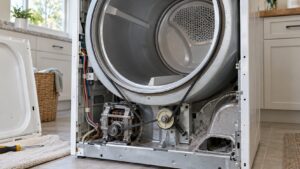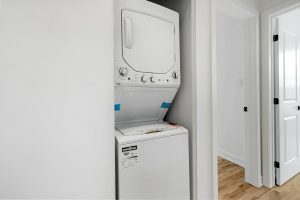

A ge dryer vent cleaning routine has two separate parts that owners often confuse: the small removable lint trap inside the dryer door or drum opening, and the full exhaust duct that carries hot, moist air from the back of the dryer all the way outside. Cleaning only the lint trap while ignoring the duct is one of the most common reasons a dryer eventually overheats and blows its thermal fuse.
Cleaning the lint trap
- Remove the lint trap or lint filter after every load, or at minimum once a day for regular dryer use
- Peel off accumulated lint by hand, then rinse the mesh screen under warm water periodically to clear fabric softener residue, which can coat the mesh and reduce airflow even when it looks visually clean
- Let the trap dry fully before reinserting it
Cleaning the full exhaust duct
- Unplug the dryer (or turn off the gas supply on gas models) and pull it away from the wall enough to access the duct connection
- Disconnect the duct from the back of the dryer
- Use a dryer vent brush kit, which extends through the full length of the duct, to physically dislodge lint buildup along the entire run
- Vacuum out loosened lint from both ends of the duct
- Check the exterior vent cap outside your home for a clear flap and no nesting debris or lint clumping at the exit point
- Reconnect the duct securely and push the dryer back into place, avoiding any new kinks in the process
Why the full duct matters more than most owners realize
A restricted exhaust duct is the leading cause behind a blown thermal fuse and the associated no-heat symptom covered in our related guide on the GE dryer won’t heat diagnostic flow, as well as the unusually long drying times many owners assume is simply a sign the dryer is wearing out.
How often to clean the full duct
Once a year is a reasonable baseline for most households, though longer duct runs, homes with pets that shed heavily, or households doing frequent laundry may need duct cleaning more often. Rigid metal ducting holds up better and clogs less than flexible foil or plastic ducting, which is worth considering if you are replacing an older run.
Warning signs your duct needs cleaning now
- Clothes taking noticeably longer to dry than they used to
- The dryer or the exterior vent cap area feeling unusually hot to the touch
- A burning smell during operation
- Visible lint accumulation at the exterior vent opening
Fire safety – the real reason for a GE Dryer Vent Cleaning
A neglected dryer vent is a genuine, well-documented residential fire risk, not just a performance nuisance, since lint is highly combustible and a blocked duct traps heat directly against it. A thorough ge dryer vent cleaning at least once a year is one of the single most effective home-fire-prevention habits available to any dryer owner, alongside never running the dryer unattended or overnight if the duct has not been checked recently.
How this connects to electronic control codes
On GE dryers with an electronic control panel, a restricted duct is the most common trigger behind an E3 exhaust or outlet over-temperature problem, and a persistent E1 or E2 thermistor-related code can also follow prolonged overheating from a clogged run. Completing a full ge dryer vent cleaning is the first troubleshooting step before assuming any of these codes point to a failed sensor rather than simple airflow restriction.
When to call a technician
Our dryer repair technicians can clear a full duct run and also check whether repeated overheating has already damaged the thermal fuse or thermistor.
Quick summary
Cleaning the lint trap after every load and the full exhaust duct at least once a year together prevent the vast majority of overheating and long-drying-time complaints on any dryer.
Our experienced, independent technicians – not affiliated with GE Appliances, a Haier company, or General Electric Company – can clear ducts and check for existing heat damage. Schedule service at /schedule/. General GE product information is at geappliances.com.