Running a GE oven self-clean cycle takes three to five hours, locks the door for the whole run, and heats the cavity to roughly 900°F to burn off grease and spills into ash. That is the entire mechanism: no chemicals, no scrubbing — just heat well past normal cooking temperature. The steps that matter are what to remove beforehand and what to expect from the smell, the door lock and the smoke detector while it runs.
What actually happens inside a GE oven during self-clean?
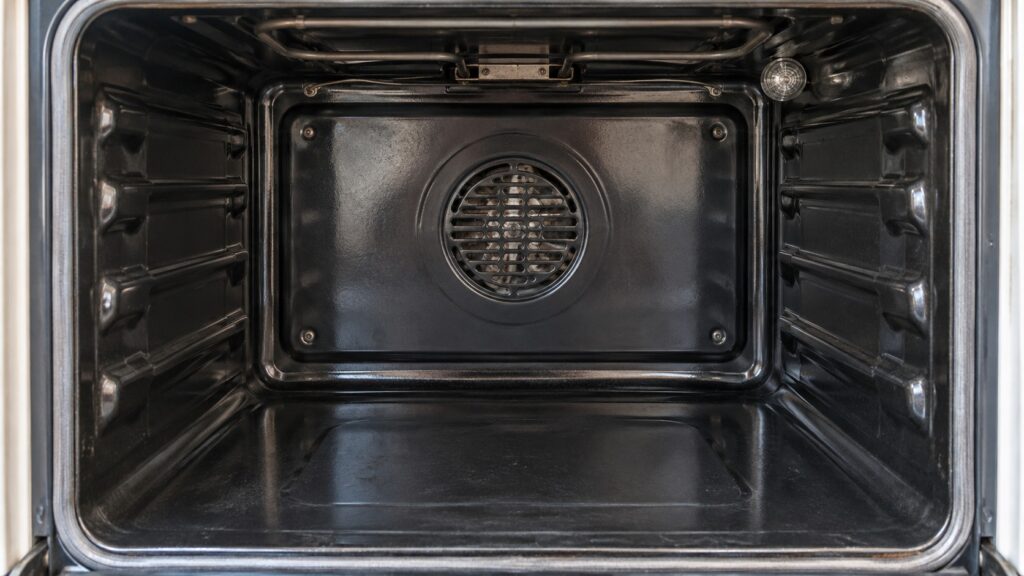
The cavity heats far beyond any bake or roast setting — commonly cited around 900°F — until baked-on grease and food residue turn to ash rather than staying as a stuck coating. There is no cleaning agent involved; the enamel liner is designed to survive that temperature repeatedly, which is also why a self-clean cycle is not optional to “turn down” — running it at a lower temperature does not clean, it just uses power without finishing the job.
What should you remove before starting the cycle?
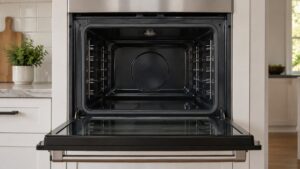
Take out the oven racks unless your specific model’s manual says they are self-clean rated — many GE racks lose their finish or discolor at cleaning temperature even when the oven itself handles it fine. Remove the broiler pan, any pizza stone, and foil liners on the oven floor; foil can melt onto the cavity floor at that heat and is far harder to remove than the soil it was meant to catch. Wipe out loose crumbs and large spills by hand first — self-clean burns off residue, but a thick spill can smoke heavily and take longer to finish than a lighter one. Check the manual for your exact model before assuming any accessory is rated for the cycle; a coated rack marked “self-clean safe” is the exception, not the rule, and running an unrated rack through a full cycle is one of the more common ways a GE oven interior ends up with a discolored streak that has nothing to do with the cleaning itself.
Why does the oven door stay locked during self-clean?
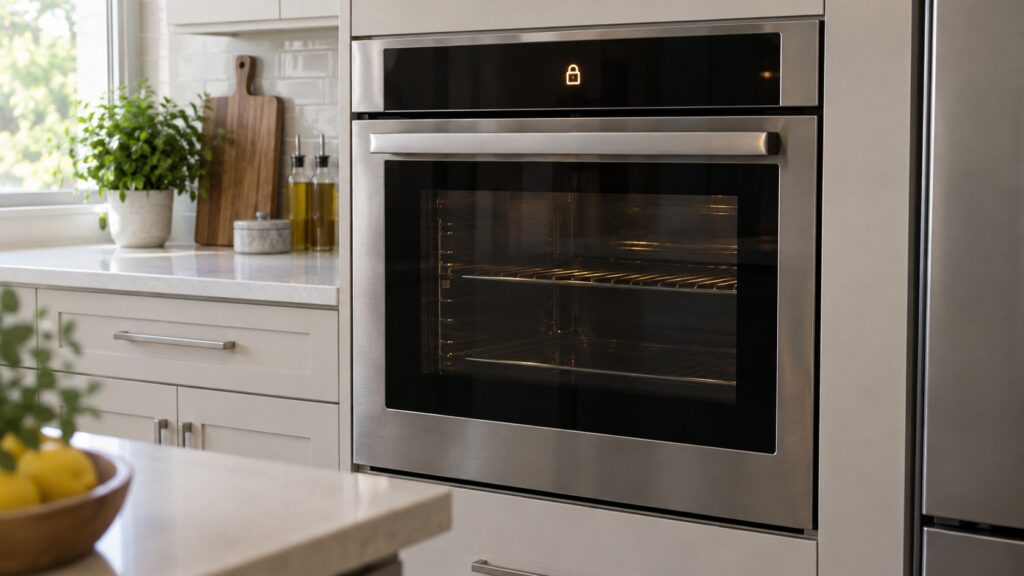
The door lock is a safety interlock, not a convenience feature: it prevents the cavity from being opened at 900°F and stays engaged through the entire heat cycle plus a cool-down period afterward. If the door will not unlock once the display shows the cycle finished, give it another 30 to 60 minutes — the lock releases only once the internal temperature sensor confirms the cavity has dropped to a safe range, and interrupting power to force it open is not a safe workaround.
Is the smoke and smell during self-clean normal?
Some smoke and a strong odor are expected, especially on the first run after a long stretch without cleaning, or with heavy grease buildup. Open a kitchen window, run the range hood if the oven is under one, and expect the smell to linger for a few hours afterward. What is not normal is thick, continuous smoke that does not taper off, or an odor of burning plastic rather than baked-on food — either of those is a reason to cancel the cycle rather than wait it out.
Can you cancel a self-clean cycle partway through?
Yes — pressing Cancel or Off stops the heating element, but the door stays locked until the cavity cools to a safe temperature regardless of when you cancel. Canceling does not undo any cleaning that already happened in the portion of the cycle that ran; it simply stops the process where it is. If you canceled because of heavy smoke, let the oven cool fully before running the cycle again, and clear out any large debris by hand first. A partial run also will not reset the interior to a lighter soil level for the next attempt; whatever ash and residue built up before you canceled is still there, so the next cycle should usually run on the same soil-level setting rather than a shorter one.
How often should you run a GE oven self-clean cycle?
Once every one to three months for a household that cooks regularly is a reasonable interval — often enough that spills never build up into a thick, smoky layer, but not so often that the door lock and heating element see more wear than necessary. An oven used lightly may go six months between runs with no real buildup to speak of; one used daily for baking or broiling benefits from the shorter end of that range. There is no fixed schedule printed on the appliance itself, so judge by how much residue you can see on the cavity floor and walls rather than by the calendar alone.
A cavity that has gone a year or more without a self-clean run will often need the full high-heat cycle rather than a shorter one, and will produce noticeably more smoke and odor than a cavity cleaned on a regular schedule. If the buildup is heavy, wipe out what you can reach by hand first — that alone shortens how much the cycle has to burn off and cuts down on the smoke it produces.
Does the steam-clean option replace a full self-clean cycle?
No, and treating it as a substitute is the most common reason a “cleaned” oven still has baked-on residue afterward. Steam-clean runs at a much lower temperature over roughly an hour, using steam to loosen light, fresh spills rather than ash-burning grease into powder the way the full high-heat cycle does. It works well for a quick pass between full cleans, or for a cavity that only sees light use, but it will not touch a rack drip that has been baked on for weeks. Reach for the full cycle whenever residue is already hard or discolored, and save steam-clean for upkeep between those runs.
What if the door won’t unlock, or the cycle throws a fault?
A self-clean cycle that ends with the door still locked after several hours of cool-down, or that stops mid-cycle with a code on the display, usually points at the door lock mechanism or the temperature sensor rather than anything you did wrong. Our guide to GE oven door won’t unlock covers that exact failure, and if the display shows an F-series code instead, GE oven F codes explains what the family of codes generally points at.
Self-clean puts real stress on the door lock solenoid and the temperature sensor, and both are common wear points on ovens that run the cycle often. If a lock or sensor needs replacing, a visit starts from a standard diagnostic call with the estimate confirmed before any part goes in — we are an independent repair company, not a factory service arm. For the routine upkeep that keeps a cavity from needing a long self-clean run in the first place, see GE oven maintenance. GE oven repair covers a stuck lock or a failed sensor, and you can schedule a visit or call (844) 524-4561.