The GE dishwasher water inlet valve is the electric valve that opens to let water into the tub, and it is the last suspect, not the first, when a dishwasher runs but does not fill. Before blaming it, rule out the cheaper causes in order: the shutoff valve under the sink is not fully open, the supply line is kinked, the small inlet screen is clogged, or the float in the tub is stuck down. If all of those check out, the inlet valve needs testing. Work through them in that order and you will usually find the cause in minutes, without taking anything apart.
Why would a GE dishwasher not fill with water?
The fill step is simple: the control opens the water inlet valve for a measured time, and water flows from the household supply into the tub until the float tells the control the level is right. Anything that interrupts that path produces a dishwasher that sounds normal but has little water. Our GE dishwasher pages list five causes in order of likelihood: a household shutoff valve not fully open, often bumped during nearby plumbing work; a float switch stuck down, so the control never senses it is safe to fill further; a failed water inlet valve that will not open; a kinked or clogged supply line; and a clogged inlet screen that has blocked the small filter at the valve inlet with sediment.
What do I check first?
Begin where the water comes from, because the cheapest cause is also the most common.
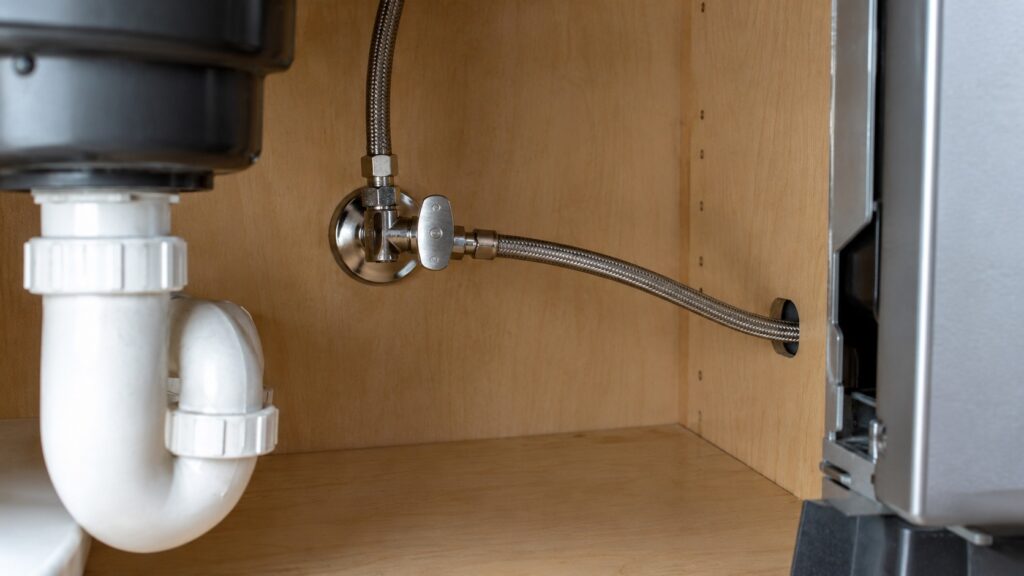
- The shutoff valve. Open the cabinet under the kitchen sink and find the small valve on the supply line to the dishwasher. Turn it fully counter-clockwise or in line with the pipe. A valve that is partly closed passes a trickle that looks like a broken dishwasher.
- The supply line. Look for kinks, especially if the dishwasher was moved or pulled out for cleaning. A bent line restricts flow.
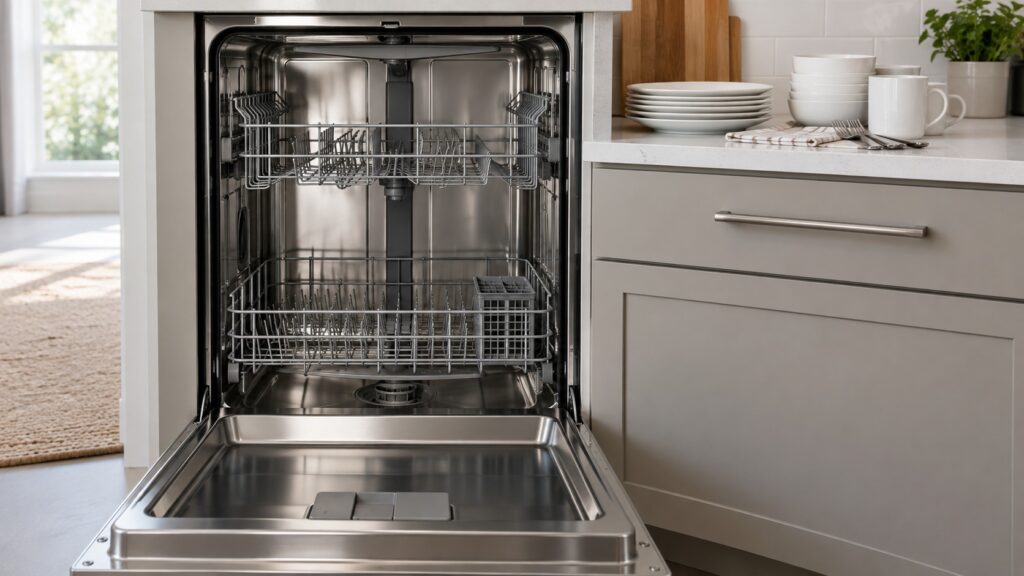
- The float. Inside the tub, find the small float assembly at the bottom. It should lift and drop freely. Food or a sticky residue can hold it down.
- The sound of filling. Start a cycle and listen. A faint hum from the inlet area during fill suggests the valve is energized; silence suggests it is not.
- Recent changes. If the problem started right after plumbing work near the sink, suspect the shutoff valve first.
How does this relate to the H2O message?
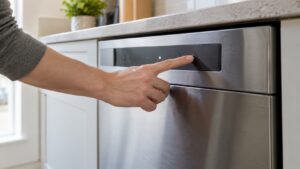
On GE dishwashers with a display, H2O means the dishwasher is detecting low or no water entering during the fill step. According to our H2O page, it is most often a supply-side issue, such as the shutoff valve, supply line or inlet screen, rather than the dishwasher itself. A model without a display may show nothing at all, which is why many cases go unnoticed until the dishes come out dry and dirty. The checks above apply either way.
Do not confuse a fill problem with a drain problem. C1, C2 and C3 are drain codes: C1 means a pump-out longer than two minutes, C2 more than seven minutes, and C3 that the dishwasher will not drain at all. C4 is closer to filling, since it means the dishwasher filled twice after a power failure or the float is stuck. Our GE dishwasher C2, C4, C5 and C8 codes guide covers that group, and a GE dishwasher that is not draining covers the other side.
How do I know the GE dishwasher water inlet valve has failed?
If water still will not enter after the shutoff valve, line and float check out, the water inlet valve is the next suspect. A silent valve during the fill step, with the cycle otherwise running, is the classic sign. It is an electrically operated valve at the front lower corner of the dishwasher, behind the toe kick, and it can fail to open if its coil is dead or its screen is blocked by sediment. A technician tests it directly with a meter, because a valve that clicks is not always a valve that passes water. Replace only the part that fails the test; a new valve fitted to an unchecked float problem wastes money. Do not remove the toe kick and work on the valve with the power on. The valve and its wiring are live, and the water connection will leak if it is disturbed.
Can the dishwasher diagnose itself?
Many GE dishwashers have a diagnostic mode that cycles through checks and displays results. Our GE dishwasher diagnostic mode guide explains how to enter it for your model. It is useful when you want to know whether the control calls for water at the right moment before you suspect a valve. If the dishwasher fills but the dishes come out dirty, the cause is a different list, covered in why a GE dishwasher is not cleaning well.
When should I call a technician?
Call when the shutoff, supply line and float are all fine and the dishwasher still does not fill, when you hear no hum at the inlet valve, or when water appears where it should not. A technician checks the inlet valve, float switch and wiring in a single visit, and brings the correct part for your model and serial number. We are an independent service. GE dishwasher repair covers all of these checks, and you can schedule a visit online.