The GE dishwasher sanitize cycle is an extra-hot final rinse option that raises the water temperature at the end of the wash to help sanitize dishes, and it is available on models such as the GDT635HSRSS and GDT670SGVWW. Use it for baby bottles, cutting boards, and dishes after illness, not for everyday loads. This how-to covers how to run it, what to load, what to keep out, and what to do when it seems to run long or leaves dishes wet.
What does the GE dishwasher sanitize cycle do?
A normal cycle washes and rinses at the temperature your water heater and the dishwasher’s own heater reach. The sanitize option extends the hot phase so the final rinse runs hotter and longer. That is why the cycle takes more time and why dishes come out hot. It does not add a different detergent or a different wash; the extra work is heat. The result depends on a working heating element and temperature sensor, and on water that arrives hot enough to start with.
How do I run it step by step?
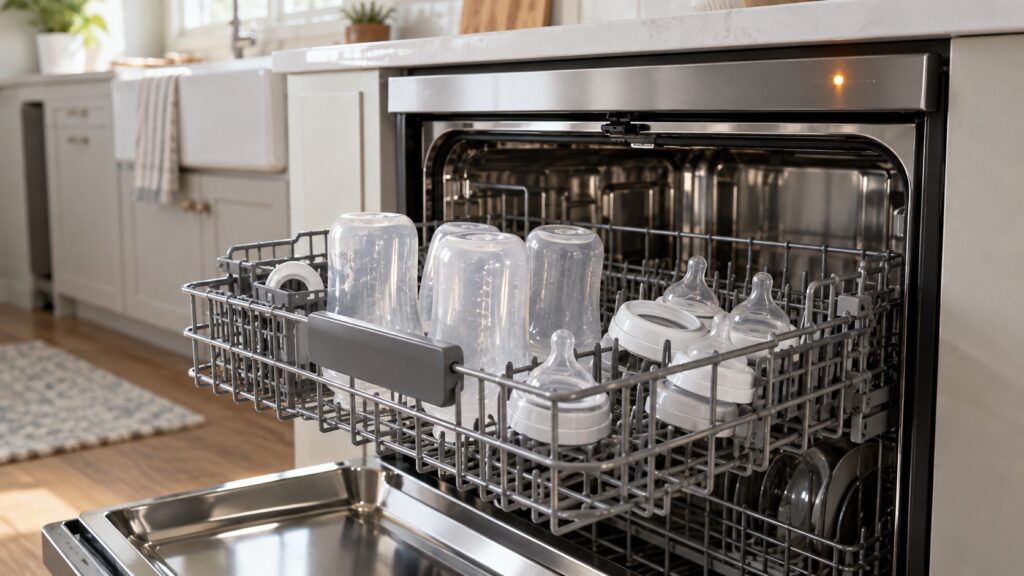
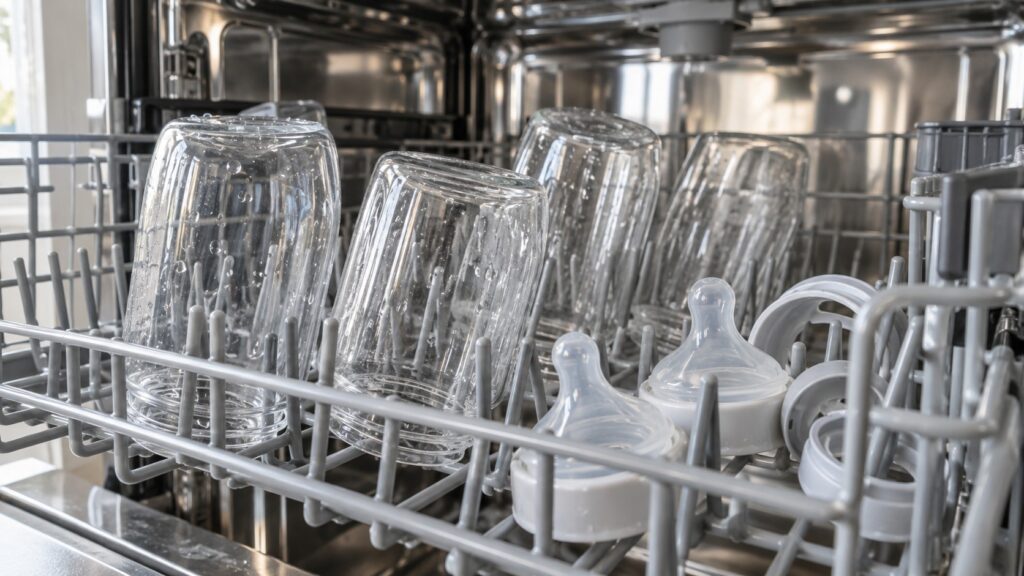
- Prepare the load. Scrape off food, and place items so water can reach every surface. Bottles go upside down on the upper rack or in a basket; cutting boards stand in the lower rack.
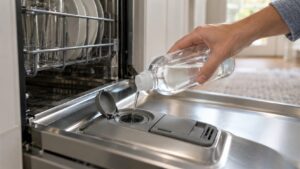
- Add detergent. Fill the cup with fresh, dry detergent; old powder that has clumped in a damp cup can jam the dispenser door.
- Run the hot tap. Let the kitchen faucet run until the water is hot before starting, so the dishwasher does not begin with cold water in the line.
- Choose the wash cycle, then the Sanitize option. Press it before you close the door and press Start; your manual shows the button for your model.
- Wait for the end. Do not open the door early; the contents are very hot. Let the load cool before unloading.
What should not go through a sanitize cycle?
Heat damages some things, and the bottom of the tub near the heater is the hottest spot. Keep out wood, which warps and cracks, and items marked hand wash only. Thin plastics and anything marked top-rack safe can soften or warp near the heater at the bottom of the tub, so put them high or leave them out. Delicate glass with gold trim and cast iron are poor choices in any dishwasher. Baby bottle nipples and small parts belong in a closed basket so they do not fall onto the heater. If you are unsure about an item, wash it by hand.
Why does the cycle take so long, or leave dishes wet?
A long cycle is normal, since the dishwasher must reach and hold a higher temperature. If it runs far longer than usual, the incoming water may be cold and the heater is doing all the work. The C6 code means the water entering is too cold to wash effectively, and C7 means the water-temperature sensor circuit has a problem, both covered in the C6 page and C7 page. Wet dishes after a hot cycle usually trace to drying, not heating: rinse aid empty, or on models with Dry Boost, a fan-assist module that is failing. See GE dishwasher hard water care for the film that can also make dishes look dull or wet.
How does the heat work with hard water and rinse aid?
Very hot rinses can bake mineral film onto glassware, so hard-water homes sometimes see cloudier glasses after sanitize cycles. A full rinse aid reservoir helps water sheet off and dry cleanly, and a cleaning cycle for the tub removes scale from the heater area. If glasses turn cloudy only after hot cycles, try a normal cycle with fresh rinse aid and compare. The result tells you whether the film is a hard-water issue or a detergent issue.
Also think about the water heater. The sanitize option adds heat on top of what arrives, so supply water that is lukewarm at the tap makes the machine work harder and longer. Running the kitchen tap hot for a minute first is a free habit that shortens the cycle and improves results every time, whichever cycle you choose.
What safety points apply to a hot cycle?
The tub and the dishes are hot at the end, and steam escapes when the door opens. Wait until the cycle has finished and the load has cooled, then open the door slowly. Keep children away from the door during and just after the cycle. Do not open the door mid-cycle to add items; hot water can spray, and the interrupted cycle may not finish properly. If the dishwasher leaks, shows a leak message or smells of burning plastic, stop it and unplug it.
Is the sanitize cycle worth using every day?
Usually not. A normal cycle with hot water cleans well for ordinary dishes, and the extra heat uses more energy and is harder on plastics. Save sanitize for the cases that call for it, and use a normal cycle with the hot tap run first for everything else. Keeping the filter and spray arms clean matters more for everyday results; see the GE dishwasher filter cleaning guide and the spray arm cleaning guide. If a cycle will not heat at all, or the sanitize option never completes, GE dishwasher repair can test the heater and sensor, and you can book a visit.