
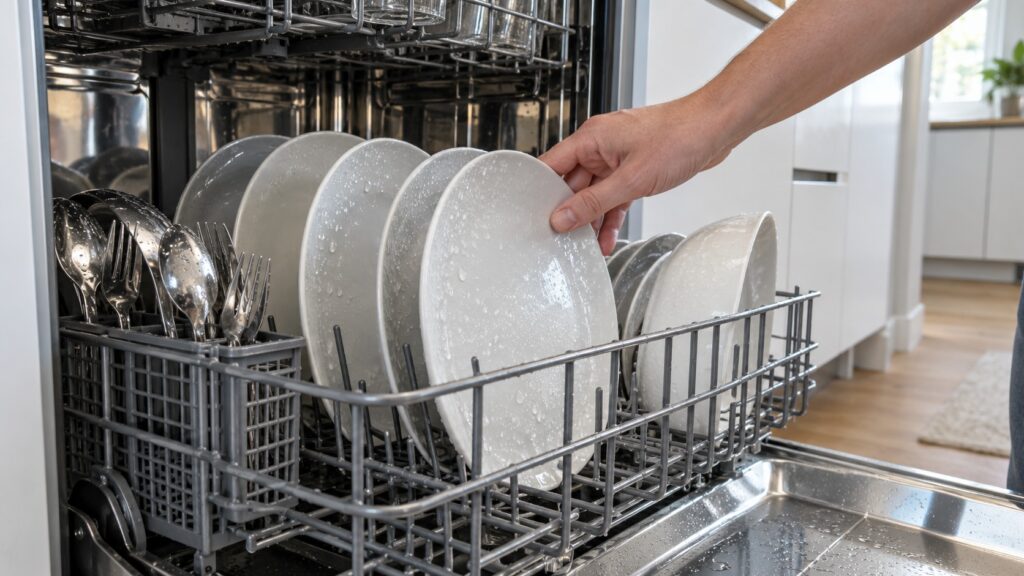
If your GE dishwasher heated dry is not working and the dishes come out wet, check these in order: the rinse aid reservoir, the drying option you picked, the way the dishwasher is loaded and then the heating element and the vent. Wet dishes after a hot cycle usually trace to drying, not washing, and an empty rinse aid reservoir is the most common and easiest cause to rule out. Only after the simple checks does a failed heating element or a vent that does not open become the likely cause, and both need a technician to test.
Why is your GE dishwasher not drying the dishes?
A dishwasher dries in two ways. It heats the tub, so the dishes get hot, and it lets the moist air out, so the water that evaporates does not settle again. Rinse aid helps by making the water sheet off the surface instead of forming droplets. When any one of these is missing, the dishes come out damp. The typical report is the same on any of them: the cycle finishes normally, but glasses feel damp, plastic holds droplets and steam is trapped inside when the door opens. Our page on a GE dishwasher not drying lists the same short set of causes, which is how we order the checks below.
Is the rinse aid empty or set too low?
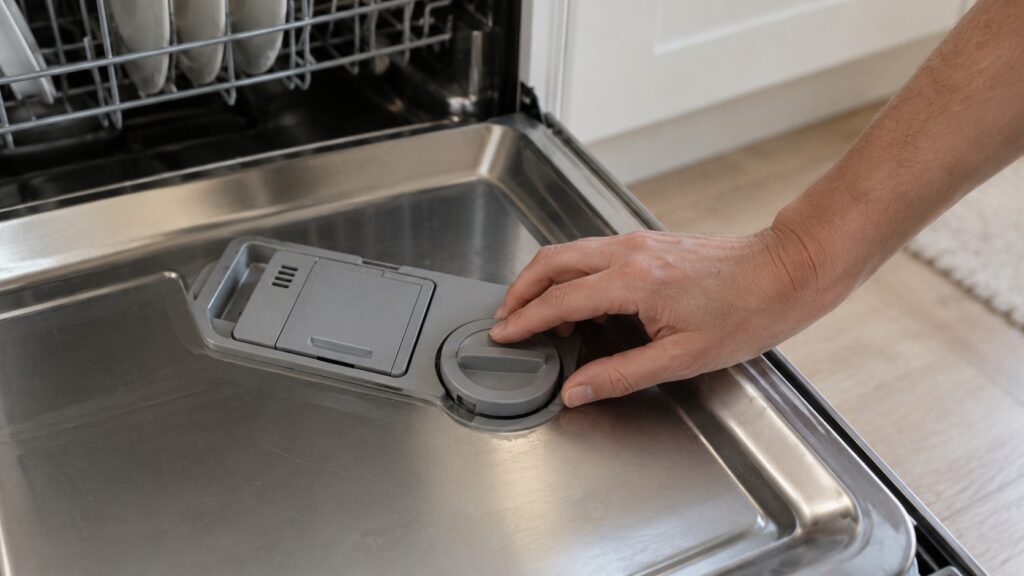
Start here. Without rinse aid, water beads on the dishes and the heat alone does not clear it. Refill the reservoir, make sure the cap is seated and confirm the dial is not set to the lowest position. Run a normal cycle and compare. If the dishes dry better, you have found the cause, and the refill schedule is the fix. Our GE dishwasher rinse aid guide shows how to fill the dispenser and set the dial, and explains what to do when the reservoir level never drops.
Note that plastic is the hardest to dry. Plastic holds less heat than glass or ceramic, so some droplets on plastic items are normal even when the dishwasher is healthy. Judge the dishwasher by the glasses and the plates, not by the plastic container on the top rack.
Did you choose a heated dry setting?
Many GE dishwashers offer a heated dry option, and some cycles use less heat on purpose to save energy. If the dishwasher offers a heated dry or boost setting and you are running an eco or a light cycle, select the heated option and try again. On models that list Dry Boost, such as the GDT635HSRSS, a fan-assist module helps move the air and can be the source of a wet-dishes complaint. The exact names and the buttons differ by model, so check your manual for the drying options on yours. If your cycle choice is unclear, the GE dishwasher buying guide explains what the common options do.
Is the load blocking the airflow?
Overloading is a quiet cause. When bowls nest and cups face the wrong way, water sits in the pockets and the air cannot reach it. Leave space between dishes, tilt cups and bowls downward so the water runs off, and keep tall items from blocking the spray arm. After the cycle, prop the door open briefly to let the remaining moisture escape. This costs nothing and often explains why the same dishwasher dries well one day and poorly the next. If the dishes are also not coming clean, our GE dishwasher not cleaning well guide helps with the washing side.
Could the heating element or the vent be at fault?
If the rinse aid, the setting and the load are all right and the dishes are still wet, two parts remain. A failed heating element means the drying heat is not engaging: the tub stays cooler than it should, and the dishes are wet and cool to the touch. A vent or a fan assembly that does not open leaves the moist air trapped, and you see steam inside the tub when you open the door. Neither one is a homeowner repair. The element and the vent sit behind panels and carry household voltage, and an element can stay hot for a long time after a cycle. Switch off the breaker before anything is touched, and leave the testing to a technician.
Do not run the dishwasher with the door open or the panel off to see the element glow. It is not safe, and the door switch will stop the cycle anyway.
What about hard water and a dirty tub?
A tub with scale on the heater area dries poorly, and hard water leaves a film on glasses that looks like a drying problem. A cleaning cycle for the tub removes scale from the heater area, and fresh rinse aid with a normal cycle is a good way to tell whether glasses are cloudy from heat or from minerals. Our GE dishwasher hard water care guide covers the routine.
When should you call a technician?
Call when the dishes are wet after you have refilled the rinse aid, picked a heated dry option and loaded with space, or when you see steam trapped in the tub. A technician can test the heating element and the vent, and tell you whether a repair is worth it on an older dishwasher. Have the model and serial number ready. Our GE dishwasher repair service covers GE and Cafe dishwashers.