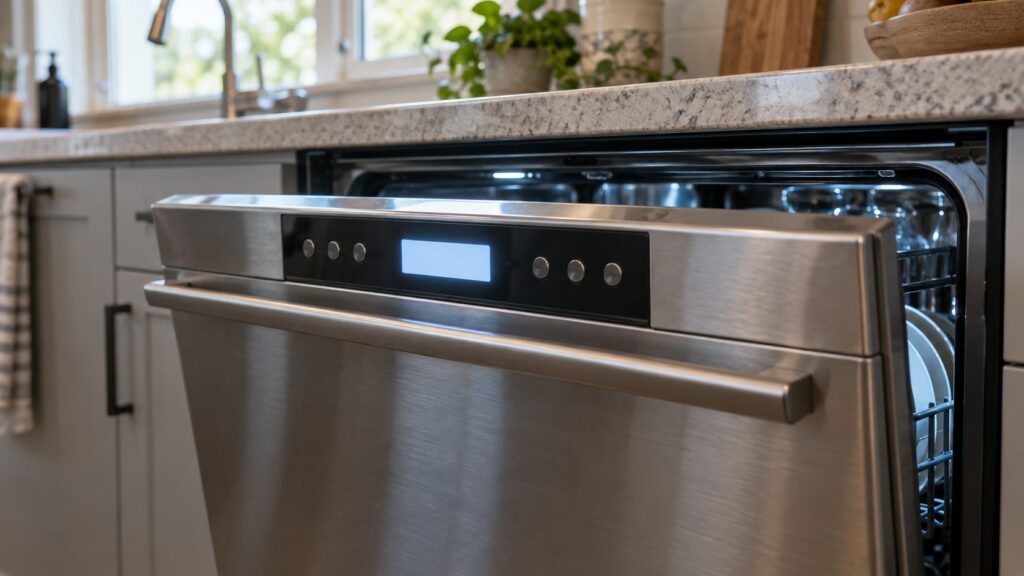
A GE dishwasher PrS code means the control cannot trust what the pressure sensor is telling it about the water level in the tub. The machine is not reporting a leak, a blocked drain or a dead pump — it is reporting that the one instrument it uses to measure water has gone quiet or started returning a value that makes no physical sense. Until that reading comes back, the control refuses to run a fill, because filling blind is how a dishwasher floods a kitchen.
What does a GE dishwasher PrS code mean?
Every modern GE dishwasher fills by measurement rather than by timer. A small pressure sensor reads the column of water standing in the sump, converts it to a level, and reports that level to the control board several times a second. The control uses the number for three decisions: when to shut the fill valve, whether the wash arms have enough water to build pressure, and whether the tub has actually emptied at the end of the drain.
A GE dishwasher PrS code appears when that number stops being believable. In practice that is one of three conditions: the sensor returns nothing at all, it returns a value that never changes while the fill valve is open, or it returns a level that swings faster than water physically can. The control cannot tell those apart from the outside, so it uses one code for all of them and stops.
The useful consequence for you is that PrS is a measurement fault, not a water fault. A dishwasher that shows PrS very often has perfectly good water pressure, a clear drain and a healthy pump. Chasing the plumbing is the single most common wasted evening on this code.
Why would the pressure sensor stop reading correctly?
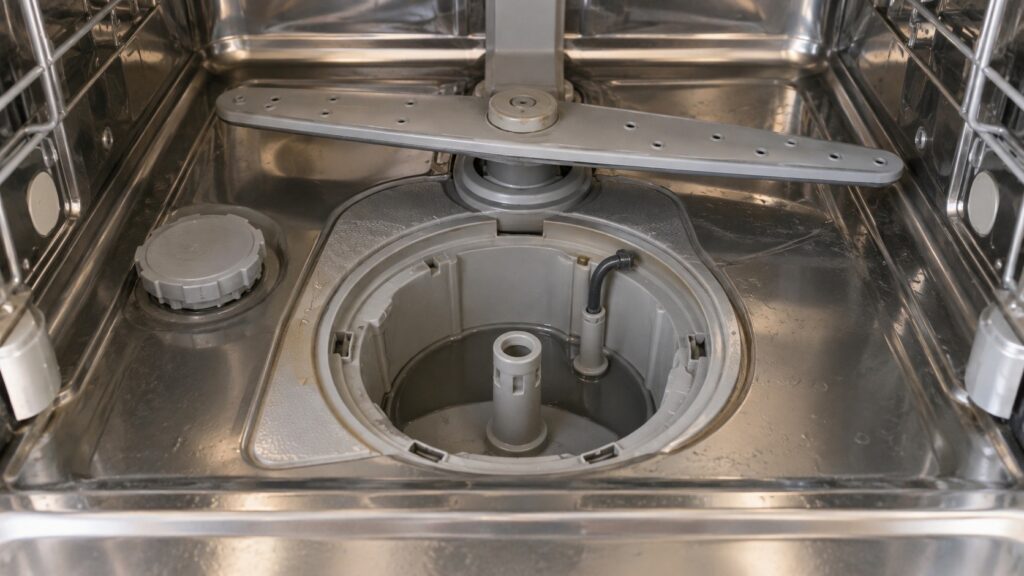
The sensor is not in the water. It sits above the sump and reads the air trapped in a short vertical tube, so the water level pushes a column of air against a diaphragm. Almost everything that goes wrong with it happens in that air path rather than in the electronics.
- A blocked or wet air tube. Detergent film, grease and hard-water scale collect in the tube. Once water gets past the trap and sits in the tube, the sensor reads a level that never falls, even on an empty tub.
- A loose connector. The harness runs along the base of the machine, where it is exposed to vibration and to any water that has ever found its way under the tub. A corroded pin makes the reading intermittent, which is why some owners see PrS on one cycle and a clean run on the next.
- A cracked sump nipple. The sensor tube pushes onto a plastic spigot molded into the sump. Age and heat harden the plastic, and a hairline crack vents the air column so the level never registers at all.
- A failed sensor. The least common of the four, and the reason a technician tests the first three before replacing anything.
Notice what is absent from that list: the fill valve, the float switch, the drain hose. Those parts raise their own codes and their own symptoms, which is exactly why the distinction on this page matters.
What can you safely check yourself?
Three checks are safe, take about fifteen minutes, and clear a fair share of PrS reports without any parts at all.
- Cut the power for five minutes. Pull the plug, or switch off the breaker that feeds the dishwasher. A latched sensor fault frequently clears on restart. If PrS returns during the first fill, the condition is live rather than stored — that alone is worth knowing before anyone opens anything.
- Run a drain and look at the sump. Press Start and then Cancel to force a drain, then open the door and lift out the filter. The sump should be visibly empty with only a film of water left. A sump still holding an inch of water points at drainage, and a completely dry sump with PrS on the display points back at the sensor.
- Clean the filter and the sump well. Grease carried into the sump is what eventually climbs the sensor tube. Our walkthrough of GE dishwasher filter cleaning covers the lift-and-twist removal and what the well underneath should look like.
Stop there. The sensor itself is reached by pulling the toe panel and working under a tub that carries both mains wiring and the water circuit. That is not a place to be guessing with the breaker on.
How is PrS different from the other GE dishwasher codes?
GE dishwashers use short letter codes and numbered C codes for different families of fault, and they are easy to mix up when all you see is a stopped machine and a puddle-free floor.
The practical rule: if the display talks about level, look at the sensor; if it talks about water arriving or leaving, look at the valve, the filter and the hose. When the tub genuinely will not fill, the fill-problem page is the right starting point, and a tub that holds water belongs with a GE dishwasher that will not drain.
Which parts does a technician replace for this code?
A proper visit follows the air path before it follows the parts catalog. The sensor is unplugged and read on the bench, the tube is blown through and checked for standing water, the sump spigot is inspected for cracks, and the harness is wiggled with the reading live to expose an intermittent pin. Only then does a part get ordered.
When a part is genuinely at fault, it is usually the sensor itself or the sump assembly the tube mounts to. A harness repair is cheaper than either and fixes more machines than owners expect. Parts and labor for this job start from a standard diagnostic visit, and the estimate is confirmed before anything is replaced. We are an independent repair company, not a factory service arm, and if the machine is old enough that a sump replacement outruns its value, we will say so.
When should you stop and book a visit?
Book when PrS comes back after a power cycle and a filter clean, when it alternates with an unfinished wash, or when the machine fills and then stops with the tub half full. All three mean the control is getting a live bad reading, and none of them are fixed from the doorway.
Before the visit, note whether the sump was wet or dry when the code appeared and whether the code shows on every cycle or only on some. That single observation separates a blocked tube from a failing sensor faster than any test. You can read the full code entry at our GE dishwasher PrS reference, see what the same sump looks like from the pump side in our guide to the GE dishwasher drain pump, and then schedule a visit or call (844) 524-4561. Our GE dishwasher repair service covers every model that uses this sensor.