The ge dryer e3 code appears on GE’s electronic dryer models when the exhaust air temperature climbs above the safe operating range the control board expects. In the large majority of reported cases, this traces directly to a blocked or restricted vent, which is exactly why this code deserves prompt attention rather than a simple restart-and-ignore response.
Why vent blockage causes overheating
A dryer moves a continuous stream of hot, moist air out through the exhaust duct as it dries a load. When lint accumulates inside the duct, or the duct itself is crushed, kinked, or too long without adequate booster support, that airflow slows dramatically. With less air moving through, heat builds up inside the drum and duct instead of exhausting outside, and the dryer’s own safety sensors detect that rising exhaust temperature and raise the e3 problem to stop the cycle before things get genuinely dangerous.
Other contributing causes
- A lint trap that has not been cleaned before the cycle, restricting airflow before it even reaches the duct
- A bird or pest nest inside an outdoor vent cap
- An exhaust duct that is longer than the manufacturer’s recommended maximum run without a booster fan
- Crushed flexible foil or plastic ducting behind the dryer, which restricts flow even without any actual lint clog
How to clean the vent
- Unplug the dryer (and shut off the gas supply if applicable) before moving it away from the wall
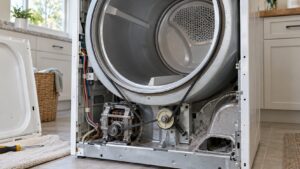
- Disconnect the exhaust duct at the back of the dryer and check for visible lint buildup
- Use a dryer vent brush kit or a shop vacuum to clear lint from the full length of the duct run
- Check the exterior vent cap for blockage, nesting material, or a damper that is stuck closed
- Reconnect the duct securely, avoiding any sharp kinks, before restarting the dryer
When to call a technician
If the vent is fully clear but the ge dryer e3 code keeps appearing, the thermistor or a related sensor in the exhaust path may be reading incorrectly rather than the airflow actually being restricted – see our guide on the GE dryer E1 code for that specific sensor failure. Our dryer repair technicians can test the exhaust temperature sensor directly and confirm whether it is the vent, the sensor, or both.
Why this matters beyond the code itself
A restricted dryer vent is one of the most common causes of dryer fires in the country, so treating a recurring e3 code as a genuine safety issue rather than a nuisance to reset past is the right instinct. It is also worth reading our related guide on GE dryer taking too long to dry, since vent restriction severe enough to eventually trigger e3 almost always shows up first as noticeably longer dry times.
Preventing it going forward
Clean the lint trap before every load, have the full vent duct professionally cleaned at least annually, and check the exterior vent cap periodically for blockage from debris or nesting animals. See our dryer maintenance guide for a complete routine.
Quick summary
The ge dryer e3 code is a genuine safety response to real exhaust overheating, and clearing a blocked vent resolves the overwhelming majority of reported cases, with a failed sensor being the far less common alternative once the vent itself checks out clean.
A habit worth building after any e3 event
Once a ge dryer e3 code has appeared even a single time, it is worth marking a reminder to check the vent again in a few months rather than waiting for the code to return, since a duct that clogged once tends to clog again on the same schedule if usage habits do not change.
Our experienced, independent technicians can inspect the full exhaust path and repair or replace the affected sensor using OEM or high-quality replacement parts. Schedule service at /schedule/. For general product information, see geappliances.com.