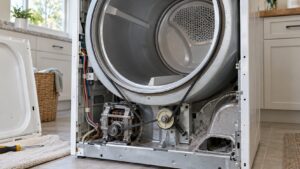
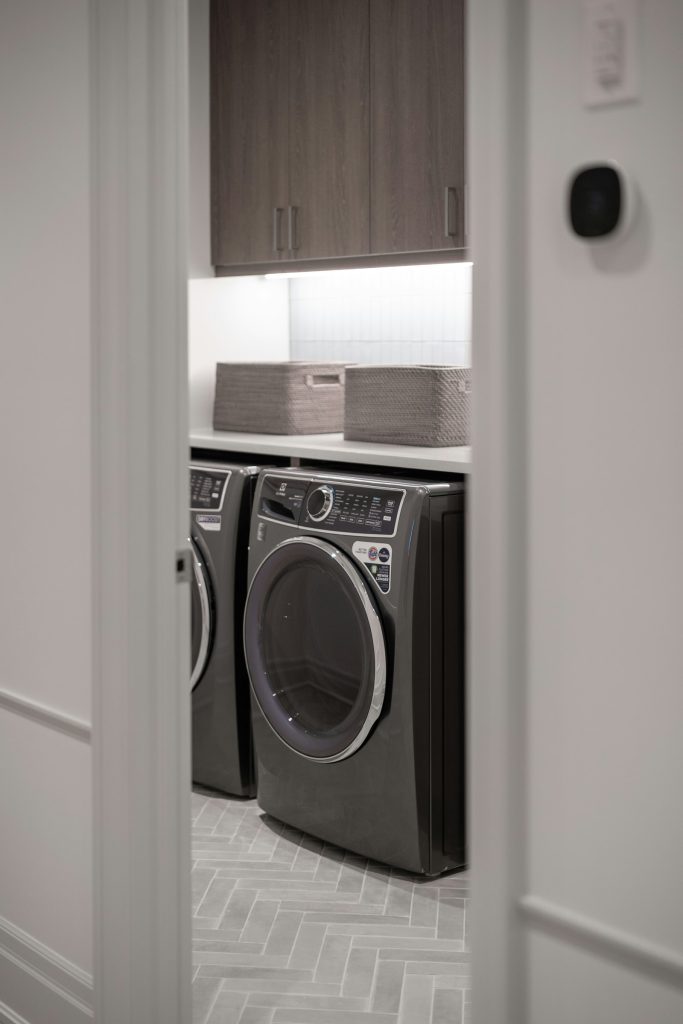
A ge dryer not heating problem – where the drum tumbles normally but clothes come out no warmer than when they went in – is one of the most common dryer complaints, and figuring out whether you have a gas or electric model narrows the likely cause considerably before any parts are ordered.
The thermal fuse: the first thing to rule out on either type
Nearly every modern dryer, gas or electric, has a thermal fuse as a one-time safety device that blows permanently if the dryer ever overheats significantly, most often from a restricted vent. A blown thermal fuse cuts power to the heat source entirely while leaving the drum motor unaffected, which produces exactly the tumbles-but-does-not-heat symptom. It never resets on its own and always needs replacement once blown.
Gas dryers: the igniter and gas valve
Gas dryers use a glow-bar igniter that heats up and opens the gas valve coils to let gas flow to the burner. A weak or failed igniter may glow without ever getting hot enough to open the valve, so the burner never lights even though the igniter appears to be working. A failed gas valve coil produces a similar symptom even with a good igniter.
Electric dryers: the heating element
Electric dryers use a coiled heating element, similar in concept to a stove burner, that the control board powers directly. A burned-out element is one of the most common electric-dryer heating failures, and it typically fails completely rather than weakening gradually, so the drum runs warm one cycle and stone cold the next.
High-limit thermostat
A high-limit thermostat is a safety switch, distinct from the thermal fuse, that trips – and on some models resets automatically once cooled – if temperatures climb too high, most often because of restricted airflow. A dryer that heats briefly, then stops heating partway through a cycle, points more toward a high-limit trip than an outright element or igniter failure.
First checks you can do
- Check whether the lint trap and vent are clear, since restricted airflow is a leading cause of both blown fuses and tripped high-limit thermostats
- Note whether the dryer heats briefly then stops (pointing to a high-limit trip) versus never heating at all (pointing to a fuse, igniter, or element)
- Confirm the gas supply valve is fully open, on gas models
- Check the circuit breaker, since electric dryers typically use a dedicated 240-volt circuit and a partially tripped double-pole breaker can sometimes affect the heating circuit while leaving the motor running on the other leg
When to call a technician
Testing a thermal fuse, igniter, gas valve coil, or heating element for continuity requires a multimeter and some familiarity with dryer disassembly, and our dryer repair technicians can confirm the actual failed part in a single visit rather than replacing components by trial and error. If the vent turns out to be the underlying cause, see our guide on the GE dryer E3 code for the safety implications of a restricted exhaust path.
Quick summary
A ge dryer not heating almost always comes down to a thermal fuse, an igniter or gas valve on gas models, a heating element on electric models, or a high-limit thermostat, and confirming which fuel type and which failure pattern you are seeing points a technician straight to the likely part.
Why noting the exact symptom pattern helps
Whether a ge dryer not heating complaint means no heat at all from the very first minute, or heat that starts and then cuts out partway through the cycle, is worth mentioning specifically when you call for service, since that single detail about your ge dryer not heating symptom often separates a thermal fuse or element failure from a high-limit thermostat trip before a technician even opens the cabinet.
Our experienced, independent technicians diagnose gas and electric GE dryers using OEM or high-quality replacement parts. Schedule service at /schedule/. For general product information, visit geappliances.com.