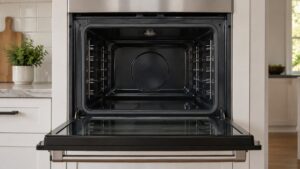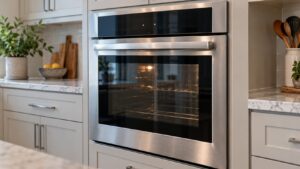
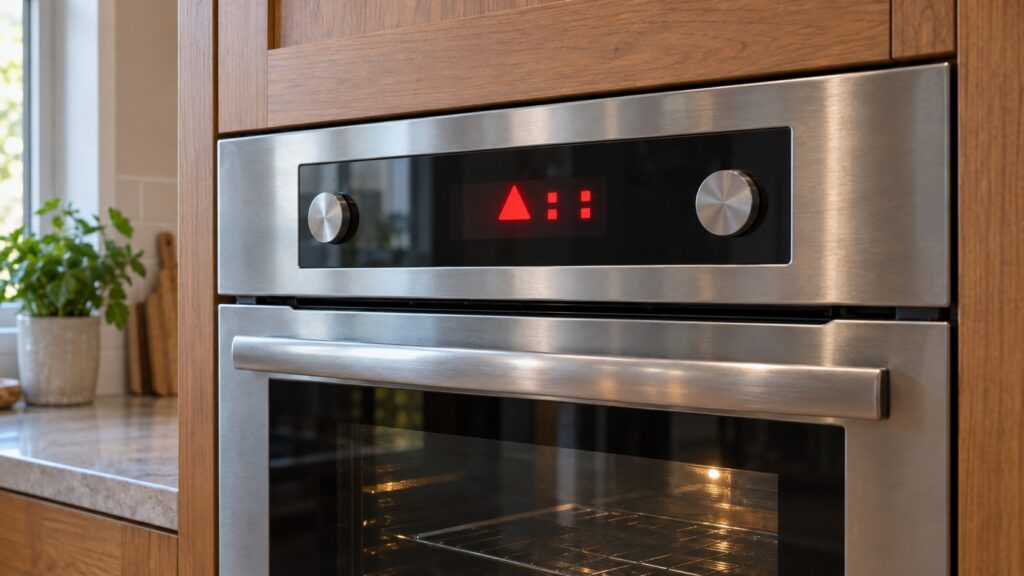
A GE oven F350 code points at the upper cooling-fan circuit of a built-in wall oven, and more often than not the fan is fine — something is stopping the air it moves. That is unusual among GE fault codes, and it is the reason this one is worth reading before you call anybody: a meaningful share of F350 reports are fixed with a flashlight, a vacuum and ten minutes, not with a part.
What does a GE oven F350 code actually mean?
A built-in oven is a hot box inside a wooden cabinet. Everything that keeps it safe there depends on a stream of room air pulled across the electronics and pushed out through a vent above the door. The upper cooling fan runs that stream. It starts when the oven does, keeps running after you switch off, and only stops once the control reads a safe temperature.
A GE oven F350 code is raised when the control watches that circuit and does not get the behavior it expects: the fan is not drawing current, it is drawing the wrong current, or the temperature behind the trim is still climbing while the fan is supposedly running. The oven does not know why. It knows that the air is not doing its job, and it puts the fault on the display rather than keep heating a cabinet it cannot cool.
Why does a cooling fan fault stop the oven at all?
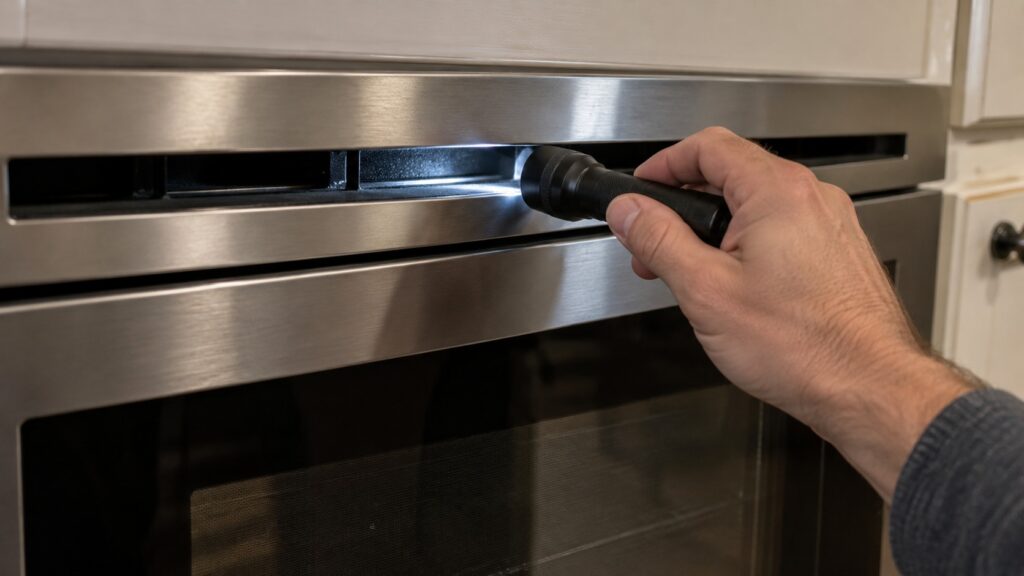
People are often surprised that a fan can take an oven out of service when the elements, the sensor and the door lock are all healthy. The answer is where the fan sits in the design. The control board, the relays and the door-lock motor live in the trim strip above the oven door, a few inches from the top of a cavity that runs at 400°F and more. Their rated temperature is not much above a warm summer attic.
Without moving air, that strip climbs past the point where relays stick and solder joints fatigue. GE would rather show you a code than replace a control board every eighteen months, so an oven that cannot prove it is cooling itself stops heating. Treat F350 as the oven refusing to damage itself, and the urgency makes sense: it is not dangerous today, and it becomes expensive if it is ignored for a season.
What blocks the cooling air on a built-in oven?
The air path is short and every part of it is reachable without tools. Work along it in order and you will find most obstructions.
- The vent slot above the door. This is the exhaust. A dish towel hung over the handle, a cutting board leaned against the trim, or a run of foil laid across the vent for a holiday roast will choke it completely.
- The intake beneath the cabinet. Air is usually drawn from under the oven cutout. A drawer packed to the back, a slab of insulation added during a remodel, or an installer who sealed the gap with trim all starve the fan.
- Grease on the fan wheel. Years of self-clean cycles carry vapor past the blower. A wheel coated in baked grease moves a fraction of the air it should while drawing normal current — which is exactly the case where the fan sounds right and the code still appears.
- A crowded cabinet. Double ovens and oven-microwave stacks share a chimney. Something stored on top of the upper unit in a tall cabinet blocks the outlet the installation manual assumed was clear.
Cutout clearances are the quiet cause behind the stubborn cases. Our GE wall oven installation guide sets out the gaps the cabinet is supposed to leave, and an oven that has thrown F350 since the week it was fitted is usually an installation problem rather than a failure.
Can you clear F350 yourself?
Often, yes, and the sequence is short:
- Let it cool completely. An hour with the door shut and the vent clear. The fan may run for part of that; that is normal and is not a fault.
- Clear the vent and the intake. Remove anything resting on the trim, pull the drawer beneath the oven right out, and look for foil, packaging or a fallen towel.
- Cut the power for five minutes at the breaker, then restore it. F350 is latched — clearing the blockage alone will not always wipe the display.
- Run a 350°F bake for thirty minutes with nothing in the cavity and listen at the vent. You should feel warm air moving steadily above the door within a few minutes.
If the code returns during that test, or if you feel no air at the vent at all, stop. The fan itself lives behind the trim, next to mains terminals and the control board, and it is not a panel to pull with the oven warm.
How is F350 different from the other GE oven F codes?
GE groups its oven faults by function, and F350 is alone in its group — the only code about moving air rather than making heat or reading it.
That separation matters when two symptoms arrive together. An oven that overheats and then shows F350 has usually been running hot because the cooling stream failed, not the other way round. For the whole family in one place, see our roundup of GE oven F codes; if the oven is also slow to reach temperature, the long-preheat page covers the separate sensor question.
When does F350 need a technician?
Book a visit when the vent is clear and the code still returns, when the fan is silent on a hot oven, or when it screeches, rattles or runs on for hours after everything has cooled. Those are the three shapes of a failing blower motor, and the fourth case — a fan that works perfectly while the control keeps reporting it — is a harness or board issue that needs meter readings, not guesses.
A visit for this fault starts from a standard diagnostic call, and the estimate is confirmed before any part is fitted. We are an independent repair company, not a factory service arm. Keeping the vent and the cabinet clear is the one habit that prevents a repeat, and it sits alongside the rest of our GE oven maintenance advice. The full code entry lives at our GE oven F350 reference; when you want it looked at, schedule a visit or call (844) 524-4561 and ask about GE oven repair.