GE refrigerator how to set temperature is a short job: find the temperature control in your owner’s manual, because the location and the buttons differ by model, move it one step, wait for the refrigerator to settle and then check the real temperature with a thermometer. Food stays safe when the refrigerator is at or below 40 degrees F and the freezer is at 0 degrees F, which are the FDA figures. If it is still warm after a correct setting, look at airflow, door seals and parts, not at the control.
Where is the temperature control on a GE refrigerator?
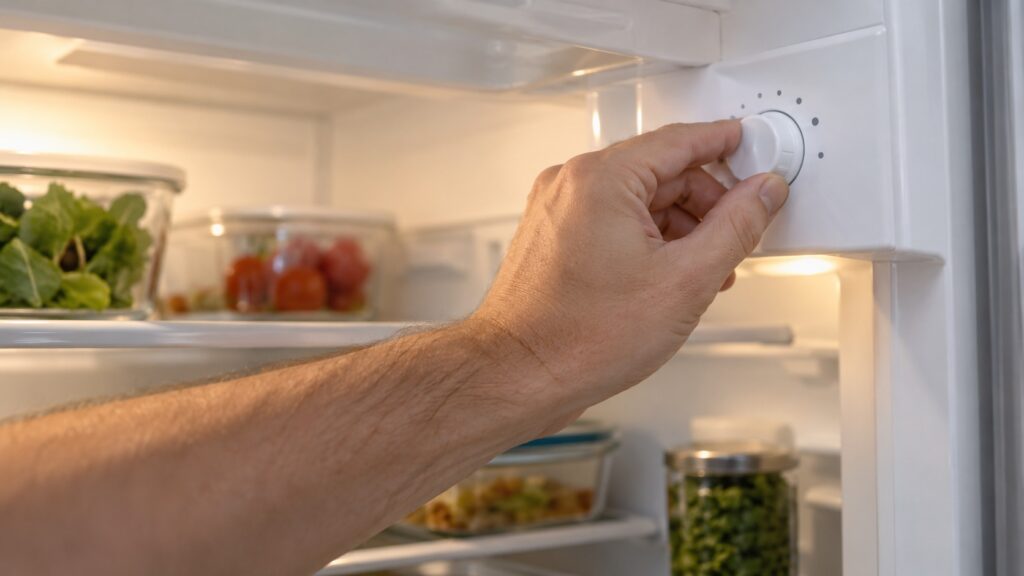
It depends on the model. Some GE refrigerators have a panel on the outside of the door or the dispenser, some have controls inside the fresh-food compartment and some have separate settings for the freezer and the fresh-food sides. Because we cannot tell your layout from the brand name, your owner’s manual is the guide to the buttons and the display. If you do not have the manual, look up your model number, which your manual or our find your model and serial number guide explains how to find, and use it to get the right manual. We do not give button sequences, because they differ and a wrong one can change the wrong setting.
What should the temperatures be?
The FDA’s food-safety figures are 40 degrees F or below for the refrigerator and 0 degrees F for the freezer. Your manual may suggest a starting setting for each compartment, and that is where to begin. Settings that are colder than needed freeze produce and waste power. Settings that are warmer shorten the life of food and are a safety problem. A display may show the set point, which is the target, rather than the measured temperature, so do not read it as a thermometer.
How do you change the setting?
Move the control one step toward colder or warmer, as the manual describes, and leave it alone. The refrigerator needs time to respond, and our FF page notes that a unit needs time to recover after a door was left open. Change only one compartment at a time so that you can tell which change did what. If the panel has a lock, the manual says how to unlock it. If a change seems to do nothing, wait longer before you try a second step, and write down the date and the setting so that you can go back.
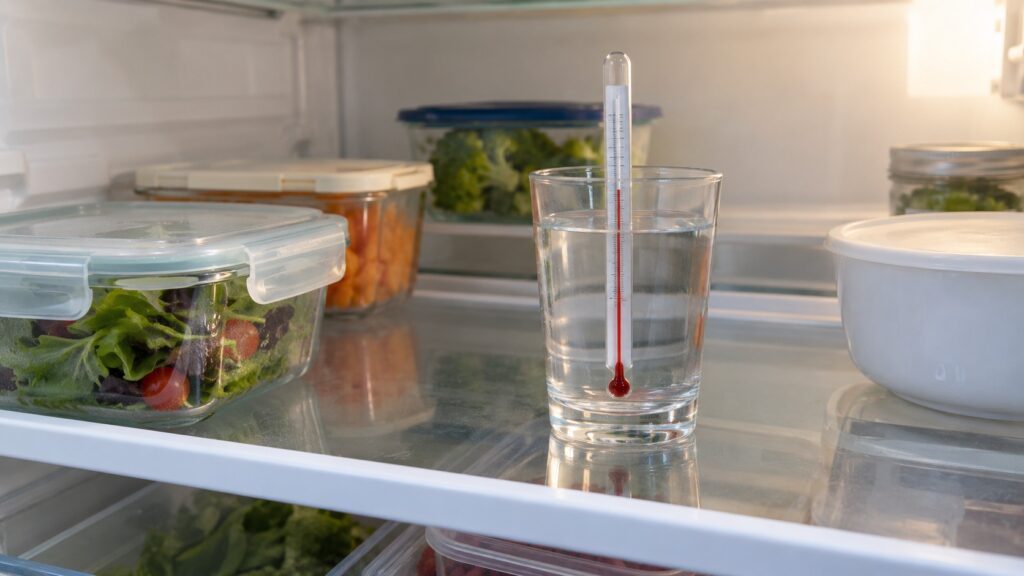
How do you check the real temperature?
Put a thermometer in a glass of water on a middle shelf of the refrigerator and another in the freezer, leave them long enough to settle without opening the door more than necessary and then read them. Write each reading down with the time, because one reading is only a snapshot and a second reading the next day shows whether the setting is holding. Water changes temperature slowly, so the reading shows what your food experiences. If the refrigerator is above 40 degrees F or the freezer above 0 degrees F after the settings have had time to take effect, work down our checklist: the doors seal, nothing blocks the vents, the condenser coils are clean and the compartments are not packed solid.
Why is the refrigerator warm when the setting is right?
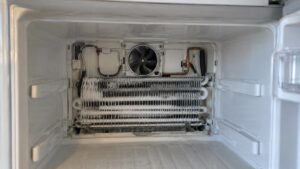
Several things can do it. A door that does not close fully lets warm air in, a blocked vent stops cold air reaching the fresh-food side and dusty coils make the cooling system work harder. If the freezer is warm, our FF page lists the evaporator fan, the coils, the door seals and the defrost system, and for a warm fresh-food side our CC page lists the damper control, the fan, the gaskets and the thermistor. Our warm refrigerator, cold freezer guide and not cooling guide go through the causes.
What should you do about food during a warm spell?
If the refrigerator or freezer has run warm, protect the food. FDA guidance is that a closed refrigerator keeps food safe for about four hours during an outage, a full freezer for about 48 hours and a half-full freezer for about 24 hours if the door stays closed. Check food with a thermometer, keep the doors shut and throw out perishable food that has been above 40 degrees F for too long. When in doubt, throw it out. Our refrigerator maintenance checklist lists the habits that keep a refrigerator steady, such as keeping the seals clean and the vents clear.
What if it is too cold or the food freezes?
Move food away from the air vent, where the coldest air enters, and turn the setting one step warmer. Keep high-water foods such as lettuce and drinks out of the coldest spot. If the compartment still freezes food at a moderate setting, the sensor or the damper may be at fault, which is a technician’s job. Do not open any panel to look. A refrigerator that was just plugged in or just lost power can also run cold or warm for a while, and our PF page says the code only reports that power was lost and the control reset.