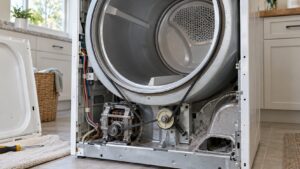
The ge dryer e1 code shows up on GE’s electronic dryer models, including the GFD series, and it means the thermistor has failed. A thermistor is a small resistance-based sensor that reads the temperature of the air moving through the drum, and the control board relies on it constantly throughout a cycle to know how hot the dryer actually is running, separate from what the heat source itself is doing.
What the thermistor does
Unlike a simple on/off thermostat, a thermistor gives the control board a continuously variable temperature reading, which lets modern GE dryers modulate heat more precisely across a cycle and support features like moisture sensing and auto dry cycles. When the thermistor fails outright, the control board loses that ongoing temperature feedback entirely, which is why the e1 code appears rather than just a vague heating complaint.
What causes thermistor failure
- Age-related wear on the sensor element after years of heat cycling
- A damaged or corroded connector at the thermistor harness
- A broken wire in the thermistor circuit, sometimes from vibration over time
- Excess heat exposure from a restricted vent, which can accelerate wear on nearby components
How this differs from E2 and E3
The e1 code is specifically a thermistor failure, while a separate GE dryer E3 code points to exhaust over-temperature, most often from a blocked vent, and E2 relates to the high-limit thermostat tripping or an inlet thermistor short. All three sit in the same general heat-management system, but they point to different specific components, so it is worth confirming which code your display actually shows rather than assuming.
What to do first
- Note whether the code is specifically E1 rather than E2 or E3, since the fix differs
- Power cycle the dryer by unplugging it for a minute, then run a short cycle to confirm the code returns
- Check the vent for obstruction as a general precaution, even though E1 itself points to the sensor rather than the vent
- Avoid running full cycles repeatedly once E1 has appeared, since inaccurate temperature feedback can lead to overheating over time
When to call a technician
Confirming a thermistor failure requires testing its resistance against the manufacturer’s expected value at a known temperature, which our dryer repair technicians can do directly rather than replacing the part on assumption. If your dryer is also drying slowly or not heating at all, our dryer not heating guide covers the broader set of causes beyond the thermistor alone.
Replacement considerations
The thermistor itself is a relatively small, accessible component on most GFD-series dryers, typically mounted near the blower housing or duct, which keeps this on the more straightforward end of dryer repairs once correctly identified.
Quick summary
A ge dryer e1 code points specifically to a failed thermistor rather than a vent blockage or a high-limit trip, and confirming that distinction before ordering parts avoids replacing the wrong component.
Keeping the thermistor from failing early
While a ge dryer e1 code eventually catches up with age on any unit, keeping the vent clear and avoiding chronic overloading reduces the heat stress that accelerates thermistor wear, which means a healthy exhaust system indirectly protects this sensor even though it is not the vent itself that failed. Owners who have already dealt with a ge dryer e1 code once, and had the thermistor replaced, generally do not see it recur soon afterward unless the same heat-stress conditions – a chronically restricted vent or persistent overloading – are allowed to continue unaddressed in the years that follow.
Our experienced, independent technicians test the thermistor circuit directly and use OEM or high-quality replacement parts for the repair. Schedule service at /schedule/. For general product information, visit geappliances.com.