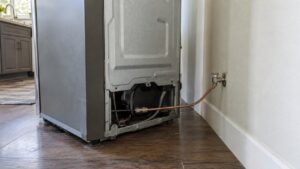
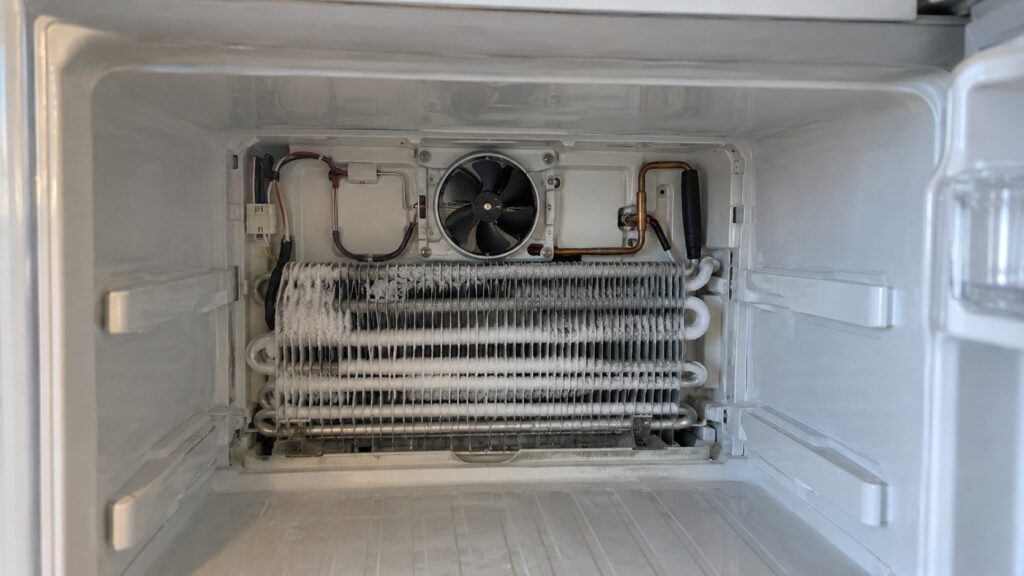
The GE refrigerator evaporator fan motor sits behind the rear panel of the freezer and pushes air across the cold evaporator coil and into both compartments. When it fails, the usual signs are a squeal or rattle from inside the freezer, a freezer that stays cold while the fresh-food side warms up, and frost on the back wall. It is one of the most common noise and warm-cabinet parts on a GE refrigerator, the repair is routine, and the part is matched to your model and serial number.
What does the evaporator fan motor do?
A frost-free refrigerator makes cold air in one place, the evaporator coil in the freezer, and moves it everywhere else. The evaporator fan motor does the moving. It runs while the compressor runs, drawing air over the coil and pushing it through vents into the freezer and, through a duct and damper, into the fresh-food compartment. Without that airflow the coil still gets cold, but the cold does not leave the back of the freezer. That is why the freezer can feel fine while the fresh-food side warms: most of the airflow into the fridge comes from the same fan.
How do I know the evaporator fan has failed?
The clues, in order of how often we hear them, are these. A high-pitched whine, squeal or rattle from inside the freezer, which our GE refrigerator noise page ties to a failing evaporator fan motor. A fresh-food compartment that is warm while the freezer holds temperature, as covered in our guide to a GE refrigerator that is warm while the freezer is cold. Frost or ice on the back wall of the freezer, because the coil is cold but not exchanging air. And a fan you can no longer hear when you open the freezer door and press the door switch. Noise changes are an early warning, since a motor with worn bearings often squeals for weeks before it stops.
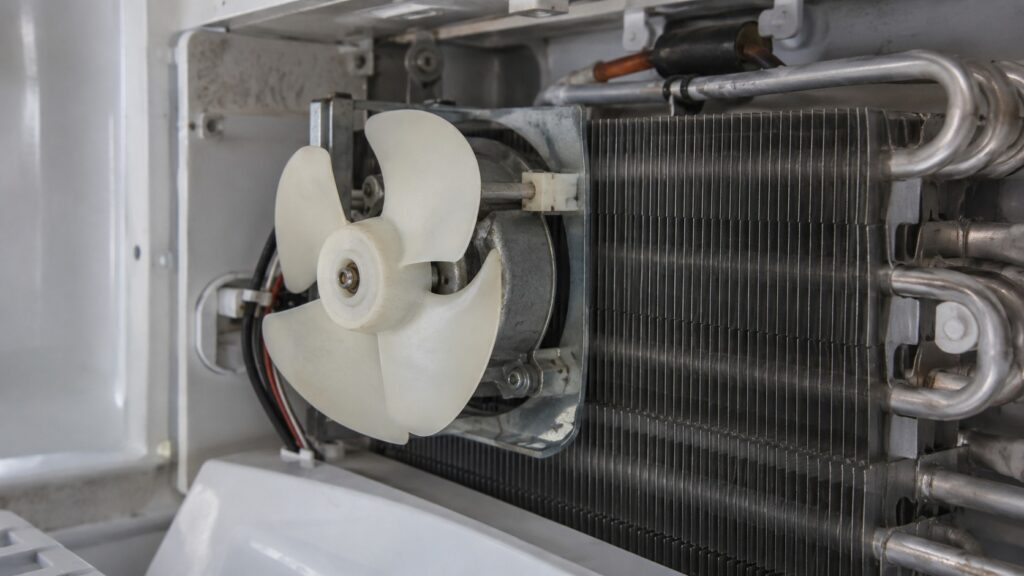
How is it different from the condenser fan?
The two fans do opposite jobs in different places. The evaporator fan is inside the freezer, behind the rear panel, and moves cold air. The condenser fan is in the machine compartment at the bottom or back of the refrigerator and moves air across the condenser coils to shed heat. A squeal from inside the freezer points to the evaporator fan; a hum or rattle from the bottom or back points to the condenser fan or the compressor area. Our refrigerator too noisy page lists both as separate causes. If the noise comes from the bottom, clean the coils first, as set out in the condenser coil cleaning guide.
What can I check without tools?
Start with simple observations. Open the freezer door and press the door switch with your finger; the evaporator fan on many models stops when the door opens, so a fan that is silent with the door open may be normal. Listen with the door closed and your ear near the back wall. Look for ice buildup on the rear panel, and clear anything that blocks the freezer vents inside. If you see a thick sheet of ice, the cause may be a defrost fault rather than the fan, because ice can jam the fan blade. Our guide to the defrost heater and thermostat covers that cause.
Do not remove the rear panel with the refrigerator plugged in. The panel hides the fan motor, the coil and a defrost heater with live wiring, and the plastic parts crack easily.
What does replacing the motor involve?
A technician unplugs the refrigerator, empties the freezer shelves, removes the rear panel, and inspects the coil for ice. The fan blade is tested for free spin and the motor for resistance and voltage. If the motor has failed it is replaced with the correct one for your model, and the airflow path is cleared. The technician also checks why it failed: ice from a failed defrost system is a common reason, and replacing the motor without fixing the defrost fault means the new motor is soon jammed again. After the repair, the refrigerator needs several hours to return to temperature. Our GE refrigerator diagnostic mode guide explains how some models test their own fans.
Is it worth replacing the motor on an older refrigerator?
Usually yes, when the rest of the refrigerator is sound. The motor is a small, defined part, and the repair restores airflow without touching the sealed cooling system. The question is the age and condition of the cabinet. A refrigerator in the first ten years of life with a failed fan motor is a straightforward repair. An older one with a leaking door seal, frost on every wall and a weak compressor is a different conversation. A technician can tell you which case you have during the visit, and a repair that fixes the root cause, such as a defrost fault that iced the fan, lasts far longer than one that treats only the noise.
When is it something else?
A warm refrigerator is not always the fan. If the compressor clicks and does not start, look at the start relay. If the whole refrigerator is warm, read why a GE refrigerator is not cooling. When you want a technician to test the fan and confirm the cause, GE refrigerator repair covers it, and you can book a visit online.