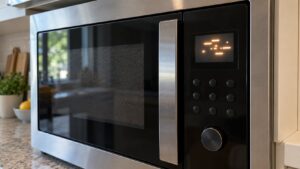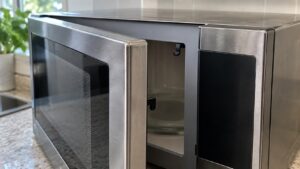
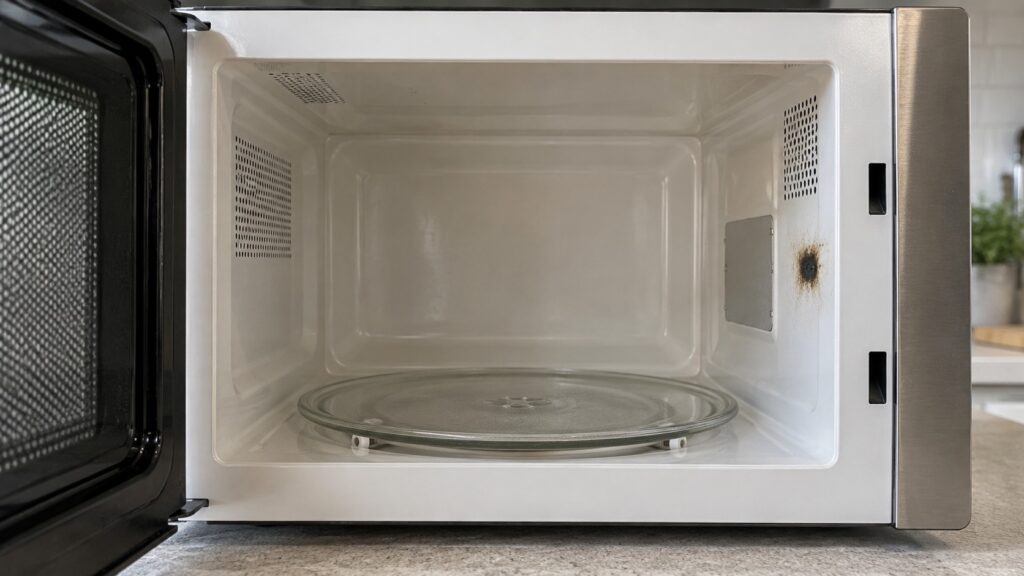
A GE microwave sparking inside should be stopped immediately and not used again until the cause is found. The most common cause is something metal in the cavity: a twist tie, the edge of foil or a dish with a metal trim. If nothing metal was inside, the usual suspects are a damaged or burned waveguide cover, chipped interior paint that exposes bare metal, or heavily burned-on food residue. Sparking that continues with an empty cavity needs a technician, and our symptom page rates it high severity.
Why is my GE microwave sparking inside?
Because microwave energy is finding something it should not: metal, a damaged surface or conductive residue. Our symptom page for a GE microwave sparking or arcing lists the four causes in order of how often they happen. The first is a metal object in the cavity. The second is a damaged waveguide cover, a burned or broken mica cover that can arc at the damaged spot. The third is chipped interior paint with bare metal underneath. The fourth is carbonized food debris, heavily burned-on residue that can conduct and arc under microwave energy. Look at where the sparks appear: sparks traced to one specific spot on a wall, the floor or the waveguide cover point to damage at that spot.
What should you do the moment it sparks?
Stop the microwave right away by pressing Stop, and unplug it if you can reach the plug with a dry hand and a dry floor, as our page advises; otherwise switch off the breaker. Do not use it again until the cause is confirmed. Once it has stopped and cooled, remove any metal item, foil or metal-trimmed dish. If you smell burning, see smoke or the sparking will not stop, switch off the breaker for the microwave at the panel while standing on a dry floor; do not pull a plug from a wet or scorched outlet. Never open the microwave’s outer case or try to look inside the cabinet; that is a technician’s job. If a fire starts inside, keep the door closed so the flames starve, switch off the power at the breaker, and if the fire does not go out at once, leave the kitchen and call 911 from outside. Never open the case: parts inside, including the high-voltage capacitor, can hold a lethal charge even when unplugged.
Could it just be something metal?
It usually is. A twist tie from a bag, the edge of a piece of foil, a fork left in a bowl, or a plate with a gold or silver rim will spark. Check the cavity and the turntable after the microwave has cooled. If the sparks started after you heated a particular dish, that dish is the first suspect. Test the dish only by looking at it, not by running the microwave with it again. If the cavity is clean and nothing metal was in it, move to the next possibility. Our GE microwave maintenance guide explains how routine cleaning, including the door edge and cavity, keeps small problems from growing.
Could the inside of the microwave be damaged?
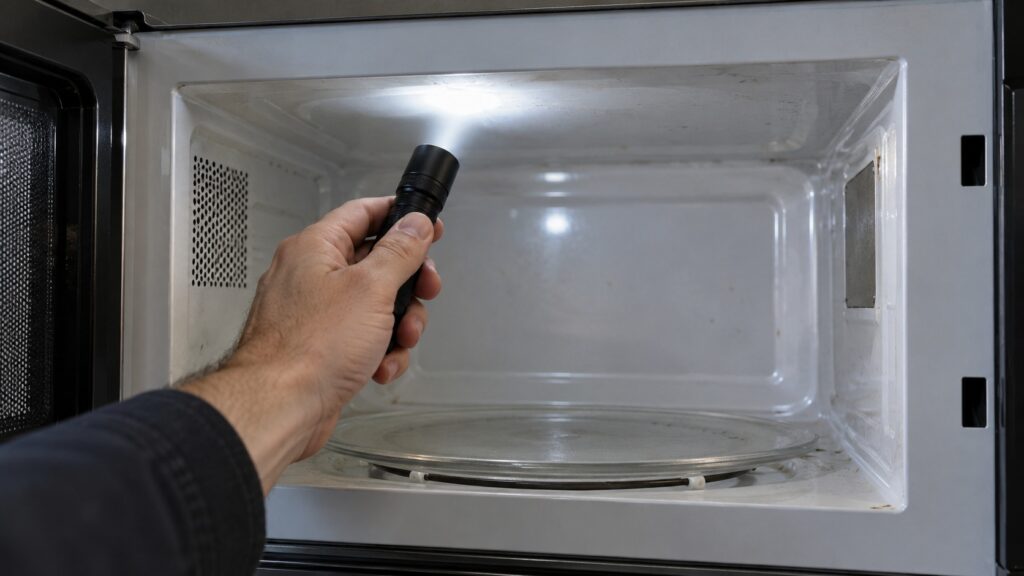
Yes. With the microwave off, unplugged or at the breaker, and cooled, look for a small panel on a side or top wall of the cavity, which is the waveguide cover, and check it for burn marks or damage. Look for chips in the interior paint where bare metal shows through, and for patches of burned, black residue. Our page says that sparking that continues with no metal object present needs a technician to inspect and replace the waveguide cover or address exposed interior metal before the unit is used again. Do not scrape or touch up the cavity yourself, and do not remove the cover; the right part is matched from the model and serial number.
Is the magnetron to blame?
Not from sparking alone. Our guide to the GE microwave magnetron and diode explains that the magnetron produces the cooking energy and that a problem with the diode or capacitor feeding it can leave the microwave running without heat. That is a different complaint from visible sparks in the cavity. If your microwave sparks and also does not heat, tell the technician both. If the problem is only heat, read our GE microwave not heating guide. Our symptom page also covers a loud humming or buzzing microwave; a buzz without sparks is a different problem from arcing.
Is it safe to use the microwave after you clean it?
Only if you found and removed an obvious cause, such as a metal item that you saw sparking, and the cavity and waveguide cover show no damage. If you are not sure what caused it, treat the cause as unconfirmed and leave the microwave unused, as our page advises. If it ever sparks again, stop and book a visit. Because our page rates this condition high severity, it is safest to stop using the microwave and arrange service promptly rather than keep retrying. An older, low-cost countertop microwave with extensive damage may be worth replacing; ask the technician. GE microwave repair covers the visit and you can book it online.