A GE dryer making noise usually points at one of three places, and the sound itself tells you which: a squeal on start-up is almost always the idler pulley or a drive belt going dry, a rhythmic thump is a worn drum roller or a shifted glide, and a metallic scraping or clanking is something loose or trapped between the drum and the cabinet. None of the three stop the dryer from heating or tumbling right away, which is why the noise often runs for weeks before anyone books a repair.
Why does my GE dryer squeal when it starts?
A squeal that is loudest right when the drum starts turning and fades somewhat once it is up to speed is the signature of a dry or worn idler pulley, or a drive belt that has started to glaze and slip slightly on the drum. The idler pulley tensions the belt that wraps around the drum, and its small bearing dries out over years of heat exposure. This is one of the more affordable dryer repairs, since the pulley and belt are both accessible without removing the drum itself.
Why does my GE dryer thump while it runs?
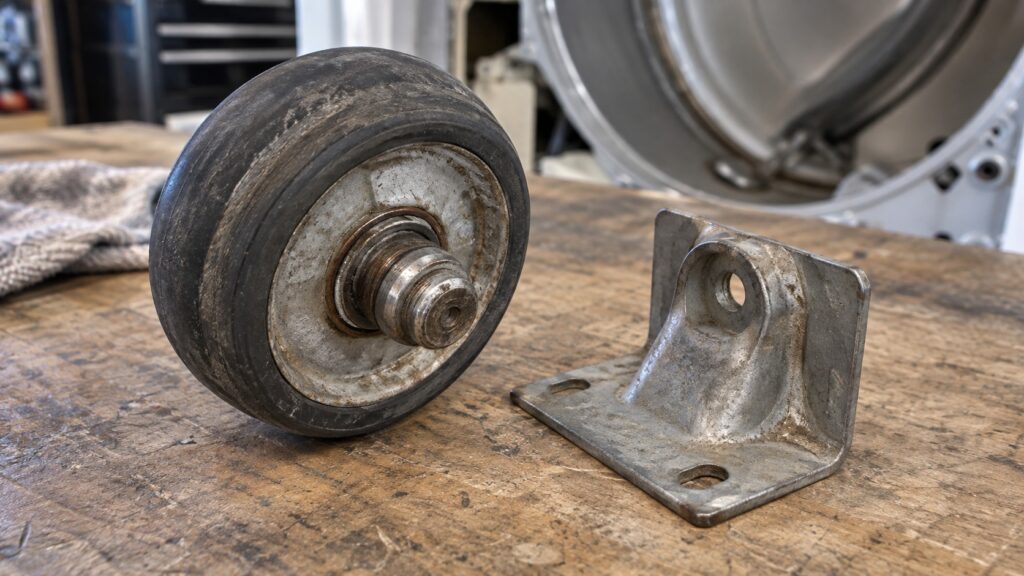
A thump that repeats in time with the drum’s rotation — not random, but on a steady beat — is almost always a drum support: either a rear roller that has worn flat on one side, or a front glide that has worn down and let the drum sag slightly. The thump gets more noticeable with a heavier load, since more weight against a worn roller or glide makes the drum’s slight wobble more pronounced. This wear is gradual, so the sound is often mistaken for “just an old dryer” for months before it is diagnosed.
What causes a metallic scraping or clanking sound?
Scraping or clanking that sounds like metal on metal, rather than a dull thump, often means a small object — a coin, a bra underwire, a zipper pull — has worked its way past the lint trap and is caught between the rotating drum and the stationary cabinet or bulkhead. The other common cause is a torn felt drum seal at the front or rear of the drum, which lets the metal drum edge contact the cabinet directly once the felt that normally cushions it has worn through. Stop the dryer and check for a dropped item before assuming a part has failed; it is the cheaper explanation and the easier fix.
Checking pockets before every load sounds obvious, but it is the single most effective habit for avoiding this exact call. A dryer that has swallowed a coin or a small piece of hardware will often run for weeks with a mild, intermittent clank before the object works its way into a position where it scrapes on every rotation, so catching it early saves a repair visit entirely. A quick check of the lint trap and, further back, the exhaust duct itself is worth doing at the same time — a duct that has been crushed behind the dryer or come loose at a joint can produce its own whistling or rattling sound that has nothing to do with the drum, belt or rollers at all.
How can you tell which part is making the noise before opening the dryer?
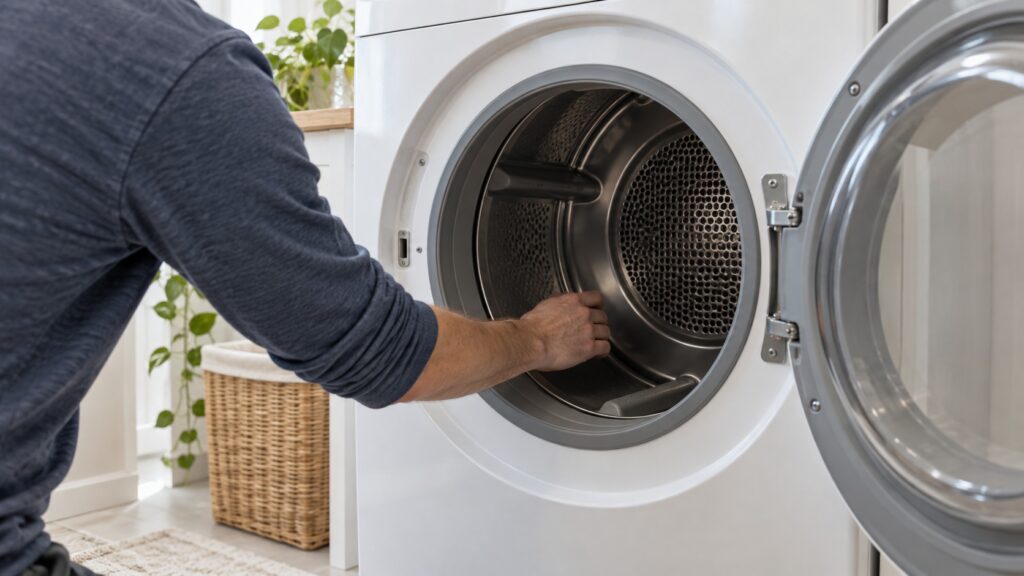
With the dryer unplugged and empty, reach into the drum and turn it by hand slowly through a full rotation. A roller or glide problem usually reproduces the same thump at the same point in the turn every time; a belt or pulley squeal is harder to reproduce this way since it depends on running speed, but you may feel resistance or hear a faint squeak as the drum turns past the pulley’s position. This simple check narrows down whether the noise is coming from the support system at the bottom of the drum or from the belt and motor assembly.
Does the sound change with a heavier or lighter load?
A pulley or belt squeal stays about the same whether the dryer is loaded lightly or packed full, since it comes from a part that moves at a fixed speed regardless of what is tumbling. A roller or glide thump, by contrast, usually gets louder and more noticeable with a heavier load, because more weight pressing down on a worn support makes the drum’s slight wobble more pronounced. Using that difference is a quick way to sort a belt problem from a roller problem before opening the cabinet: run a small, light load and a full, heavy load back to back and listen for whether the sound’s intensity changes.
How does this relate to a part actually failing?
Drum rollers, the belt, the idler pulley and the felt seal are the parts behind almost every dryer noise complaint, and our guide to the GE dryer drum rollers and belt covers what each one looks like and how they are replaced. A dryer that is noisy but still heats normally is a different problem from one that has stopped heating — if heat is also an issue, see GE dryer not heating instead, since that points at the heating element or thermal fuse rather than anything mechanical.
Can a bad vent or exhaust duct cause noise that isn’t the dryer’s fault at all?
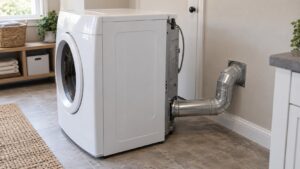
Yes, and it is worth ruling out before assuming an internal part has worn. A flexible exhaust duct that has been crushed against a wall, or a rigid duct with a loose joint, can whistle, rattle or hum as air forces its way past the restriction — a sound that travels back into the laundry area and is easy to mistake for something coming from inside the cabinet. Pulling the dryer out and checking the duct run for kinks, loose clamps or lint buildup takes a few minutes and costs nothing, and it rules out the one common noise source that has nothing to do with a belt, roller or bearing at all.
When is dryer noise worth booking a repair for?
A squeal, thump or scrape that is present on every load and getting louder over time is not going to resolve on its own — worn rollers and dry pulleys continue wearing, they do not recover. A visit starts from a standard diagnostic call and the estimate is confirmed before any part is fitted. We are an independent repair company, not a factory service arm, and on an older dryer we will tell you plainly when a $20 roller kit is the fix and when the noise signals something bigger. GE dryer repair covers any of the causes above, and you can schedule a visit or call (844) 524-4561 with a description of the sound.