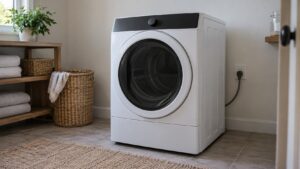
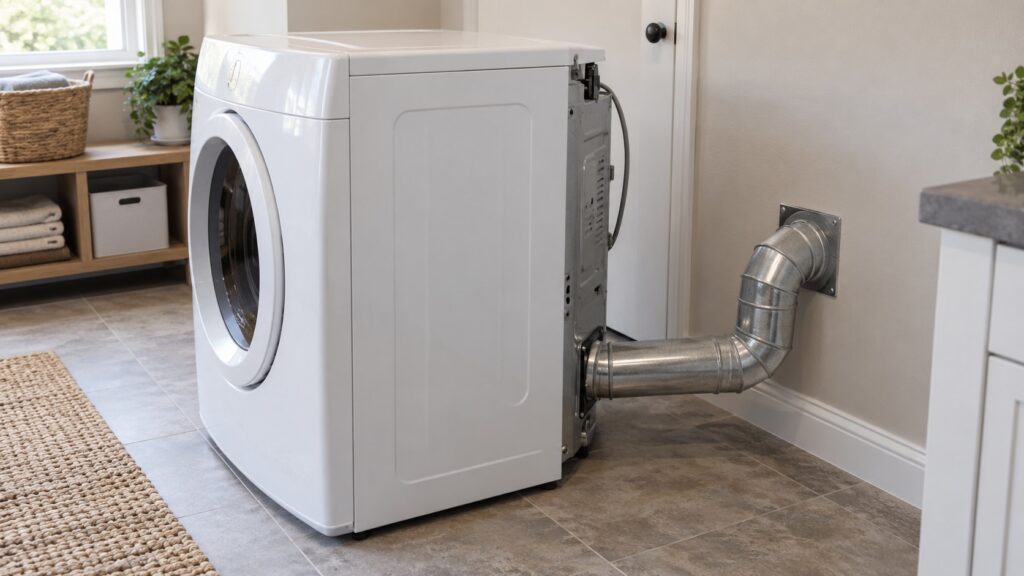
The GE dryer venting requirements come down to one idea: the air that leaves the drum, hot and full of lint and moisture, must have a short, smooth, open path to the outdoors. Our installation guide says to use rigid or semi-rigid metal duct, keep the run as short and straight as possible, vent to the exterior only and fit an exterior cap with a damper that opens freely. A restricted vent makes a dryer slow and hot, and it is the most common cause of E3 and overheating.
Why does a GE dryer need a proper vent?
A dryer dries clothes by moving warm air through the drum and carrying the moisture out. If that air cannot get out, the dryer takes longer and runs hotter. Our E3 page says the air leaving the drum is running too hot almost always because the exhaust vent is restricted or blocked, and that cleaning the vent resolves most cases of that code. Our E3 code page and E3 guide describe the symptoms: a hot exterior, long drying times and clothes that are damp and hot at the end of a cycle.
What duct should you use?
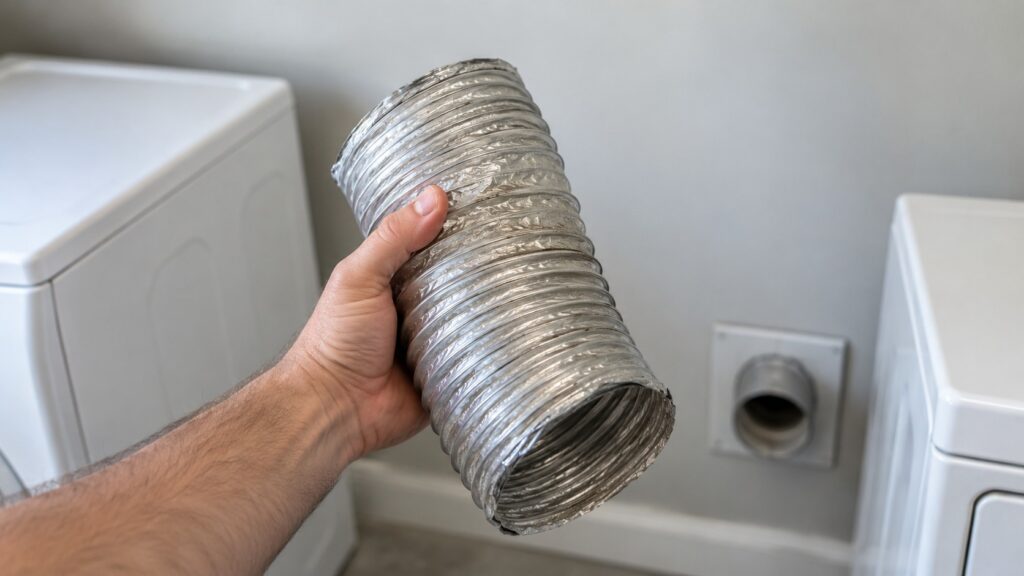
Our dryer installation guide says to use rigid or semi-rigid metal ducting rather than flexible plastic or foil accordion-style ducting, which restricts airflow more and poses a greater fire risk. Smooth metal lets air and lint travel through; ridges catch lint. If your owner’s manual allows a short flexible section to connect the dryer to the wall, it will say which type, and you should use only what it names. Ducts should be joined firmly and supported so that they do not sag, because a sag collects lint.
How long and how bent can the run be?
Our guide says to keep the duct run as short and straight as possible, because every foot of duct and every elbow adds airflow resistance. How much resistance your dryer tolerates is spelled out in the installation instructions for your model. Some of our model pages quote a maximum venting length, but that is a claim on the model page and not your limit, because a real run is shortened by every bend. Use the table in the installation instructions for your dryer. If the vent is long or has many elbows, ask an installer to check it.
Where must the vent end?
Our guide says to vent to the exterior only, never into an attic, a crawlspace or a garage, both for moisture and for lint safety. Do not vent into a room to save heat, and do not run the exhaust into a wall cavity. Fit an exterior cap with a damper that opens freely under normal airflow, and keep the outside end clear of snow, plants and nests. A cap that sticks shut turns a good vent into a blocked one. While the dryer runs, look at the cap from outside: you should see the damper open with the airflow, and if it stays shut, stop the dryer and clear the cap. If the exit goes through a wall or roof, the work of cutting the opening is for a qualified installer.
What goes wrong with a vent over time?
Lint builds up in the duct and the cap, a duct gets crushed when the dryer is pushed back and a bird or a rodent can block the outside end. The signs are the same each time: cycles take longer, the dryer and the laundry room feel hot and the dryer may stop or show E3. Our dryer vent cleaning guide explains upkeep, and our dryer taking too long guide goes through the other causes. Pull the dryer out only as far as the duct allows, and take care not to crush or disconnect it. Do not use the dryer if you suspect the vent is blocked.
What if the dryer shows a vent warning?
Some dryers have an indicator or a message that tells you to check the vent. Whether yours does, and what it is called and how it is cleared, is in your owner’s manual, and we do not describe it here. The important point is that a reset does not clear a blocked duct. If a vent warning or a code returns right after you clear it, the airflow is still restricted, and clearing the message only hides the problem. Clean the lint screen, look at the duct behind the dryer, check the outside cap and run a short test load. If the warning remains, the sensor may be at fault, and that is a job for a technician. Our dryer maintenance guide lists the routine checks that keep the airflow healthy.
What about gas and electric dryers?
The venting rules are the same for both, but the stakes are higher for gas, because the exhaust carries combustion gases outdoors as well as moisture. Gas and electrical connections are for qualified people. If you ever smell gas, do not switch anything on or off, leave and call the gas utility or 911 from outside. If you smell burning or see sparks, stop the dryer and switch off the breaker at the panel while standing on a dry floor. Our GE dryer repair page explains how a visit works.